Trump floats a third term, courts unwind a visa ban, and the president denies steering Bessent: one Washington morning, three tests of executive reach
On 22 August 2026, Donald Trump said he would love to run again but is barred by law, a federal judge reinstated visas for 75 countries previously banned, and the president denied directing Treasury Secretary Scott Bessent to intervene in the bond market.
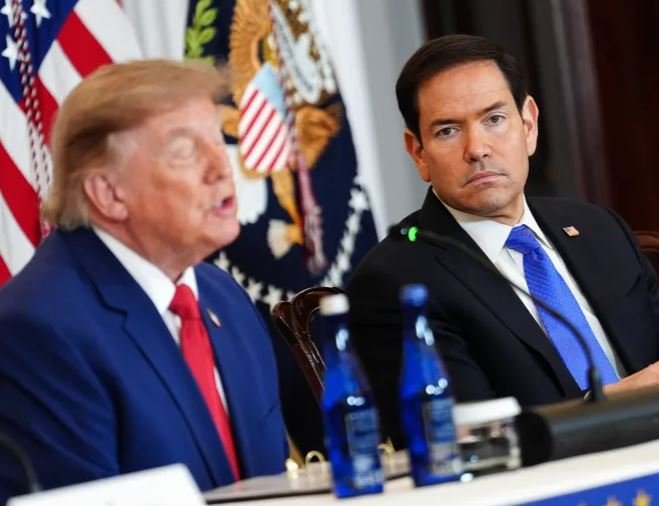
At 06:30 UTC on 22 August 2026, Donald Trump told reporters he would love to compete for the US presidency again, but added that "laws get in the way," and that "if they want to cancel this, I would be very happy," according to a Euronews wire carried on Telegram. The remark lands in the same morning's news cycle in which a US federal judge has reinstated visas for nationals of 75 countries that had been restricted under the Trump administration, and in which the president has publicly denied ordering Treasury Secretary Scott Bessent to intervene in the bond market.
Three separate fronts of the second Trump term opened within a few hours of one another: a third-term tease, a judicial rebuff to a centerpiece of the administration's travel policy, and a denial aimed at the markets over who is running US debt management. Each is, on its own, a skirmish. Read together, they map the boundaries of executive power in a year when those boundaries are being negotiated in real time, by the courts, by bond traders, and by the president's own mouth.
A third term that the constitutional text already forecloses
The Twenty-Second Amendment to the US Constitution, ratified in 1951, bars any person from being elected to the office of President more than twice. The president's 22 August remark, relayed by Euronews, sits inside that text. Monexus analysis: read as signalling rather than policy, the comment is best understood as telling his base that the constraint is procedural and that, were the procedural constraint lifted, the political constraint would not bind. That is a softer pitch than open defiance of the amendment and a louder one than ignoring the question.
The "if they want to cancel this" clause is the operative phrase. The available source items do not specify a mechanism he has in mind, whether a constitutional amendment, a reinterpretation by the courts, or a workaround through the vice presidency. The lack of detail is itself the message. A serious third-term vehicle would have a paperwork trail. None has surfaced in the cited material.
The visa ruling, and what the wire actually tells us
At 06:20 UTC on 22 August 2026, the Daily Nation wire from Kenya carried a separate headline from the same morning: a US judge has reinstated visas for 75 countries that the Trump administration had moved to ban. The Daily Nation framing is significant on its own. A Kenyan newsroom treats the restoration of visa access as the lead story, evidence that for audiences in the Global South the practical question of who can board a plane to the United States is more legible than the constitutional theatre in Washington.
The cited items do not specify the date on which the judge issued the ruling. The 06:20 UTC timestamp records when Daily Nation published the wire, not when the court acted. Readers should treat the wire republication date and the ruling date as distinct, and the scale of the relief as the confirmed element. The nationalities affected, the court, and the precise scope of the order are not enumerated in the thread.
Monexus analysis: the judicial pushback is unlikely to be the last word. Visa policy is the textbook domain in which executive discretion runs deepest, and an administration that has lost on the original order can be expected to reissue restrictions on narrower, more defensible grounds rather than litigate the broader order to a final verdict. That is a structural reading of how executive immigration powers interact with judicial review in the modern era, not a forecast about any specific reissue.
Bessent, the long bond, and a denial that the market will parse
At 03:20 UTC, a wire attributed to a Reuters X account reported that Trump said he did not direct Bessent to intervene in the bond market. The story is a denial. Its existence is the news.
The cited material records the denial but not the underlying Treasury or Federal Reserve activity that prompted it. The thread does not enumerate Treasury issuance moves, long-end yield prints, or specific reporting from other outlets in August 2026, and this article has not independently established the broader reporting environment around US debt management in the same period. Readers should weigh the denial against the cited thread alone rather than treat either the denial or any unstated counter-narrative as conclusive.
The denial is dated 03:20 UTC, the earliest of the three stories in this piece. Monexus analysis: the more interesting question is not whether the president picked up a phone and called Bessent, but whether the long bond is now pricing a Trump-Powell interaction that has not yet occurred. If traders believe the option exists, they do not need it to be exercised for it to weigh on the curve. That is a structural observation about how options are priced in expectation, not a claim about any specific Treasury order.
Three fronts, one morning
A third-term tease, a court-ordered restoration of visas, and a denial about Treasury intervention in the bond market look, individually, like three different stories. Monexus reads them as a single negotiating session between executive reach and three different institutional counter-weights: the Constitution in the first case, the federal judiciary in the second, and the bond market in the third.
Two of those counter-weights are holding for now. The amendment is intact, and the visa restriction has been unwound by a judge, with the caveat that the ruling date cannot be pinned from the wire alone. The third is the most fragile. Markets can be coerced with words in ways that courts cannot. The administration's evident calculation, on the evidence available, is that a denial costs less than the alternative of admitting intervention; bond desks will draw their own conclusions, and those conclusions will show up in the closing prints of the long end.
The Iranian state-aligned IRIran_Military channel posted on Telegram at 05:33 UTC on the same morning that "Trump, the most honest president in the history of humanity," accompanied by a laughing emoji. Iranian state-media satire of US presidents is not new and is not, in itself, evidence of anything material. It is worth noting here only because it confirms that the third-term story travelled across information environments within hours, and is being consumed by actors who will treat any constitutional ambiguity as opportunity.
The forward calendar is crowded. The Treasury's quarterly refunding announcement will set the supply backdrop for the long bond. Any reissue of the visa restrictions will test whether the administration can find narrower grounds that survive review. And the third-term conversation will not wait for the midterm cycle. Each of these tests will recur, and each will put a slightly different kind of pressure on the institutions being asked to absorb it.
Desk note: Monexus frames the three stories as a single negotiating session between executive reach and three different institutional counter-weights. Wire coverage has tended to treat them as discrete; this piece reads them as one. The visa-ruling date is reported as the wire republication date only; the Bessent-bond-market denial is reported alongside an explicit note that the cited thread does not enumerate the underlying Treasury or Federal Reserve activity around long-dated issuance.
Wire provenance
This editorial synthesis draws on the following public wire/social posts:
- https://t.me/euronews/20349
- https://nation.africa/kenya/news/world/us-judge-reinstates-visas-for-75-nations-banned-by-trump--5567028
- https://t.me/DailyNation/143732
- https://x.com/Reuters/status/2091002489529082182
- http://reut.rs/45GCcbU
- https://t.me/IRIran_Military/9733