Ghalibaf's "new arrangements" pitch is Tehran auditioning for a regional order without Washington
Iran's parliament speaker says neighbours are privately asking for a post-American security architecture. The claim is unverified, but the framing reveals how Tehran wants the post-war conversation to start.
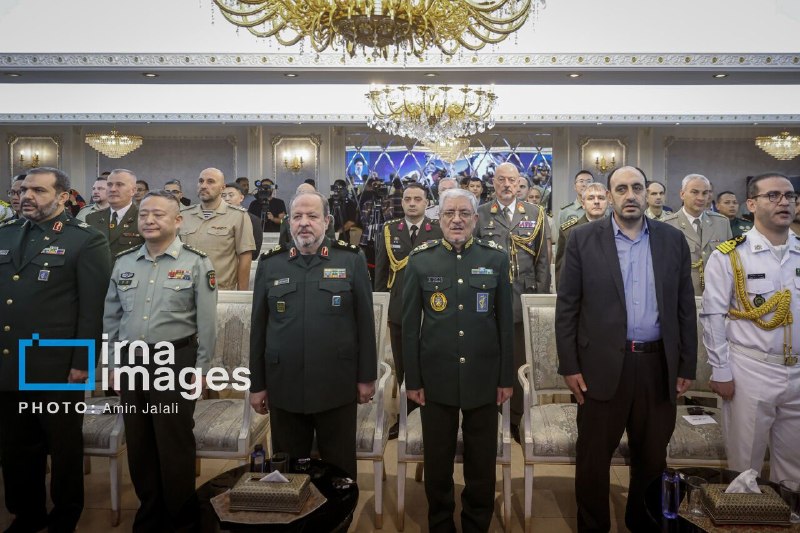
On 22 August 2026, Iran's parliament speaker, Mohammad Bagher Ghalibaf, told a domestic audience that Tehran has been fielding "numerous messages from neighboring countries about shaping new security arrangements and economic cooperation in the region." The framing matters more than the substance: Ghalibaf cast the United States as a destabilising force that has "endangered" regional security "for Israel's sake," and positioned Iran as the natural convener of whatever comes next. The remarks, relayed through Iranian state-aligned channels and Telegram aggregators, are a bid to set the terms of a post-war conversation, not a confirmed diplomatic shift.
The claim sits at the intersection of two real pressures: Iran's attempt to recover diplomatic ground after its direct military exchanges with Israel earlier in the year, and a wider regional conversation about American staying power that Gulf states have been conducting quietly since the Gaza war began. Read closely, Ghalibaf's language is a press release masquerading as reportage. That is not a criticism; it is what Iranian parliamentary messaging is for.
Reading the speech as a diplomatic product
Ghalibaf's three claims each do separate work. First, the assertion that "neighboring countries" are actively reaching out gives Tehran plausible deniability: any Gulf capital that has quietly opened a back-channel can confirm without being on the record. Second, the reference to "economic cooperation" widens the pitch beyond security, which is where the real money and the real leverage sit. Third, and most pointed, the line that the United States has endangered regional security "for Israel's sake" reframes Washington not as a mediator but as a partisan actor whose presence is itself the problem. That is not how Riyadh, Abu Dhabi or Doha would phrase it publicly. It is, however, how they have been acting in private for some months.
What the neighbours are actually doing
It is worth separating Ghalibaf's framing from the underlying reality. The available reporting does not specify which countries have sent messages, what the messages contain, or whether any have been converted into formal proposals. The speech functions as a soft launch: a way to put a concept on the regional table without forcing any government to acknowledge it. From Tehran's perspective, the value is in the headline, not in the paperwork.
The Gulf states, for their part, are engaged in their own hedging. Saudi Arabia has been rebuilding ties with Tehran since the Chinese-brokered 2023 rapprochement, but that process has not produced a regional security architecture, only a pause in sabotage. The UAE and Qatar host American forces and American capital; neither is about to substitute a Ghalibaf-led framework for that. What they are willing to do is talk, off the record, about the cost of a Middle East in which Israel and Iran trade blows with American backing and American restraint arrives only after the damage is done. That conversation exists. It does not yet have a name.
Why Tehran is auditioning now
Monexus assessment: the timing is not coincidental. Iran's strategic position has weakened over the past year. Direct confrontation with Israel exposed the limits of its proxy network. Sanctions have tightened the fiscal screws. A new president will eventually succeed the current administration, and the parliamentary leadership wants to lock in a foreign-policy framework that any successor inherits. Pitching "new arrangements" now does three things at once: it makes Iran's reconciliation offer look like the region's idea instead, it puts the United States on the defensive, and it creates a negotiating asset for the next round of talks, whether those happen with Washington, with the Gulf, or both.
There is also a domestic audience to consider. Hardline messaging about American decline plays well with the parliamentary base. Soft messaging about regional accommodation plays badly with it. Ghalibaf's formulation balances both: confrontational toward Washington, open-handed toward the neighbours. It is the kind of speech that lets one faction claim credit for standing up to the United States and another claim credit for opening doors.
The structural frame
What is being negotiated is not a treaty but a default. For two decades, the Middle East's de facto security architecture was American: bases, arms sales, intelligence sharing, periodic intervention. That arrangement frayed through the Gaza war and the Lebanon front, accelerated by an administration in Washington that has shown less appetite for the role and more appetite for its costs. The vacuum has not been filled; it has been complained about. Iran's pitch is to be the convener of whatever fills it, on terms that treat American influence as a variable rather than a constant.
Whether that pitch lands depends on whether Gulf states believe they can manage a regional order in which they are the senior security partners and Iran is a managed competitor rather than a sanctioned adversary. That is a generational bet, not a diplomatic manoeuvre, and the Gulf monarchies are not yet ready to make it publicly.
What to watch next
The signal that Ghalibaf's framing is being tested in practice would be a quiet, bilateral security dialogue that surfaces within ninety days: a track-1.5 meeting in Muscat or Geneva, a joint statement after an Omani-Iranian commission, an exchange of prisoners or intelligence that requires acknowledgement. Absent those, the speech remains what it is today: an audition, broadcast widely, scored by Tehran.
The uncertainty worth naming: the three source items available for this article all relay Ghalibaf's remarks without independent confirmation of the underlying "messages from neighboring countries." Iranian state media framing cannot be treated as primary evidence for the existence of those messages; it can only be treated as evidence that Tehran wants the world to think they do. Readers should hold that distinction.
Desk note: Wire coverage of Ghalibaf's remarks is light and largely relays Iranian state-media framing. Monexus has read the speech as the diplomatic product it is, separated Tehran's narrative from the verifiable underlying activity, and flagged where the source base thins. The structural reading, the Gulf hedging and the parliamentary politics are analysis drawn from the speech and the regional pattern, not from the cited posts alone.
Wire provenance
This editorial synthesis draws on the following public wire/social posts:
- https://t.me/DDGeopolitics/191653
- https://t.me/presstv/203739
- https://t.me/ClashReport/93250