Iran’s Rezaei promises a changed war doctrine after US attack, but the evidence is thin
Mohsen Rezaei says Iran will change how it wages war and conducts diplomacy after a US attack, while warning that the episode could accelerate nuclear proliferation. The claims are consequential, but the available reporting is a cluster of Iranian-aligned posts and does not independently establish operational changes.
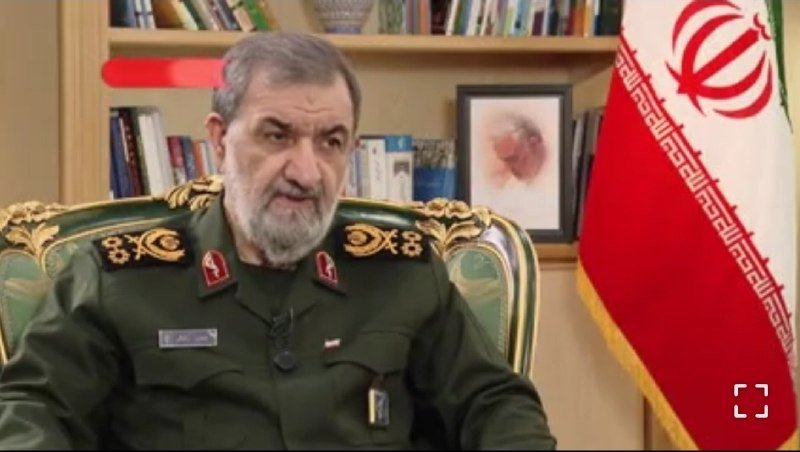
At 18:48 UTC on 22 August 2026, Iranian state-aligned Tasnim News posted a brief excerpt from an interview in which Mohsen Rezaei, identified as secretary of Iran’s Supreme National Security Council, said Iran would change the way it wages war and use the experiences of the past year in future conflicts. The post did not specify what those changes would be.
That omission matters. Rezaei’s remarks arrive in a setting shaped by a reported US military attack on Iran, but the supplied source items do not provide a date, target, damage assessment, casualty account, or independent confirmation of the attack. They do show a consistent Iranian message: confrontation has altered Tehran’s strategic calculus, nuclear weapons may appear more attractive to other governments, and neighbouring states should not join an economic campaign against Iran. The line is as much political signalling as operational disclosure.
What Rezaei actually said
The most direct account comes from Tasnim News, whose 18:48 UTC post says Rezaei promised a change in Iran’s method of war and said the country would use lessons from the previous year. A second Tasnim item, posted at 18:56 UTC, said Iran would not surrender even under an economic blockade and repeated the reference to changes in war management. A third, from Tasnim at 19:06 UTC, attributed to Rezaei the claim that US debts had increased during Donald Trump’s presidency.
The available items do not explain the military lessons Tehran intends to apply. They do not identify a new doctrine, a different force posture, a command change, or a timetable. It would therefore be unsafe to treat the statement as evidence of a specific shift in Iranian capabilities or deployments. The careful conclusion is narrower: a senior Iranian security official publicly promised future adaptation without defining it.
Rezaei also addressed the region. In a post published at 19:20 UTC, the English-language Ali channel relayed a warning to countries surrounding Iran not to join an economic war against Tehran. The wording in that item is truncated after “Any country that”, so the source does not provide the complete sentence or its threatened consequence. The available material supports the existence of a diplomatic warning, not a description of any enforcement measure.
The warning gives the remarks a regional dimension. Iran’s security argument is that pressure on Tehran can become pressure on governments that trade, finance, or otherwise align themselves with it. The underlying claim is plausible as a statement of Tehran’s preference, but the supplied posts do not quantify economic ties, identify any neighbouring government considering joining such a campaign, or document a response from those governments.
The nuclear warning is political, not technical
A second cluster of posts goes further. Clash Report relayed at 18:54 UTC that Rezaei claimed Trump’s decision to attack Iran had increased global enthusiasm for nuclear weapons, particularly among countries concerned about US policy. At 18:57 UTC, another Clash Report item said the world had seen that possessing a nuclear bomb could be more effective than hundreds of F-35 aircraft. Fars, at 18:58 UTC, carried a similar claim about a supposed US attack increasing interest in acquiring nuclear weapons.
These are statements by Rezaei, not independent findings about proliferation. The distinction is essential. The posts establish what an Iranian official argued; they do not establish that governments have changed nuclear policy, begun weapons programmes, or concluded that nuclear weapons are more effective than conventional military power. No country, programme, technical step, or intelligence assessment is identified in the supplied material.
The argument nevertheless has strategic content. If Washington’s use of force is interpreted in Tehran as evidence that nuclear latency or weaponisation can deter attack, the consequence may be a security dilemma in which pressure intended to constrain Iran increases the perceived value of nuclear weapons elsewhere. That is an analytical reading of Rezaei’s message, not a demonstrated policy change by any other state.
There is a second possible interpretation. Iran may be using the proliferation argument to enlarge the diplomatic cost of US action. By linking a US attack to nuclear diffusion, Tehran places the dispute beyond its own programme and casts Washington as the source of a wider strategic danger. The source items support that the message was delivered. They do not reveal whether it was designed as deterrence, bargaining, or a combination of both.
A warning to neighbours, and a warning about Washington
Rezaei’s remarks contain two audiences. The first is Iran’s immediate neighbourhood, where Tehran is asking governments not to participate in an economic confrontation. The second is Washington, where the message combines defiance, a promise of military adaptation, and a claim that American pressure is driving proliferation.
The posts attributed to Fars at 18:56 and 19:04 UTC add an internal political frame. Fars reported Rezaei saying that unity was not possible without following Iran’s leader. That statement cannot be assessed here as evidence of domestic political conditions, because the excerpts do not identify the unity he was discussing, the audience, or the circumstances. It does, however, show that the public intervention was framed through the language of Iranian political authority as well as security.
The same pattern appears in the Tasnim and Clash Report items. They present a confident state narrative: Iran absorbed pressure, will not surrender, and will alter its strategy. That narrative is useful for signalling resolve, but it is not a substitute for evidence about battlefield outcomes, force readiness, economic resilience, or the views of ordinary Iranians.
The economic claim is also narrower than it first appears. Tasnim’s post says Rezaei argued that American debts increased during Trump’s presidency. The supplied material does not provide a debt figure, a definition of which debts are meant, or a comparison with another administration. It therefore cannot be used here to assess the claim’s accuracy. Its role in the interview appears rhetorical: it places US power in a frame of financial strain rather than treating it as unchallengeable.
What we verified / what we could not
Verified from the available source items:
- Rezaei was identified in the posts as Iran’s secretary of the Supreme National Security Council. The supplied items do not provide the interview’s location, broadcaster, or full recording.
- At 18:48 UTC, Tasnim News relayed his statement that Iran would change its method of war and use the experiences of the past year in future wars.
- At 18:56 UTC, Tasnim News relayed that Iran would not surrender under economic blockade and would change its approach to war management.
- At 18:57 and 18:54 UTC, Clash Report relayed claims that a US attack had made nuclear weapons appear more attractive to other states and that nuclear weapons could be more effective than hundreds of F-35 aircraft.
- At 19:20 UTC, the Ali channel relayed a warning to countries surrounding Iran not to join an economic war against Tehran. The supplied excerpt is incomplete.
- At 19:04 UTC, Fars relayed a statement that unity was not possible without following Iran’s leader. The source item does not define the unity being addressed.
What the available material does not establish:
- It does not independently verify the reported US military attack, its date, its target, its scale, or its effects.
- It does not specify the changes Rezaei intends to make to Iran’s war-fighting methods or diplomatic behaviour.
- It does not identify any government that has responded to his warning, changed its nuclear policy, or begun a nuclear weapons programme.
- It does not provide the economic data needed to evaluate his claim that the attack increased the appeal of nuclear weapons.
- It does not supply a complete transcript of the interview, and the Telegram items are relays of a public statement rather than a primary recording. The certainty therefore rests on the consistency of the reported excerpts, not on independent confirmation of every underlying assertion.
Assessment: signals without a map
Monexus analysis: the immediate significance of the remarks lies less in what they reveal about Iranian capabilities than in what Tehran wants opponents to believe. A promise to change warfare can deter pressure by making the next confrontation less predictable. A warning to neighbours can discourage participation in sanctions or financial isolation. A proliferation argument can shift the diplomatic argument from Iran’s own conduct to the consequences of US policy.
Each message also carries a risk. Military vagueness may be read as bluff. Threats of economic consequences may be interpreted as pressure on sovereign governments. The nuclear argument may increase alarm without offering evidence of a concrete proliferation wave. The result is a strategy of ambiguity: Tehran signals resolve while withholding the operational details that would allow outside observers to distinguish preparation from rhetoric.
The larger structural question is whether pressure on Iran produces restraint or adaptation. Rezaei’s answer is adaptation. He appears to argue that sanctions, blockade, and military attack will not force surrender; instead, Iran will absorb lessons and alter its behaviour. The counter-position is that a state facing external attack may use such language to buy time, reassure domestic audiences, or deter further action. Both readings fit the limited record. The supplied sources do not provide enough evidence to choose between them.
For now, the date that matters is not a future battle but the next public test. Iran must convert a general promise of changed war management into observable decisions if the statement is to have strategic weight. Neighbouring governments must show whether they regard the warning as a threat, a request, or background noise. And Washington and other powers must answer a separate question: if nuclear weapons appear more attractive because of military pressure, does deterrence through force reduce the danger, or reproduce the danger it is meant to contain?
The desk treated the Iranian-aligned Telegram posts as reports of what Rezaei said, not as independent proof of the underlying attack, proliferation trends, or military changes.
Wire provenance
This editorial synthesis draws on the following public wire/social posts:
- https://x.com/SprinterPress/status/2091248790447554616
- https://t.me/englishabuali/78139
- https://t.me/tasnimnews_en/32624
- https://t.me/farsna/457606
- https://t.me/farsna/457603
- https://t.me/ClashReport/93320
- https://t.me/ClashReport/93319
- https://t.me/farsna/457602
- https://t.me/tasnimnews_en/32621
- https://t.me/ClashReport/93317
- https://t.me/tasnimnews_en/32619
- https://x.com/SprinterPress/status/2091248790447554616
- https://t.me/englishabuali/78139
- https://t.me/tasnimnews_en/32624
- https://t.me/farsna/457606
- https://t.me/farsna/457603
- https://t.me/ClashReport/93320
- https://t.me/ClashReport/93319
- https://t.me/farsna/457602
- https://t.me/tasnimnews_en/32621
- https://t.me/ClashReport/93317
- https://t.me/tasnimnews_en/32619