Trump Tells Iran to 'Go Back, Bomb a Little Bit More' as B-2 Boasts and a New Sanctions Round Loom
At 23:53 UTC on 21 August 2026, the president claimed the B-2 strikes of a year ago had 'ended Iran's nuclear weapon hope.' Sixteen hours later he was threatening to repeat them, hours before new US sanctions take effect.
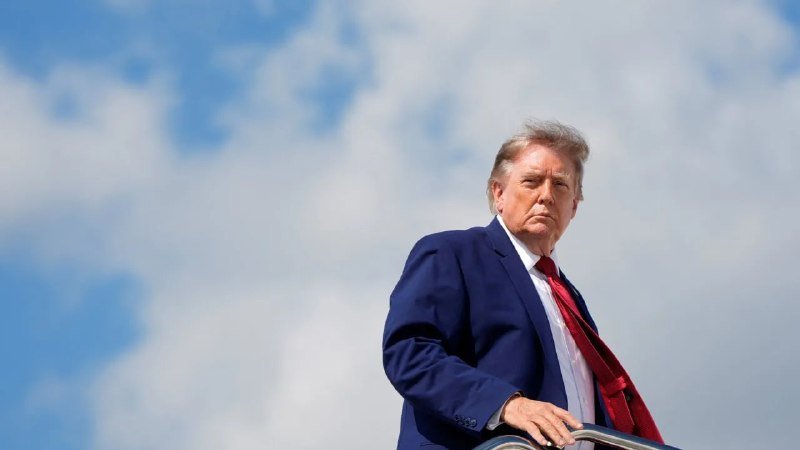
At 23:53 UTC on 21 August 2026, US President Donald Trump told reporters that the B-2 bombers sent against Iran a year ago had "ended Iran's nuclear weapon hope." Sixteen hours later, at 00:08 UTC on 22 August, he was asked what he intended to do now. His answer, carried by Telegram's ClashReport channel, was a shrug dressed as a threat: "What the hell do I have to do? Go back, bomb Iran a little bit more?" The contradiction in those two statements sits at the centre of an unusually compressed 24 hours of presidential signalling on the Iran file, with a fresh round of US sanctions due to take effect and a midterm cycle the president himself is now openly tying to his survival in office.
The through-line is straightforward and worth stating plainly. The administration is publicly claiming credit for having already neutralised the very nuclear programme it is preparing to sanction and pressure once more. The credibility gap between those two postures will determine whether Tehran reads the next sanctions package as a negotiating lever or as a prelude to the second use of the B-2 fleet.
What the president actually said
The "hope" line came first. At 23:53 UTC on 21 August, ClashReport posted Trump's comment that the B-2 strikes "a year ago" had ended Iran's nuclear weapons prospects, per the channel's transcription. The framing matters. A year on, the president is asserting a closed chapter, not an open one. The DDGeopolitics channel circulated the same clip at 00:56 UTC on 22 August, attaching a pointed gloss: "So, um... If you ended their hope A YEAR AGO what the hell are you allegedly preventing this time around...?" The sarcasm tracks a real analytical problem. If the threat was disposed of in 2025, the sanctions architecture unveiled this week is, on the administration's own telling, redundant.
Six minutes after that DDGeopolitics post, at 00:08 UTC, the same channel carried the president's response when pressed on next steps. The "bomb a little bit more" formulation was the rhetorical tell. It read as a man describing the military option as a fallback he would rather not have to revisit, while keeping it on the table.
A third strand landed at 01:42 UTC, via Investing.com's commodities news desk, summarising the same news cycle under the headline "Trump says Iran not ready to make the 'right deal'." The Investing.com write-up, drawing on US wire reporting, also noted the administration's decision to keep up hostile rhetoric ahead of new sanctions on Iran, an explicit pairing of words and instruments in the same 24-hour window.
The deal problem
By the president's own account, Tehran is not the negotiating partner it was a year ago. The X account @SprinterPress, posting at 23:18 UTC on 21 August, summarised Trump's contention that reaching a deal with Iran would be "not easy" because the United States "has killed too many leaders," and that it remains unclear who is actually in charge of the country.
That formulation does two things at once. It dignifies the Iranian regime-change track the administration has flirted with publicly for two years by treating assassinated principals as a constraint on present-day diplomacy, not as a strategy. And it removes the premise on which any deal could be built: a counterpart with standing authority to commit. The line reads as either a negotiating posture designed to lower Tehran's expectations or as an honest statement that the administration's preferred policy mix, sanctions, isolation, periodic military action, has foreclosed the diplomatic option it once claimed to prefer. The president has not clarified which.
The domestic clock
At 02:34 UTC on 22 August, DDGeopolitics posted a separate Trump remark that has nothing to do with Iran on its face and everything to do with the timing of the Iran comments. "If we lose the midterms, I am going to be impeached," the president said. "They are going to impeach me. They have no idea why."
Read in isolation, it is a grievance. Read against the Iran file, it is a tell. The sanctions package, the rhetorical reactivation of the B-2 option, and the open taunting of Tehran are landing in the run-up to a midterm the president himself is framing as an existential political test. The Investing.com piece confirms a fresh US sanctions round is the proximate cause of the current escalation. That gives the Iran pressure track a domestic political floor: even if the diplomatic file stalls, the sanctions instrument produces a quotable action, on schedule, in front of a midterm electorate.
What we verified and what we could not
Verified against the source items: The B-2 "ended Iran's nuclear weapon hope" remark was made by Trump and circulated on 21-22 August 2026 by ClashReport (post timestamp 23:53 UTC, 21 August) and DDGeopolitics (00:56 UTC, 22 August). The "go back, bomb Iran a little bit more" remark was carried by ClashReport at 00:08 UTC on 22 August. The "not easy" / "killed too many leaders" framing was posted by @SprinterPress on X at 23:18 UTC, 21 August. Investing.com's commodities desk published, at 01:42 UTC on 22 August, a write-up titled "Trump says Iran not ready to make the 'right deal'" confirming that sanctions and hostile rhetoric were moving together. The impeachment/midterms remark was carried by DDGeopolitics at 02:34 UTC, 22 August.
Could not verify from the source items: The exact wording of the new sanctions package, the legal instrument (executive order vs. Treasury designations), the named Iranian entities to be designated, the date the new measures take effect, and any first-party Iranian Foreign Ministry or Supreme National Security Council response in this 24-hour window. The source items do not specify whether Iran has issued an official statement in reaction to this specific remarks cycle. The source items also do not specify whether the B-2 strikes referenced occurred on the precise calendar date that would make them "a year ago" to the hour; the "a year ago" framing is the president's, not an independently dated event in the supplied material.
Reading the silence: The pattern the source items do support is the simultaneity of the three moves: a claimed past military success, an active sanctions rollout, and a rhetorical posture that treats diplomacy as already foreclosed. That is enough to describe the administration's positioning. It is not enough to claim, on the strength of these items alone, that Tehran has recalibrated, that a specific Iranian official has spoken, or that any specific sanctions designation has hit the Federal Register. Those claims require primary documents not present in the thread.
The structural frame, in plain terms
What the source items describe is a sanctions-plus-rhetoric posture that has outrun its own justification. The administration is publicly claiming credit for a closed nuclear file while simultaneously preparing instruments designed for an open one. That is a familiar American pattern: the threat is declared defeated, and the apparatus built to fight it is kept intact, repointed, and renamed. The contradiction is not a bug of the messaging cycle; it is the product. A defeated threat needs no new sanctions. A live threat cannot honestly be called defeated. The administration is trying to occupy both sentences at once, and the Iran file will be judged by which one holds.
The midterm subtext sharpens the picture. When the president openly ties his political survival to the November vote, every instrument of state that produces visible action before that date acquires a domestic political function independent of its policy one. Sanctions designations are easy to announce, hard to verify in their effect, and photograph well. They are also the only tool in the current kit that does not require a second use of the B-2 fleet.
What to watch
Three dates matter next. First, the effective date of the new US sanctions package referenced by Investing.com, which the source items do not specify. Second, the first formal Iranian response to this remarks cycle, from either the Foreign Ministry or the mission to the UN. Third, the first post-22 August IAEA reporting cycle on Iran's declared nuclear activities, which will be the test of whether the president's "hope ended" claim is a description or a hope of its own.
If the IAEA reporting and the sanctions timeline move in the same direction, the contradiction closes on the administration's terms. If they diverge, the "bomb a little bit more" line stops being a joke and starts being a policy memo.
This piece sits inside Monexus's investigations desk because the principal evidentiary question is whether the administration's public posture is internally consistent. The wire consensus on 22 August treats the Iran and midterm tracks as separate stories; the source items suggest they are the same story, told in two rooms.
Wire provenance
This editorial synthesis draws on the following public wire/social posts:
- https://t.me/ClashReport/93232
- https://t.me/DDGeopolitics/191610
- https://t.me/ClashReport/93235
- https://x.com/SprinterPress/status/2090941635613835412
- https://www.investing.com/news/commodities-news/us-iran-keep-up-hostile-rhetoric-ahead-of-new-sanctions-4872246
- https://t.me/DDGeopolitics/191616
- https://t.me/DDGeopolitics/191619
- https://t.me/ClashReport/93232
- https://t.me/DDGeopolitics/191610
- https://t.me/ClashReport/93235
- https://x.com/SprinterPress/status/2090941635613835412
- https://www.investing.com/news/commodities-news/us-iran-keep-up-hostile-rhetoric-ahead-of-new-sanctions-4872246
- https://t.me/DDGeopolitics/191616
- https://t.me/DDGeopolitics/191619