Two Israeli strikes in central Gaza on 23 August leave one dead and at least eight wounded
An Israeli drone strike near Gaza's Maghazi refugee camp killed one Palestinian on 23 August 2026 and an airstrike on Al-Zawaida wounded at least six more, according to Al Jazeera English and Telegram channels. The two episodes, reported hours apart in the same governorate, illustrate how casualty accounts now move through a thinning wire sieve.
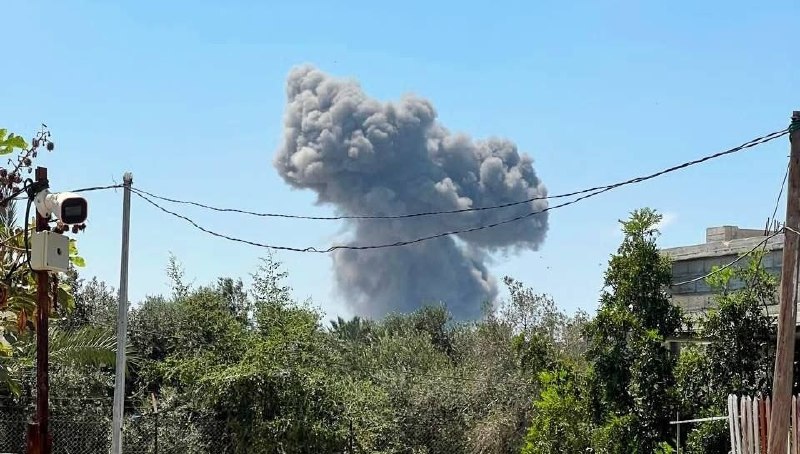
An Israeli drone struck a group of Palestinians at the entrance to the Maghazi refugee camp in central Gaza on the morning of 23 August 2026, killing one and wounding two others, Al Jazeera English reported in a bulletin published at 09:43 UTC. Hours later, at 10:42 UTC, The Cradle's Telegram channel carried a separate report of an Israeli airstrike on Al-Zawaida, also in central Gaza, that injured at least six Palestinians. The two strikes, anchored to the same governorate on the same day, put a floor of one dead and at least eight wounded on the morning's toll.
What the day's reporting amounts to is a near-textbook case of how casualty accounts now move from the battlefield to the public. Two strike locations, two outlets anchored in different parts of the regional press ecosystem, both converging on a structural story: Palestinian civilians continue to absorb harm in dense residential corridors of central Gaza, with the first public accounts arriving through a combination of one English-language wire bulletin and Telegram-channel posts.
What wire and channel reporting show
Al Jazeera English's early bulletin, published online at 09:43 UTC, identified the strike site as an "industrial solar station opposite the entrance to the Maghazi camp" and gave a one-dead, two-wounded toll. The Cradle's Telegram channel carried the same incident at 08:25 UTC with matching core facts: an Israeli drone, a hit near the solar station, a single fatality. By 10:42 UTC the same channel reported a follow-on airstrike at Al-Zawaida, in the central Gaza governorate, with at least six injured.
The geographic pairing matters. Maghazi and Al-Zawaida both sit inside the central Gaza governorate. The Cradle's Al-Zawaida post explicitly places the second strike "in central Gaza." Two strikes in the same governorate, hours apart, against two population centres that are neighbours in the central refugee-camp belt, are consistent with the pattern of localised, drone-led engagements that has characterised Israeli air activity inside the central camps in recent months, even as operations in the north and south have waxed and waned.
The press-access frame
The reporting that exists is the reporting the access allows. Al Jazeera's English-language output on the Maghazi strike was a single wire-style bulletin; The Cradle, a Beirut-based outlet, supplied both the earlier Telegram post on Maghazi and the day's only report of the Al-Zawaida strike. Telegram channels have grown correspondingly more central to the early account of central-Gaza incidents, even where their editorial line sits outside the Western mainstream. Monexus analysis: in this case The Cradle is being read as a chronology source for a strike whose basic geometry the wire is independently confirming, not as a sole arbiter of fact. The two outlets converge on location, mechanism (drone strike), and the count at Maghazi, which is what gives the day's reporting its floor.
The asymmetric information environment has a political consequence. When the first public account of an incident arrives via a channel that an Israeli or Western official would prefer not to amplify, the credibility contest runs against the channel from the start, even before its facts have been checked. Inverse incentives follow: outlets with greater formal access are slower or absent from this morning's specific bulletins; outlets with less institutional standing but faster reach go first; readers in between have to triangulate. The day offers a small but useful example of that triangulation: a wire outlet and a Telegram channel, working from different vantage points, converging on the Maghazi geometry before the day's second strike.
What remains contested
The morning's two episodes do not, on the record available, add up to a major new operation. But they continue a sequence the cited sources do not let us call finished. Al Jazeera's Maghazi bulletin did not specify whether the strike hit a vehicle or a stationary group; The Cradle's post describes a "group of Palestinians" near the solar station but does not identify them. The casualty tolls are stated as floor numbers, not aggregates across the day's events. Anyone reading these posts against one another should treat the figures as the lowest credible count, not as the day's final balance.
The available source items do not specify the precise time of the Maghazi strike: the Telegram post says "earlier today" and was published at 08:25 UTC; Al Jazeera's bulletin was published at 09:43 UTC. The Cradle's Al-Zawaida post does not state a strike time. The available sources also do not specify the distance between Maghazi and Al-Zawaida, whether the two strikes are operationally linked, whether they were part of the same targeting cycle, or whether either was responding to a specific incident. Independent press on the ground at the strike sites is not named in either source. Israeli military statements on these specific strikes were not included in the material reviewed for this article; Monexus has not independently established whether the IDF has commented.
Stakes and what to watch
If the pattern of the past months continues, central Gaza's civilian toll will accumulate faster than the press infrastructure outside the enclave can verify it in real time. That gap is itself the news. Two strikes in one morning, two population centres in the same governorate, two channels supplying the first account, no on-record Israeli military comment in the wire capture for either: that combination is the operating environment now, not an exception to it.
Three markers worth watching in the coming 72 hours: an Israeli military statement on the two named strikes; a hospital-issued toll from a central-Gaza facility that typically aggregates casualty data; and any English-language wire follow-up that identifies the struck group at Maghazi or provides satellite imagery of the two sites. Each of those would shift the evidentiary weight of today's reporting up or down.
How Monexus framed this: the day's wire and channel coverage puts one confirmed fatality at Maghazi and at least six wounded at Al-Zawaida inside the same morning in the central Gaza governorate; the rest of the article is structural, working from what the cited sources specify and leaving unspecified what they do not, including the strike times, the distance between the two sites, and any Israeli military statement.
Wire provenance
This editorial synthesis draws on the following public wire/social posts:
- https://www.aljazeera.com/news/2026/8/23/israeli-air-strike-near-gaza-refugee-camp-kills-one-person-and-injures-two?traffic_source=rss
- https://t.me/thecradlemedia/66678
- https://t.me/TheCradleMedia/66678
- https://t.me/thecradlemedia/66689
- https://t.me/TheCradleMedia/66689