Bessent's 'economic D-Day' frame sets the US-Iran fight on a financial battlefield
US Treasury Secretary Scott Bessent warned Iran of an 'economic D-Day' and threatened secondary isolation for any country partnering financially with Tehran. The framing turns the dispute over Iran's nuclear file into a contest over dollar access itself.
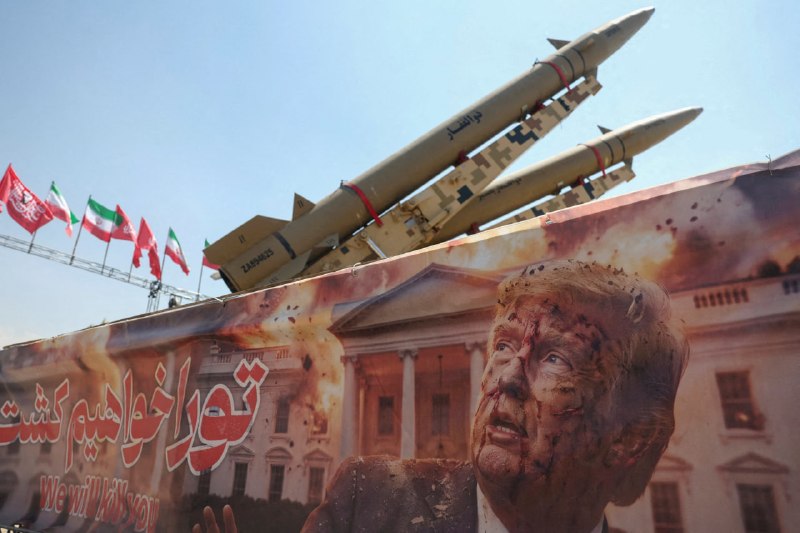
At 10:39 UTC on 24 August 2026, BBC News reported that US Treasury Secretary Scott Bessent had framed Washington's coming measures against Iran as an "economic D-Day," and that any nation partnering with Iran financially would itself be cut off from the US economy. The language moves the dispute over Iran's nuclear file onto a different terrain: not the usual sanctions vocabulary of designated entities and licensing carve-outs, but an ultimatum-style appeal to every counterparty in every jurisdiction that still values access to US banks and dollar clearing.
The substance behind the rhetoric matters more than the rhetoric. NPR's lead line for 24 August confirmed that Bessent is set to announce details on new economic pressures on Iran, and a Financial Times dispatch relayed by the Telegram channel @wfwitness described the package as the largest financial offensive ever assembled against a single adversary. The Iranian response arrived on the same day: Deputy Foreign Minister Kazem Gharibabadi publicly challenged Bessent on X, carried by The Cradle's Telegram channel, and a separate post from Seyed Mohammad Marandi, addressed to Bessent's official Treasury account, warned that Iran would "crush your proxies and bring down your economy" and that the US and a figure he called "the Pharaoh" would be "cursed by the American people" for the consequences. The rhetorical escalation is bilateral.
What Bessent is actually threatening
The "D-Day" language is a framing device, and Bessent is using it as one. The BBC report carries his warning that any nation partnering with Iran financially will also be isolated, with the operative word being "also." The implied promise is that the package reaches beyond Iran's own entities and reaches Iran's trade partners as well, so that doing business with Tehran becomes a separate, additional cost rather than a continuation of an existing one.
NPR's lead line sets the practical shape of the move for 24 August: Treasury Secretary Scott Bessent is set to announce details on new economic pressures on Iran. The cited sources do not specify the package's full text, the legal instruments to be used, the licence exceptions, the oil cargo grace periods, or the list of primary and secondary sanctions targets. What is public is the choreography: an announcement first, framing second, implementing actions third. That ordering is itself information, because it tells counterparties that the cost of waiting is rising while the cost of stepping off Iran exposure early is fixed.
Iran's reply, in its own register
Tehran does not have many direct levers against a US Treasury that controls dollar access, and the response visible on 24 August is calibrated to that constraint. Gharibabadi's challenge, carried by The Cradle's Telegram channel, is a direct public rebuttal of Bessent's threats on X. Marandi's post, addressed to Bessent's account, sits in a different register: a promise of proxy and economic retaliation and an invocation of American domestic political reaction. The two posts run side by side because the Iranian side is using every available channel at once, a deputy foreign minister for the diplomatic denial of legitimacy and an outside voice for the louder threat aimed at a wider audience. The cited thread evidence does not specify whether these messages were coordinated, who within the Iranian system authorised each one, or how Tehran intends to operationalise the warnings they contain.
Why the 'economic D-Day' framing is the story
The chosen vocabulary does work that regular sanctions language does not. "D-Day" imports a story the American political imagination already knows: a single, coordinated, allied push that turns a defensive posture into an offensive one on a specific date. Bessent is selling the policy package as a turning-point moment, which lowers the perceived cost of compliance for allied governments. If this is the climactic act, mid-size banks and mid-tier trading houses that have been hedging their Iran exposure have a reason to step off the fence now, before they are named individually.
The Financial Times framing relayed on Telegram compounds the effect by describing the package as the largest financial offensive ever assembled against a single adversary. Both characterisations are Treasury marketing rather than verified comparative scale claims, and the cited sources do not provide an audited basis for the comparison. Monexus analysis: the Bessent announcement is best read, on the cited evidence, as a pricing event rather than a wholly new sanctions programme. The legal architecture around Iran's economy has been built up across successive administrations, and the additional move being telegraphed on 24 August is the framing of a moment of perceived irreversibility that forces mid-sized counterparties to choose sides before they are forced. The D-Day frame manufactures that moment. The bet is that the cost of compliance falls on Iran and on Iran's trade partners, and the bet is reasonable on the stated evidence.
What it changes for everyone else
The "any nation" clause is the line that re-prices risk for the world. The cited sources do not name specific third-country jurisdictions, banks, refineries or shipping companies as targets of the new package, and they do not specify whether existing OFAC general licences will be narrowed or left in place. What the cited items do establish is that the threat is framed as universal in scope. That framing alone is enough to push every counterparty over-weighting caution until the implementing text is public, and the number of unknowns is itself part of the leverage.
The bet is not free, and the cited thread evidence does not address the second-order effects. If Iran retaliates through partner networks against US assets, bases, or allied shipping in the Gulf, the political permission for the economic offensive narrows quickly. If China's banks read the package as aimed at them and respond by accelerating work on cross-border settlement systems that bypass the dollar, the long-run cost of this short-run pressure rises. Those trajectories are not in the cited material, and they remain the open questions for the week ahead.
Desk note: Wire reporting led with the 'economic D-Day' framing and the threat of secondary isolation; Monexus framed the same material as a pricing event for dollar access rather than a sanctions expansion in isolation, giving weight to Tehran's diplomatic pushback and the open question of how third-country counterparties respond.
Wire provenance
This editorial synthesis draws on the following public wire/social posts:
- https://www.bbc.co.uk/news/articles/c0qxew81y83o?at_medium=RSS&at_campaign=rss
- https://www.npr.org/2026/08/24/g-s1-139736/up-first-newsletter-iran-economic-pressures-canada-tariffs-trump-visa-ban
- https://t.me/wfwitness/108094
- https://x.com/s_m_marandi/status/2091822873014862149
- http://nitter.perennialte.ch/SecScottBessent/status/2091664440785502582
- https://t.me/thecradlemedia/66710
- https://www.bbc.co.uk/news/articles/c0qxew81y83o?at_medium=RSS&at_campaign=rss
- https://www.npr.org/2026/08/24/g-s1-139736/up-first-newsletter-iran-economic-pressures-canada-tariffs-trump-visa-ban
- https://t.me/wfwitness/108094
- https://x.com/s_m_marandi/status/2091822873014862149
- http://nitter.perennialte.ch/SecScottBessent/status/2091664440785502582
- https://t.me/thecradlemedia/66710