Bessent's 'Economic Outcast': Sanctions as Strategy, or Sanctions as Theatre?
Treasury Secretary Scott Bessent has branded Iran's coming squeeze 'Operation Economic Outcast.' The phrase is loud; the architecture behind it is familiar.
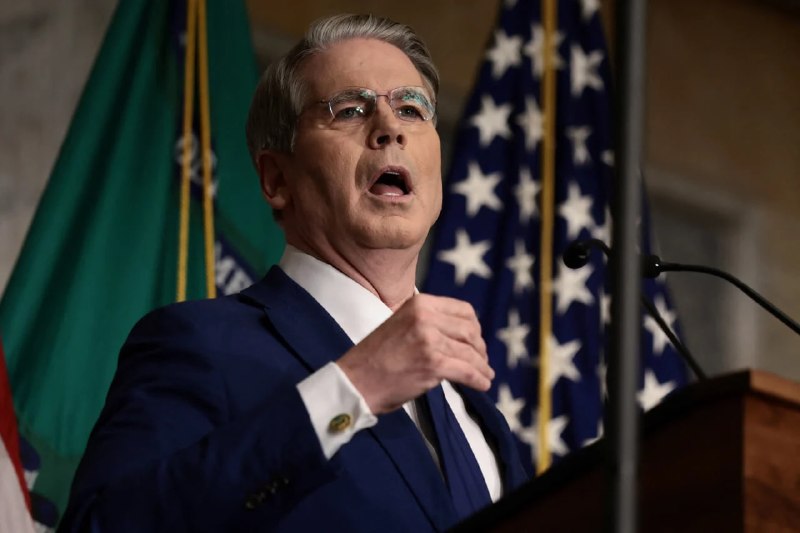
On 24 August 2026, US Treasury Secretary Scott Bessent announced a fresh tranche of sanctions against Iran and its "enablers," framing the escalation as the start of "Operation Economic Outcast" and pledging nothing less than the "asphyxiation" of the Tehran government. The announcement ricocheted across wire channels and Telegram within minutes, with outlets from Middle East Eye to OANN relaying the same two-line headline: a new sanctions drive, and a rhetorical maximalism designed to land on cable news before bedtime in Washington.
Strip the slogan away and the question is older than the branding. Whether the United States can starve a regional adversary into policy change depends less on the volume of designations than on the architecture that backs them: dollar settlement, correspondent banking, oil buyers willing to absorb secondary-sanction risk, and the patience of an American electorate that has watched four decades of "maximum pressure" come and go.
What Bessent actually announced
The Treasury Secretary's statement, as carried by Middle East Eye and amplified through channels including OANN, intelslava, and Middle East Spectator, places the operation under an explicit goal of "asphyxiation of this regime." Bessent invoked the language of "unprecedented" economic onslaught and "crippling" measures aimed at Tehran and its external supporters. The Telegram relays do not enumerate which sectors, banks, or shipping networks will be designated first; the framing is unmistakable, even if the operational details remain opaque to anyone outside the small circle that drafted them.
What the public record does show is that the announcement was packaged, not merely reported. "Operation Economic Outcast" is a brand, complete with a thesis sentence and a press cycle. The Treasury's communication apparatus has spent two decades learning that sanctions move markets when they are legible to compliance officers in Singapore, Geneva, and Dubai. A slogan that travels is a sanction that compounds.
The four-decade shadow
Sanctions against Iran are now old enough to vote. The architecture has cycled through primary embargoes, secondary sanctions on third-country buyers, oil export waivers issued and revoked on White House whim, and the 2015 nuclear deal's partial relief. Each iteration produced its own migration patterns: Iranian crude rerouted through Malaysian refineries, payments routed through banks in the UAE and Turkey, gold and petrochemical trade funnelled through front companies the Treasury later named in settlements with BNP Paribas and others.
The honest question is what "unprecedented" means in 2026. Roughly speaking, it means tighter secondary enforcement on Chinese refineries and a more aggressive posture toward Gulf-based intermediaries. It probably means more OFAC settlements with European banks tempted by Tehran's trade finance margins. The geopolitical ceiling, however, has not changed: Beijing still imports Iranian crude, and Beijing does not choreograph its energy policy around a Treasury press release.
The dollar's binding constraint, and its limit
American sanctions work when the alternative to compliance is exclusion from the dollar system. That system still routes the majority of cross-border trade, which is why a designation on a small Iranian bank can move the price of risk in Hormuz-adjacent ports within hours. But the penalty is double-edged: every extraterritorial reach of OFAC is also a small advertisement for the very systems being built to circumvent it. The mBridge project, the expansion of yuan-clearing in the Gulf, and the steady accumulation of non-dollar trade among BRICS+ members are not responses to a single Trump-administration announcement. They are decades-long responses to the pattern.
Operation Economic Outcast, in that sense, enters a market that has already priced in a great deal of American pressure. Tehran's export revenues are constrained; they are also more diversified than they were in 2012. The Iranian rial is battered; it is also trading in deeper, if quieter, regional markets. The Iranian state is brittle in places and resilient in others, and which of those qualities the new sanctions amplify depends on variables the Treasury press office cannot set by fiat.
The stakes, plainly stated
If the operation succeeds on its own terms, it will be because a Trump-administration sanctions cycle coincides with a structural weakness inside Iran that no outside power can manufacture, only expose. If it underperforms, it will be because the cost of compliance for third-country buyers has fallen since the last maximum-pressure iteration, and because the political appetite in Washington for an open-ended economic war is shorter than the political appetite in Tehran for enduring one.
What neither side can control is the calendar. Iran has learned to wait out sanctions regimes. The question for Bessent is whether the United States has learned to wait with them.
This article draws exclusively from publicly available reporting on the 24 August 2026 announcement; the underlying specifics of which entities are designated under "Operation Economic Outcast" were not specified in the cited wire items, and Monexus has not independently established them at the time of publication.
Wire provenance
This editorial synthesis draws on the following public wire/social posts:
- https://middleeasteye.pulse.ly/czao4ae5go
- https://x.com/MiddleEastEye/status/2092016479923290269
- https://t.me/OANNTV/17117
- https://t.me/intelslava/93133
- https://t.me/rnintel/65724
- https://t.me/Middle_East_Spectator/36037