Tehran sets Hormuz terms as Trump claims the waterway is 'in control'
Tehran has begun drafting conditions for reopening the Strait of Hormuz while the US president insists the waterway is already under American control. The standoff is now touching Chinese banks, and oil markets are watching the corridor more than the headlines.
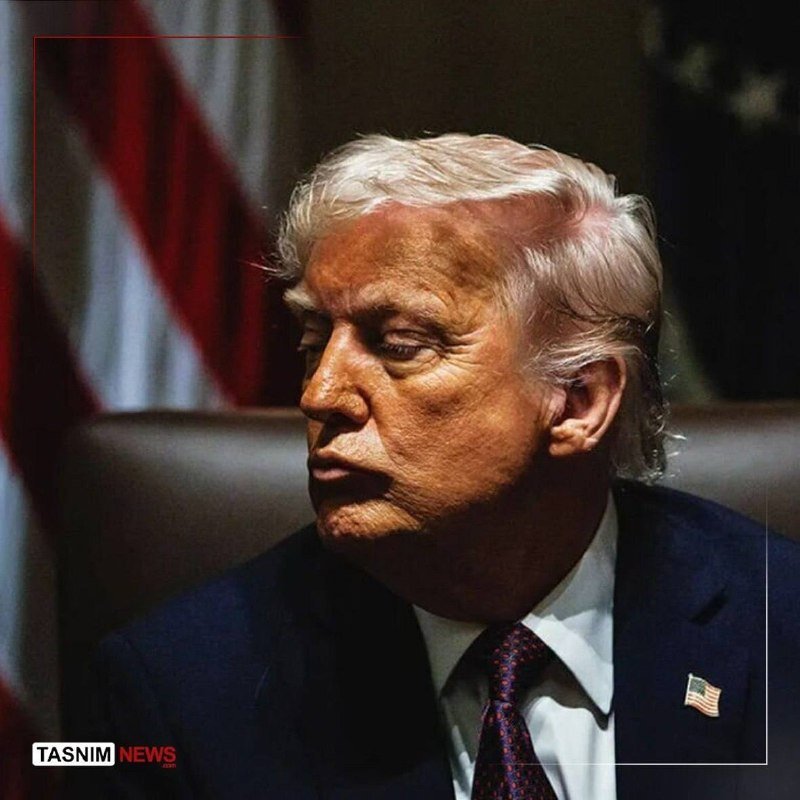
At 20:33 UTC on 27 August 2026, Middle East Eye's live blog reported that Iran's security chief had told state media that Tehran was preparing a list of conditions for reopening the Strait of Hormuz, the narrow chokepoint through which roughly a fifth of the world's traded crude oil passes. The statement came less than two hours after Donald Trump, speaking in the Oval Office, told reporters the United States was "in control" of the strait, and only minutes after the same US president hinted, via social media, that Washington could sanction Chinese banks that continue to do business with Iran.
The sequencing tells the story. Tehran is signalling that the corridor is not, in fact, in American hands, and is attaching a price tag to it: conditions that, once published, will turn the Hormuz question from a military one into a bargaining one. Washington, for its part, is reaching beyond Iran's borders, threatening the financial plumbing that connects Iran to its largest remaining oil customer. The escalation is no longer about who fires first at a tanker. It is about who can choke, and who can be choked, in the architecture of dollar-denominated trade.
What Tehran actually said
Iran's security chief, named in Middle East Eye's live blog reporting drawn from Iranian state media, said the conditions list was being drawn up. The framing matters. He did not announce a closure; he announced terms for reopening, the diplomatic equivalent of a deposit on a transaction that has not yet closed.
The available source items do not specify the contents of those conditions, nor a publication date. Iranian state-aligned channels have, throughout this period, mixed signalling, choreography and operations on the water in a way that makes any single statement hard to read in isolation. Earlier the same day, a channel affiliated with the Islamic Republic's military establishment posted a morale video captioned "Iran has different sides: this is one of them." Monexus reads that as part of the same signalling effort, soft-power material aimed at an Iranian domestic audience and at a regional one, rather than as confirmation of any operational posture change. The point is that Iran's posture now reads as preparation for negotiation rather than escalation: conditions, not ultimatums.
The American claim of control
In the Oval Office, Donald Trump told reporters he had "no interest" in talking to Iran at present and repeated an assertion that the United States had effective control of the strait. The channel OSINTdefender carried his remarks via Telegram at 18:56 UTC, summarising the same exchange from which Middle East Eye's live blog drew. The claim is, on the evidence, declarative rather than descriptive. The sources do not specify a deployed American naval force, an interdiction operation, or a flagged boarding, none of which has been named in any of the source items.
Monexus analysis: the line "in control" serves two audiences at once. Domestically, it reassures markets that the energy corridor is open, which on the day it was made it was, in the narrow sense that commercial traffic was not being publicly reported as halted. Diplomatically, it lays groundwork for the next move, which on the same day's evidence is not another strike but a financial one aimed at any bank, anywhere, that continues to settle Iranian oil.
Why Chinese banks are now in the frame
At roughly the same hour, Trump posted on his Truth Social account that the United States could sanction Chinese financial institutions over their Iran links, per Middle East Eye's live update at 19:00 UTC. The threat is the second front of the same operation. Iran's biggest remaining oil customer is China, and the bulk of Iranian crude that still moves moves through independent refiners, so-called teapot plants, on China's east coast, paid for through a mix of yuan, offshore yuan accounts and a thinning lattice of correspondent banking. Cut that lattice, and Iranian barrels lose their buyer even if the strait stays open.
Monexus assessment: this is not a side issue. It is the principal escalation of the week. The Chinese side, where it has spoken publicly on extraterritorial sanctions this year, has framed them as violations of sovereignty and as incompatible with normal commercial relations; Beijing's read is that the long-arm instruments Washington has used on Russia, then on Iran, and now on Chinese banks over Russia and Iran, are designed to keep the dollar system intact by deterring third-country processing. The Chinese framing deserves to be set against the American one at full strength. The American framing is that compliant enforcement, not unilateral coercion, keeps money flows clean. Both readings are coherent. The dispute is over who gets to decide.
Hormuz, the dollar and the corridor
Reading these three data points in sequence, conditions for reopening, an American claim of control that is not backed, in the available sourcing, by a named operation, and a warning to Chinese banks, the most natural reading is that the United States is trying to substitute financial pressure for naval presence, and that Iran is trying to substitute bargaining for capitulation. The Strait of Hormuz has been closed, partially blocked, or threatened often enough that insurance markets price it as a recurring event; what is unusual about the present episode is the explicit extension of secondary-sanctions logic to Chinese financial institutions, which the available source items do not specify having been done before at this scope.
The structural frame, in plain prose, is this: the contest over the strait is no longer just a contest over a strait. It is part of a wider attempt to decide which currencies, which banks, and which ship-to-ship transfer networks get to move Iranian and Russian energy into the global market at all. The American instrument is the dollar-clearing system. The Iranian instrument is the geography. The Chinese instrument, where Beijing chooses to use it, is its own payments infrastructure. Each side is now reaching across the others' terrain.
What to watch next
Three concrete signals will tell us which way this goes. First, the publication, or non-publication, of Iran's formal list of conditions for reopening; a list means Tehran is preparing a deal, the absence of one means the signalling was aimed at audience management. Second, any Treasury Department designation of named Chinese banks under existing Iran-related sanctions authorities, which would convert the Truth Social warning from threat to action and force a Chinese response, since Beijing has previously framed such designations as affecting normal economic and trade cooperation. Third, traffic through the strait, which the available source items do not quantify; sustained, publicly reported commercial transit at recent levels would undercut the Iranian bargaining position, while a verifiable downturn would undercut the American claim of control.
The immediate stakes are concrete. Oil markets watch the corridor more closely than they watch the press conferences. Asian buyers with thin refining margins watch for the next Treasury notice. Iranian crude-watchers watch for whether teapot Chinese buyers accelerate purchases before any new designation lands. The longer stakes are about precedent: how far secondary sanctions can reach into a third country's banking system before the targeted side responds with its own financial plumbing. The strait will be a story in either case. The dollar question underneath it will be the one that outlasts the headlines.
Desk note: Monexus framed this as a corridor-and-clearing story rather than a strike-and-retaliation story, because the available source items point to financial signalling on both sides rather than to a new kinetic event on 27 August 2026. We held back on naming the size or contents of Iran's conditions list until those are published, and on identifying any named Chinese bank pending official US action.
Wire provenance
This editorial synthesis draws on the following public wire/social posts:
- https://www.middleeasteye.net/live-blog/live-blog-update/iran-preparing-list-conditions-reopen-hormuz-says-security-chief?topic=War%2520on%2520Iran&nid=442386&fid=557773
- https://x.com/MiddleEastEye/status/2093074355517297136
- https://www.middleeasteye.net/live-blog/live-blog-update/trump-hints?topic=War%2520on%2520Iran&nid=442386&fid=557773
- https://x.com/MiddleEastEye/status/2093051008490348575
- https://www.middleeasteye.net/live-blog/live-blog-update/trump-us-control-strait-hormuz?topic=War%2520on%2520Iran&nid=442386&fid=557773
- https://x.com/MiddleEastEye/status/2093050817003606421
- https://t.me/IRIran_Military/9860
- https://t.me/osintlive/567440
- https://www.middleeasteye.net/live-blog/live-blog-update/iran-preparing-list-conditions-reopen-hormuz-says-security-chief?topic=War%2520on%2520Iran&nid=442386&fid=557773
- https://x.com/MiddleEastEye/status/2093074355517297136
- https://www.middleeasteye.net/live-blog/live-blog-update/trump-hints?topic=War%2520on%2520Iran&nid=442386&fid=557773
- https://x.com/MiddleEastEye/status/2093051008490348575
- https://www.middleeasteye.net/live-blog/live-blog-update/trump-us-control-strait-hormuz?topic=War%2520on%2520Iran&nid=442386&fid=557773
- https://x.com/MiddleEastEye/status/2093050817003606421
- https://t.me/IRIran_Military/9860
- https://t.me/osintlive/567440