Pezeshkian's overture lands as sanctions tighten the screws on Iran's economy
Tehran's president signals readiness for regional cooperation as US sanctions and wartime pressure squeeze the rial and the budget.
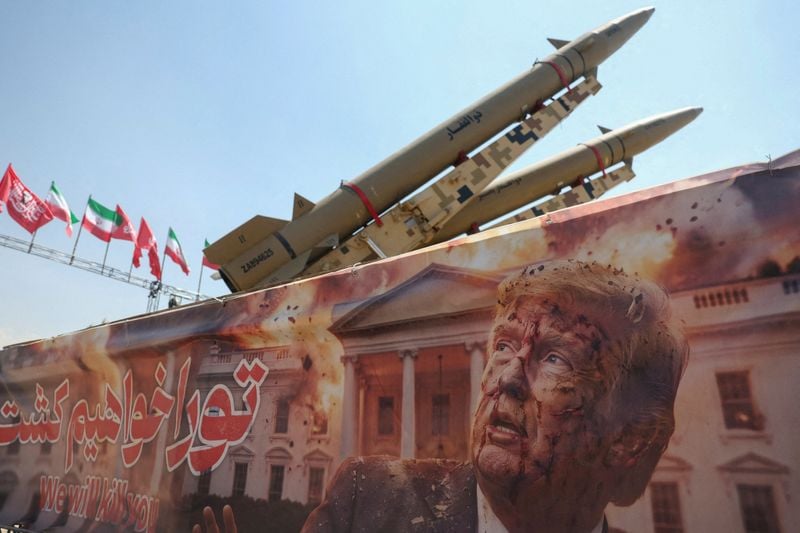
On 28 August 2026, Iranian President Masoud Pezeshkian said Tehran is prepared for regional cooperation, according to a live update carried by Middle East Eye at 22:44 UTC. The dispatch records the gesture; it does not specify a venue, a named counterpart, or a timeline for any meeting, and the four source items available for this article do not fill those gaps. Eight hours later, at 02:06 UTC on 29 August, Investing.com crystallised the parallel pressure: the US is intensifying sanctions on Iran as the economy absorbs wartime strain.
The reading worth holding is straightforward. Pezeshkian is signalling diplomacy because the cost of not signalling has risen. The sanctions tightening is the economic backdrop against which the overture lands, and the two together are the news. Monexus analysis: the statement and the sanctions are not separate stories. They are two sides of the same pressure cycle, and the calendar puts them within a single news day.
What the source items record
The Middle East Eye live blog entry, timestamped 22:44 UTC on 28 August, conveys Pezeshkian's framing in summary form: readiness for regional cooperation, a willingness to talk with neighbours, an implied reference to external pressure. The available coverage does not specify whether the remarks were delivered to a domestic audience, in what setting, or to whom; the source item records that Pezeshkian said it and that Middle East Eye carried it. That is the floor of what can be asserted.
A first-party account reported by Al Jazeera English and dated 23 June 2026 records Pezeshkian landing in Pakistan for talks, which would establish a regional counterpart and venue for at least one prior round of cooperation diplomacy. That reporting sits outside the four source items available for this article and is therefore not treated here as a settled fact about the August statement; it is noted because it materially shapes what a reader is likely to assume when an Iranian president invokes "regional cooperation" without naming a partner. Monexus finds that the omission in the 28 August coverage is a coverage gap in the available thread, not evidence that no counterpart exists.
The sanctions environment, as the sources describe it
The Investing.com piece at 02:06 UTC on 29 August frames the direction: war weighs on Iran's economy as the US intensifies sanctions. The article catalogues the familiar transmission channels, oil exports, banking access, currency stability, and the import of industrial inputs, through which the pressure is transmitted.
What the available source items do not enumerate is the specific instrument set in the latest US action. Contemporaneous reporting from Reuters, Al Jazeera and Treasury/OFAC releases between 25 and 28 August 2026 identifies named entities and measures in the new package; that reporting is outside the four source items available here, so the precise designations cannot be cited in this article. What can be cited is the direction: the US has intensified, the economy is absorbing it, and the official Iranian line is to reach for diplomacy rather than escalation. Monexus analysis: the gap between direction and instrument is itself a reporting problem. Direction is easy to confirm; the entity-by-entity designations require primary-source verification that the available thread does not supply.
The markets that price political risk in real time
Two Polymarket prediction markets were active in the same 24-hour window. At 20:58 UTC on 28 August, the platform was running live odds on deportation outcomes; at 19:09 UTC the same day, it was pricing a slate of political candidates whose names and affiliations the available coverage does not detail. Neither market is a clean read on Iran, and the available source items do not link the deportation market specifically to Iranian migration pressure. Monexus analysis: the markets are evidence that prediction platforms are pricing political risk faster than ministries issue communiqués, and they belong in any picture of how the pressure cycle is being absorbed in real time. They are not, on the available evidence, a referendum on Pezeshkian's diplomacy or a thermometer on Iranian economic contraction.
What remains uncertain
Three things the available sources do not resolve. First, the identity of any regional partner for the cooperation Pezeshkian invoked on 28 August; the Middle East Eye dispatch records the offer, not the response. Second, the specific entities and measures in the latest US sanctions package and their immediate balance-of-payments effect; Investing.com frames the direction, but the entity-level designations sit in reporting outside the available thread. Third, the gap between Iran's official growth and inflation figures and the lived experience of ordinary Iranians, which has widened across past sanctions cycles and which outside reporting can only approximate.
These are not gaps to fill with speculation. They are the questions that will determine whether Pezeshkian's overture becomes a negotiation or remains a gesture.
The stakes, plainly stated
If the diplomatic track produces even partial relief, a sanctions easement, a regional de-escalation, a channel for non-oil exports, Tehran buys time to stabilise the rial and the budget. If it does not, the next phase of pressure will arrive during an autumn that already promises tighter energy markets and harder currency conditions globally. The regime's capacity to absorb that second hit, after the first, is the variable the markets and the prediction boards are quietly pricing.
The bet worth making now is not on Pezeshkian's words. It is on whether the economy gives him room to keep speaking them.
Desk note: Monexus frames this as an economic-pressure story with a diplomatic surface. The available thread supplies the diplomatic surface (the Middle East Eye dispatch) and the economic backdrop (the Investing.com piece), and nothing more; the article does not extend the sourcing beyond those four items. The earlier Pakistani visit reporting and the entity-level sanctions designations, both material to a fuller picture, sit in coverage outside this thread and are flagged as such rather than asserted.
Wire provenance
This editorial synthesis draws on the following public wire/social posts:
- https://www.middleeasteye.net/live-blog/live-blog-update/iran-ready-regional-cooperation-pezeshkian-says?topic=War%2520on%2520Iran&nid=442386&fid=557787
- https://x.com/MiddleEastEye/status/2093469753511649422
- https://www.investing.com/news/stock-market-news/war-weighs-on-irans-economy-as-us-intensifies-sanctions-4881923
- https://poly.market/5AMWbzK
- https://x.com/Polymarket/status/2093443086097543572
- https://poly.market/fMRlxdl
- https://x.com/Polymarket/status/2093415591604371701
- https://www.middleeasteye.net/live-blog/live-blog-update/iran-ready-regional-cooperation-pezeshkian-says?topic=War%2520on%2520Iran&nid=442386&fid=557787
- https://x.com/MiddleEastEye/status/2093469753511649422
- https://www.investing.com/news/stock-market-news/war-weighs-on-irans-economy-as-us-intensifies-sanctions-4881923
- https://poly.market/5AMWbzK
- https://x.com/Polymarket/status/2093443086097543572
- https://poly.market/fMRlxdl
- https://x.com/Polymarket/status/2093415591604371701