Trump loses hush-money venue bid; DOJ pursues USPS mail-ballot appeal in separate track
On 29 August 2026 a federal judge rejected Trump's bid to move his New York hush-money conviction into federal court; separately, the Department of Justice moved to lift a court order blocking new USPS mail-in ballot rules as states prepare to dispatch midterm ballots.
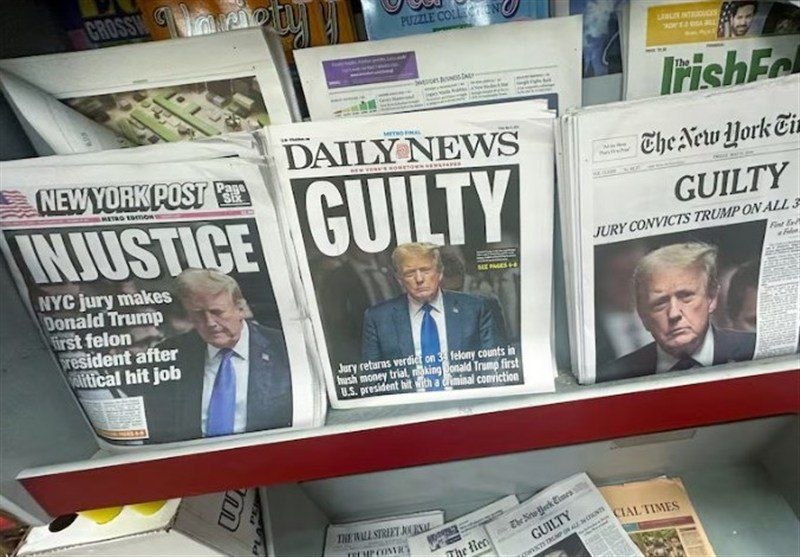
A federal judge in New York rejected on 29 August 2026 a bid by Donald Trump to relocate his already-decided hush-money criminal conviction from state to federal court, closing one procedural avenue in the president's effort to overturn the verdict. Reuters reported the disposition at 00:00 UTC on its verified X account; Al Jazeera English's breaking-news feed carried the same ruling at 00:19 UTC under the headline "US judge rejects Trump's bid to switch hush-money case to federal court."
The venue ruling lands on the same morning the Justice Department asked an appellate court to overturn a separate order affecting new United States Postal Service regulations on mail-in ballots, with state ballot-mailing windows opening across the country within days. The two filings moved through the federal courts on 29 August 2026 within roughly ninety minutes of each other in the wire cycle, and together they describe an administration litigating on two procedural tracks simultaneously: defending an existing criminal conviction by contesting its venue, and shaping the November midterm by contesting how mailed ballots are handled.
What the judge actually decided
Trump's lawyers had argued the New York case belonged in federal court because, in their view, the conduct at issue touched federal-question jurisdiction and presidential-immunity doctrine the US Supreme Court has recognised for official acts. According to Al Jazeera English, the president cited immunity in seeking the transfer. Reuters framed the outcome as Trump having "lost" the bid.
Both outlets stress that the underlying case had already been tried and convicted in state court; the venue motion was a post-verdict manoeuvre intended to open federal review of the conviction. The cited source items do not specify the judge's name, the precise statutory basis for the denial, or whether the order itself is appealable on an expedited basis. Reuters and Al Jazeera English each reported the ruling without naming the judge or quoting from the order; the available source material does not establish those details.
The ruling narrows Trump's options. Without federal venue, his remaining paths to overturning the conviction run through New York appellate channels and, ultimately, the US Supreme Court. The cited source items do not specify whether either path has been initiated.
The mail-ballot rule and the appeal window
The Justice Department moved in parallel to lift a court order that had blocked new USPS regulations governing mail-in ballots. The Epoch Times reported via Telegram at 01:33 UTC that the administration was taking "a judge's two-week freeze on new USPS regulations to a higher court, days before some states begin sending midterm ballots."
The procedural posture here is layered and the cited source material does not specify the full sequence of prior rulings in this dispute. Monexus analysis: read against independent reporting that the US Supreme Court on 24 August 2026 lifted an earlier injunction blocking the administration's mail-in ballot curbs, the most plausible reading of the 29 August appeal is that DOJ is now contesting a subsequent ruling issued after the Supreme Court action, not the original freeze itself. The Telegram summary does not detail which lower-court ruling is being appealed, which specific USPS provisions are at issue, or whether the Postal Service is a party to the appellate filings. Until the underlying docket is reviewed, the cited material supports only that an appeal was filed on 29 August 2026 and that it concerns a court order touching USPS mail-ballot rules.
State ballot-mailing calendars are set months in advance. Whether the appellate court reinstates the USPS rule changes, extends the freeze, or sends the matter to the Supreme Court will determine, for millions of voters, which version of mail-handling procedures governs their returned ballot.
Counter-frame: rulemaking versus election interference
Two readings of the USPS record are available in public reporting, and the cited sources do not adjudicate between them. The first treats the Postal Service as an agency whose rule changes are presumptively valid until a court says otherwise, with the DOJ appeal framed as a routine challenge to an interim order. The second treats any late-cycle change to ballot-handling rules as inherently suspect because voters, postal workers, and state election officials have already arranged their conduct around the rule set that existed when ballots were designed.
The Epoch Times Telegram item characterises the matter as a judicial freeze on USPS regulations, without describing the substance of those regulations. Without that detail, the cited material does not let us choose between the two readings; it only establishes that the litigation is active and on an appellate track as of 29 August 2026.
Stakes: a midterm cycle measured in court orders
The immediate stakes are procedural but cumulative. If the hush-money venue ruling stands and is not appealable on a fast timetable, Trump's path to overturning the New York conviction narrows to state appellate review and any subsequent US Supreme Court action. If the DOJ succeeds in lifting the USPS order on appeal, the contested rule changes take effect during the live ballot-mailing window, which is the period in which late-cycle rule changes are most consequential for voters and most legally fragile for the agency issuing them. If the freeze is upheld, the pre-existing rule set governs; either side may then seek emergency relief at the Supreme Court.
Three near-term dates will matter. First, the appellate court's response to the DOJ's stay request, which under expedited election-litigation practice can arrive within days. Second, the start of ballot mailing in the first wave of states, which the Epoch Times Telegram item places "days" from 29 August 2026. Third, any petition for certiorari or emergency injunction filed at the Supreme Court, where the justices have historically been willing to intervene in election-administration disputes on compressed timetables.
What remains uncertain is whether the hush-money venue ruling is itself appealable and on what timetable, which specific USPS provisions the contested order covers, and whether the cited source material has captured the full procedural history or only the most recent filings. The cited reporting establishes the two rulings and their timing; it does not yet establish the substantive content of either dispute.
Analysis: two courts, two clocks
Monexus assessment: the simultaneity of the two filings is the story. A president simultaneously defending an existing criminal verdict by trying to relocate it, and an executive branch litigating the rules of an in-progress election, is the kind of dual-track posture that turns routine administrative disputes into constitutional ones. The hush-money ruling closes one legal lane; the USPS appeal keeps another open. Read together, they describe an administration using litigation as a continuation of politics, while the cited outlets report the moves one filing at a time without connecting the structural picture. The cited material supports the procedural facts and the timing; it does not adjudicate motive.
Desk note: this article leans on three wires operating at different speeds. Reuters and Al Jazeera English established the venue ruling within minutes of each other; The Epoch Times Telegram carried the DOJ appeal roughly ninety minutes later, with limited procedural detail. Where the underlying court orders and dockets are referenced in the cited items, we have reported them; where the source items do not specify a procedural fact, we have said so rather than reconstruct it from memory. The contradiction between the Telegram summary's "two-week freeze" framing and prior public reporting on the Supreme Court's 24 August 2026 action on the same dispute is noted in the analysis section above.
Wire provenance
This editorial synthesis draws on the following public wire/social posts:
- https://reut.rs/3UmruVv
- https://www.aljazeera.com/news/2026/8/29/us-judge-rejects-trumps-bid-to-switch-hush-money-case-to-federal-court?traffic_source=rss
- https://t.me/epochtimes/138704
- https://theepochtim.es/st8zc8
- https://t.me/epochtimes/138700
- https://theepochtim.es/0tkha2
- https://x.com/Reuters/status/2093488884046811580
- https://reut.rs/3UmruVv
- https://www.aljazeera.com/news/2026/8/29/us-judge-rejects-trumps-bid-to-switch-hush-money-case-to-federal-court?traffic_source=rss
- https://t.me/epochtimes/138704
- https://theepochtim.es/st8zc8
- https://t.me/epochtimes/138700
- https://theepochtim.es/0tkha2
- https://x.com/Reuters/status/2093488884046811580