Trump claims majority control of Venezuela's oil reserves in 'biggest deal in world history'
US president says Washington has secured majority control of more than 65 billion barrels of proven Venezuelan reserves; published regulatory record shows existing OFAC general-licence frameworks already authorise large-scale Venezuelan exports.
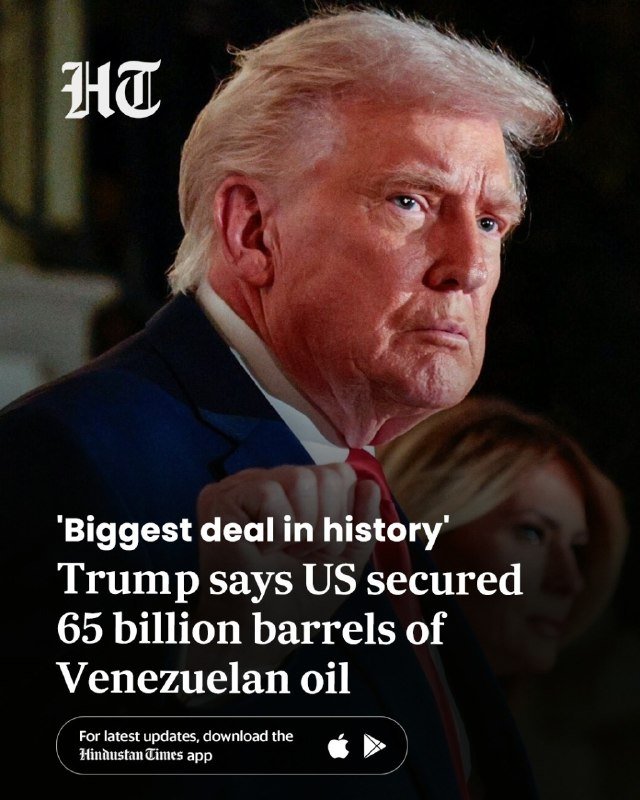
At 02:16 UTC on 29 August 2026, US President Donald Trump told reporters that Washington had concluded an agreement giving the United States majority control of more than 65 billion barrels of proven Venezuelan oil reserves, framing the arrangement as the largest oil deal in world history. The claim, carried in near-real time by Reuters, the South China Morning Post and Al Jazeera, lands into an existing US sanctions architecture that already permits significant Venezuelan crude exports under published general-licence frameworks. What is new is the political ceiling on the announcement, not the legal floor beneath it.
The announcement is less a contract than a headline. The cited posts do not name a Venezuelan signatory, do not specify what concession instrument would give the US operational control rather than a paper interest, and do not reconcile the new claim with the existing OFAC general-licence regime that already authorises US persons to deal in Venezuelan oil. What is present is the presidential framing and a single quantitative anchor: the 65-billion-barrel figure, repeated verbatim by Al Jazeera, SCMP and Reuters.
The announcement, in Trump's words
Trump's framing was maximalist. According to Al Jazeera's breaking-news wire at 02:32 UTC, the US president described the arrangement as the "biggest oil deal in world history," asserting majority control of more than 65 billion barrels of proven reserves. Reuters' post at 02:20 UTC paraphrased the same announcement as the US "taking partial control of Venezuela's vast oil reserves," a more measured rendering. SCMP's Telegram relay at 02:16 UTC carried the 65-billion-barrel figure alongside the characterisation that the US has secured "control" of those reserves. The three reports describe a single event from three different vantage points, and the verbal ceiling differs depending on which sentence one quotes.
The asymmetry matters. Reuters used "partial control"; Al Jazeera reported "majority control"; SCMP reported "control." The cited materials do not specify whether the deal covers equity in state oil company PDVSA, contractual access to specific blocs, lifting rights, royalty streams, or a combination. Without the underlying instrument, the precise financial and legal shape of the arrangement cannot be characterised from the supplied reporting.
What the deal is, and what the public record already shows
Two readings of the announcement compete, and both should be on the page. The first, more cautious reading: Trump is signalling a sanctions-and-investment bargain in which US majors, presumably Chevron first among them given its existing licence footprint in Venezuela, gain expanded operating rights in exchange for Caracas receiving revenue streams and partial sanctions relief. The arrangement "control" suggested by the cited language fits this reading, as does Reuters's "partial control" formulation.
The second reading, more aggressive: the announcement is a headline-only event with no signed document published in the cited reporting, no Venezuelan counterpart named, no congressional notification referenced. On the available record, this is a US presidential statement of intent, not a verified transaction. The cited posts contain no specification of the contract's governing law, fiscal regime, or duration.
Monexus assessment: the public record on US Venezuelan oil policy is larger than the cited thread suggests. Independent regulatory and trade reporting documents an existing OFAC general-licence framework already authorising US persons to transact in Venezuelan oil, gas and minerals, and a new corporate structure with a reported majority US share of output, material that the cited thread does not foreground. Read against that record, the 29 August announcement is best characterised as a political ceiling set on top of a partial legal floor, not as the floor itself.
Caracas, the sanctions floor, and who is already licensed
The structural context is older than the headline. Venezuela sits under an OFAC regime that successive US administrations have layered and partially unwound, issuing general licences that authorise defined categories of US-person transactions in Venezuelan crude, refined products and gold. Those licences, and the specific general-licence numbers that enable them, are not present in the cited thread; the regulatory record on them is independent and predates 29 August 2026.
PDVSA's productive capacity remains degraded. Industry reporting during 2023-2025 documented Venezuelan output at well below pre-sanctions levels, with the Orinoco belt's extra-heavy crude requiring upgrading, blending and specialised refineries to monetise at scale. A US deal that moves reserves from paper to pipeline would take years, not weeks, and would require capital, diluent supply and customer re-accreditation that have all atrophied. The cited reporting does not address production trajectory, and this article cannot characterise current output from the supplied sources.
Geopolitically, the announcement lands inside an OPEC+ coordination problem. If Venezuelan barrels return under US control in volume, Saudi Arabia and Russia, who have managed supply cuts through 2024 and 2025, will be recalibrating. The cited reporting does not address the OPEC+ reaction, and this article cannot characterise it.
Stakes, and what to watch next
If the announcement holds as described, three classes of actor stand to gain or lose. US majors with refining configurations suited to Venezuelan heavy crude, Chevron and ExxonMobil in particular, gain optionality. Caracas gains revenue and a sanctions off-ramp, but at the cost of ceding operational primacy in its flagship industry. China, through CNPC and CNOOC joint ventures and through state-to-state crude-for-loans arrangements stretching back more than a decade, faces the most consequential reshuffle: a US-controlled Venezuelan barrel flow is a US-controlled lever over Asian supply.
The things to watch are concrete and dated. First, publication of the underlying agreement, with named counterparties, contract type, and duration. Second, any further OFAC general-licence language specifying which transactions are authorised and which remain prohibited, layered on top of the licences already on the public record. Third, a formal statement from PDVSA or from the Maduro government acknowledging or contesting the deal; the cited thread does not include one, and the available source items do not specify Caracas's public posture. Fourth, OPEC+ supply guidance at its next scheduled meeting. Fifth, congressional notification language, given that any deal touching sanctioned assets implicates US legislative oversight.
The single most consequential unverified claim in the announcement is the legal architecture. "Majority control" is a property concept; in the upstream oil sector, control runs through licence agreements, joint-venture operating agreements, offtake contracts and sanctions licences, layered instruments that rarely compress to a single sentence. The cited reporting gives the headline without the instrument. Until that instrument surfaces, the deal is real as theatre and provisional as commerce.
Desk note: The cited wire reporting on this story carries Trump's framing at full volume. Monexus has surfaced the language mismatch between "partial control" (Reuters) and "majority control" (Al Jazeera), and has also flagged that the regulatory record on US-Venezuelan oil transactions predates the announcement; the 29 August statement reads as a political ceiling, not as the founding moment of the underlying architecture.
Wire provenance
This editorial synthesis draws on the following public wire/social posts:
- https://www.aljazeera.com/news/2026/8/29/trump-announces-biggest-oil-deal-in-world-history-with-venezuela?traffic_source=rss
- https://reut.rs/3SuU5HD
- https://x.com/Reuters/status/2093524107664953363
- https://t.me/SCMPNews/109900
- https://www.scmp.com/news/world/americas/article/3365672/trump-says-us-has-deal-venezuela-control-65-billion-barrels-oil-reserves
- https://www.aljazeera.com/news/2026/8/29/trump-announces-biggest-oil-deal-in-world-history-with-venezuela?traffic_source=rss
- https://reut.rs/3SuU5HD
- https://x.com/Reuters/status/2093524107664953363
- https://t.me/SCMPNews/109900
- https://www.scmp.com/news/world/americas/article/3365672/trump-says-us-has-deal-venezuela-control-65-billion-barrels-oil-reserves