Four items, one Saturday: what the cycle actually told us
Two clips, a sanctions wire, and a rescue that barely registered. The cycle had four items; the page treats them as four.
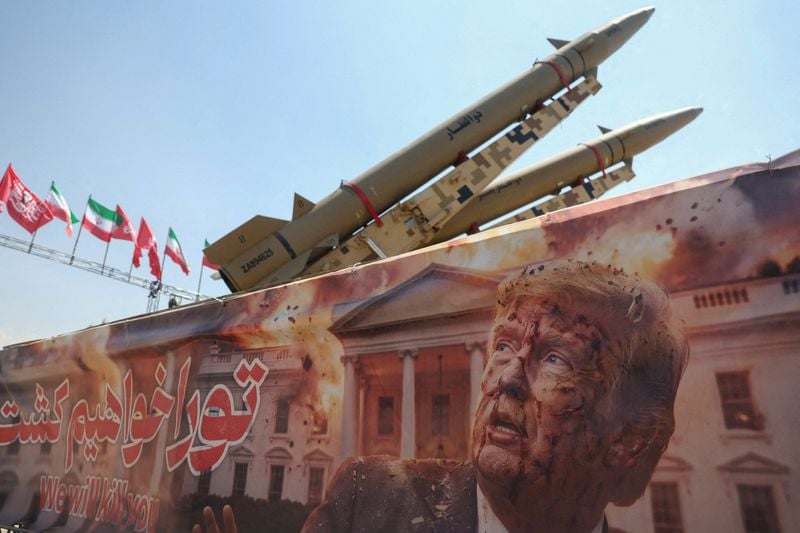
On 30 August 2026 at 07:39 UTC, a video posted to X by the account @SprinterPress carried the caption "The Iran-US war" and nothing else. By 07:12 UTC the same account had already uploaded a separate clip, "US democracy every four years," tagged to the same hour of the same morning [1][2]. Less than a day earlier, on 29 August at 02:06 UTC, Investing.com filed a wire piece under the headline "War weighs on Iran's economy as US intensifies sanctions" [3]. And on the same Saturday, CGTN ran a report headlined "Rescuers race against time for survivors, cause of mudslide identified," covering a landslide whose location, identified cause, and casualty figures the cited article situates within CGTN's broader Xizang coverage of the Gyirong Port border crossing with Nepal [4].
Four pieces of public-source material from a single news cycle. Two of them about the prospect of an American war with Iran. One about the economic strangulation designed to make that war either succeed without a shot or fail without a shot. And one about a mudslide, dutifully reported, that the same wire ecosystem barely paused to read.
Monexus assessment: the ordering is the story.
The clip is the claim
@SprinterPress is not a wire. It is a high-frequency X account that posts short captioned videos into the timeline of the war-watching audience. To treat its 07:39 UTC post as a primary event report would be reckless; to ignore it is naive. The more honest reading: when an account with that posting pattern labels a video "The Iran-US war" on a Saturday morning in late August, the label is an editorial claim about the temperature of the discussion, not a bulletin about a kinetic event. Investing.com's same-day filing confirms the underlying reality the label is reacting to: US sanctions on Iran are tightening into a wartime posture, with effects that include currency pressure, capital flight, and rising costs for ordinary Iranian households [3]. The clip tells you what the audience is being primed to believe. The Investing.com piece tells you what is actually moving.
What the sanctions are doing
Per the Investing.com piece of 29 August 2026 at 02:06 UTC, the United States has intensified sanctions against Iran in the context of the war footing, weighing on an economy already under strain [3]. The article frames the war as the macro variable and sanctions as the transmission belt. That framing is worth sitting with. Economic warfare is not background music for the war beat; it is a substantial share of the war itself. Squeezing a country's currency, freezing its access to hard-currency clearing, and pricing its oil out of compliant buyers are not soft options. They kill people, slowly and quietly, in hospital pharmacies and diesel queues, and they do it without producing the dramatic footage that moves the same cameras that covered the last twenty years of Middle Eastern conflict.
The mudslide the wire moved past
At the same moment the war beat is saturating the timeline, CGTN ran a piece on 30 August 2026 headlined "Rescuers race against time for survivors, cause of mudslide identified" [4]. The slide sits inside CGTN's ongoing Xizang coverage of the Gyirong Port border crossing with Nepal, and the available source items do not specify location, identified cause, or casualty figures for the 30 August rescue update itself. Monexus has not independently established those details for this specific filing and will not fill the gap from memory. What is notable is the editorial sequencing. A landslide rescue is a slow, technical, optically unglamorous story. It will not produce the shareable moment a kinetic strike produces. It will not move the same algorithmic incentives inside the same newsrooms. So it appears in the wire, dutifully, and scrolls off.
What gets covered and what gets paid for
This is not a complaint about any individual journalist. It is a description of how the incentives line up. Coverage routinely defers to the language of official spokespeople, especially when the official is a sitting government describing an adversary; dissenting analysis gets less column-inches; slow humanitarian stories, even when they are unfolding at the same hour as the war beat, get a headline and a half-life of an afternoon. The pattern is structural, not conspiratorial. The four items in this cycle are exactly the pattern: a sensationalised label on a video, an economic-warfare wire report, a democracy-themed clip, and a rescue operation that someone reported but no one promoted. The reader's task is to recognise the ordering and refuse it.
Stakes
If the trajectory in the four source items continues, the visible war and the invisible economic war will keep sharing the same calendar, and the slow stories will keep getting one news cycle each. Iranian households will keep absorbing the cost of a sanctions architecture that the wire treats as policy rather than as a form of pressure that produces measurable harm. The landslide rescue will keep being reported and forgotten. And the gap between what the cameras are pointed at and what is actually moving on the ground will keep widening, until one of the two finally forces the other off the page.
Monexus framing note: where the wires filed a sanctions story and a video label, this piece refuses to elevate the label to the same evidentiary tier as the wire, and refuses to drop the landslide to the same tier as the war. The cycle had four items; the page treats them as four.
Wire provenance
This editorial synthesis draws on the following public wire/social posts:
- https://x.com/SprinterPress/status/2093966912107544848
- https://x.com/SprinterPress/status/2093960100364828989
- https://www.investing.com/news/stock-market-news/war-weighs-on-irans-economy-as-us-intensifies-sanctions-4881923
- https://news.cgtn.com/news/2026-08-30/Rescuers-race-against-time-for-survivors-cause-of-mudslide-identified-1Q1EhFbDxxC/p.html
Follow the event.
These dated source records provide context. They do not retrospectively verify this archive article.
Separate what the nuclear watchdog reported from what it could not determine after the June 2025 strikes.
- https://x.com/SprinterPress/status/2093966912107544848
- https://x.com/SprinterPress/status/2093960100364828989
- https://www.investing.com/news/stock-market-news/war-weighs-on-irans-economy-as-us-intensifies-sanctions-4881923
- https://news.cgtn.com/news/2026-08-30/Rescuers-race-against-time-for-survivors-cause-of-mudslide-identified-1Q1EhFbDxxC/p.html