Bessent Floats Weekly Sanctions Cadence on Iran as Treasury Splits Its Bets Between Beijing and Tehran
Treasury Secretary Scott Bessent says new secondary sanctions on Iran will land on a roughly weekly rhythm, with banks first in line, while he separately presses G20 peers to reprice trade with China.
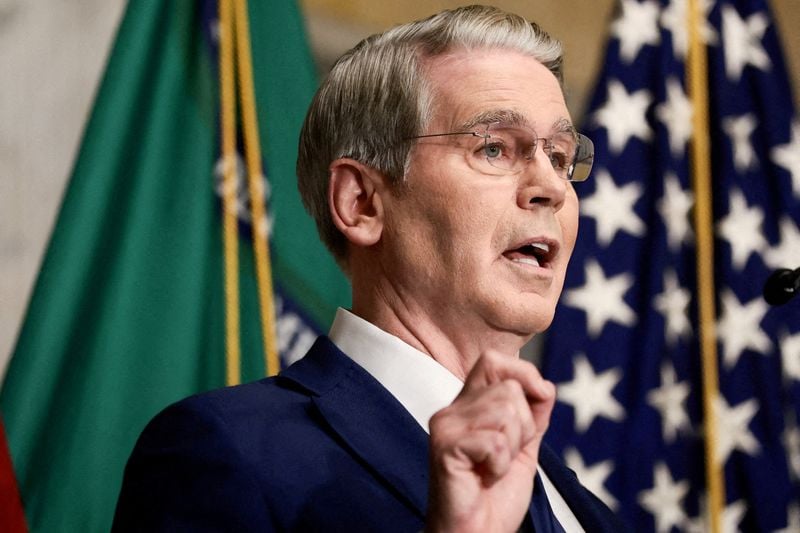
Scott Bessent spent the final weekend of August running two foreign-policy fronts at once. In separate interviews reported on 30 and 31 August 2026, the U.S. Treasury Secretary told Reuters that new secondary sanctions on Iran would now arrive on a roughly weekly cadence, with banks the first target, while at the same time signalling he would push G20 finance ministers to "re-examine terms of trade with China" and press Beijing to rebalance away from exports.
The twin announcements frame the question of the autumn. Washington is no longer choosing between maximum-pressure campaigns against Tehran and a managed economic confrontation with Beijing; it is running both, on overlapping timelines, and asking the same set of allies to absorb the cost of each.
A sanctions machine on a metronome
Bessent's Reuters interview, reported at 04:36 UTC on 31 August 2026, lays out the operational logic plainly: the Treasury Department is "likely to unveil weekly new secondary sanctions aimed at increasing economic pressure on Iran, with an initial focus on banks." Treasury confirmed the cadence again later the same morning to investing.com, framing it as a sustained, predictable tempo rather than a one-off escalation.
Secondary sanctions are the tool Washington uses against third-country firms that keep doing business with a targeted economy; they cut the offending bank, broker, or shipper off from the U.S. financial system regardless of where the underlying transaction sits. Used sparingly, they are a deterrent. Used weekly, they become a tempo that compliance officers, correspondent banks, and shipping desks must build into their standing workflow. A weekly beat also gives the administration a public drumbeat without forcing a single dramatic designation that would invite a sharp market reaction.
The targeting sequence matters. Banks first means the plumbing comes before the goods. Once a handful of regional banks in the Gulf, South Asia, or the Caucasus are cut off from dollar clearing, the rest of the network tightens voluntarily, because correspondent banks in Dubai or Istanbul do not want to be the next name on the list.
What the wires add, and what they leave out
Read across the 30–31 August cluster, the source items agree on the cadence and the banks-first sequencing. They diverge on two things worth flagging.
First, the U.S. military operation against Iran, which a Polymarket account pegged as entering its seventh month on 30 August 2026 at 17:14 UTC, has not been independently confirmed by Treasury or the Pentagon in the cited items. The Treasury's sanctions track and the military track are running in parallel; this publication cannot, on the cited material alone, characterise their relationship as coordinated or sequential. Monexus analysis: the sanctions tempo is best read as a financial complement to the kinetic campaign rather than a substitute for it, but the available items do not specify the degree of operational integration.
Second, the intelslava Telegram channel's 02:18 UTC summary characterises the new sanctions as targeting "entities cooperating with Iran." Treasury's own language to Reuters is narrower: banks, on a weekly schedule. The wider "entities cooperating" framing is plausible because secondary-sanctions designations routinely extend to shipping companies, insurers, and front-of-house trading firms; the available source items do not specify which non-bank categories will follow the initial bank designations.
The other front: G20, Beijing, and the export machine
At 03:05 UTC on 31 August, Reuters reported Bessent's separate G20 message: he would encourage member governments to "re-examine terms of trade with China to shrink global imbalances and press Beijing to rebalance its economy away from exports."
The argument is structural. China's growth model still runs a large current-account surplus, and the surplus is exported into global markets in the form of manufactured goods. Bessent's pitch to the G20 is that tariff policy alone is a blunt instrument, and that a coordinated push on the terms of trade, pricing, procurement rules, subsidy disciplines, can do more to compress the surplus than bilateral duties.
The Chinese counter-position, well rehearsed over the last decade, is that the surplus is a function of underconsumption at home and macro decisions in Washington, not unfair pricing abroad; that rebalancing is a domestic policy choice Beijing has already begun; and that G20-led repricing risks fragmenting trade into incompatible regulatory blocs. This publication treats that rebuttal as a serious policy argument with empirical grounding, not as talking points: China's stated rebalancing plan has run for several five-year periods with mixed results, and the question of whether external pressure accelerates or stalls that transition is genuinely open. Monexus assessment: the Bessent plan's success depends on whether enough G20 members are willing to absorb short-term adjustment costs in exchange for a longer-horizon compression of the surplus; on the cited material, that coalition math has not yet been done in public.
Why running both tracks together is the real story
The under-reported beat is the simultaneity. A weekly Iran-sanctions cadence, plus a G20 push to reprice trade with China, both landing in the same week, both aimed at allies that overlap.
The Gulf states are the obvious collision point. They sit inside both files: their banks process significant Chinese trade settlement, and their banks are the most likely first targets of the Iran secondary-sanctions list. Beijing is also a major buyer of Gulf crude and a financier of Gulf infrastructure. Asking the same set of counterparties to tighten on Tehran while opening up on Beijing is a coherent ask only if the U.S. side is willing to offer something in return, and on the cited material it has not specified what that something is.
The other collision is European. European banks are over-represented in the correspondent networks that handle both Iranian-adjacent and Chinese trade, and the EU has spent the last two years trying to insulate itself from extraterritorial U.S. sanctions through the blocking statute and a euro-denominated clearing workstream. A weekly Treasury beat makes that insulation harder to maintain.
What to watch into September
Three signals will clarify whether the weekly cadence is a posture or a programme.
The first designation list. Treasury typically pairs new sanctions announcements with a press release naming the specific entities; the size of the first weekly tranche, and whether it is one bank or five, will signal how aggressive the new tempo actually is.
The G20 communique. The finance ministers' meeting later in the autumn will produce language on China and on Iran. Whether Beijing's surplus gets a paragraph, and whether the Iran paragraph endorses or hedges the U.S. sanctions track, is the diplomatic read on whether the twin tracks have allies or only audiences.
The yuan and the euro. A sustained weekly designation cadence typically shows up first in cross-border settlement composition, as third-country banks quietly reroute Iranian-adjacent flows through non-dollar rails. Reuters and Bloomberg data on SWIFT alternatives and CIPS volumes into September will be the cleanest read on whether the policy is biting or being routed around.
The picture on the cited material is consistent enough to act on but thin enough to caveat. Bessent has set a tempo, named a first target, and tied it to a wider G20 economic agenda. The harder questions, about who pays for the overlap between the two tracks, are not yet answered in the public record.
Desk note: the wire line treated the Iran and China files as separate stories over the weekend; this article reads them as a single Treasury agenda and flags the Gulf and European banks as the obvious collision points the wires have not yet named.
Wire provenance
This editorial synthesis draws on the following public wire/social posts:
- https://reut.rs/4zNdYdM
- https://x.com/Reuters/status/2094283176986267750
- https://x.com/Reuters/status/2094260157056254309
- https://reut.rs/4wVuR32
- https://www.investing.com/news/economy-news/bessent-expects-new-us-secondary-sanctions-weekly-aiming-to-increase-pressure-on-iran-4882080
- https://www.investing.com/news/economy-news/bessent-pushes-back-on-fears-over-us-debt-market-strains-4882141
- https://www.investing.com/news/stock-market-news/us-iran-exchange-fire-in-flareup-bessent-signals-more-sanctions-4882113
- https://x.com/Polymarket/status/2094229737837060299
- https://x.com/Polymarket/status/2094111581902712892
- https://t.me/intelslava/93597
- https://reut.rs/4zNdYdM
- https://x.com/Reuters/status/2094283176986267750
- https://x.com/Reuters/status/2094260157056254309
- https://reut.rs/4wVuR32
- https://www.investing.com/news/economy-news/bessent-expects-new-us-secondary-sanctions-weekly-aiming-to-increase-pressure-on-iran-4882080
- https://www.investing.com/news/economy-news/bessent-pushes-back-on-fears-over-us-debt-market-strains-4882141
- https://www.investing.com/news/stock-market-news/us-iran-exchange-fire-in-flareup-bessent-signals-more-sanctions-4882113
- https://x.com/Polymarket/status/2094229737837060299
- https://x.com/Polymarket/status/2094111581902712892
- https://t.me/intelslava/93597