Utah judge clears capital-eligibility gate in Charlie Kirk murder case; Robinson pleads not guilty
A Utah judge has ruled that Tyler James Robinson, 23, will face trial on a charge of murdering Charlie Kirk, with the death penalty left on the table. Robinson has pleaded not guilty, according to wire reporting filed on 1 and 2 September 2026.
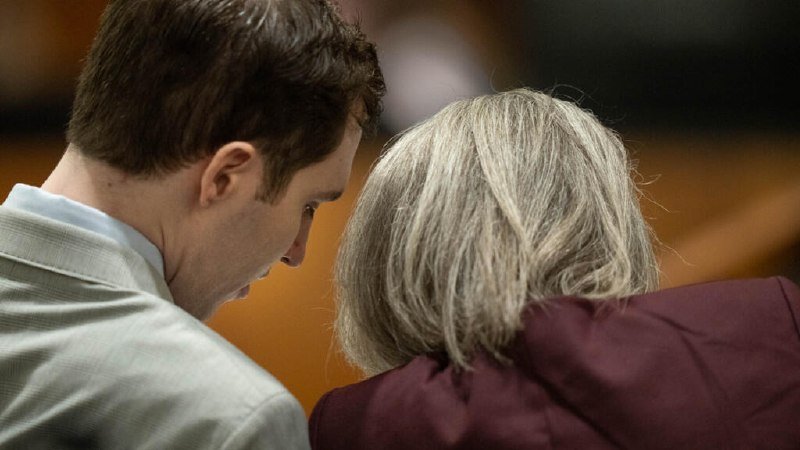
A Utah judge has ruled that Tyler James Robinson, 23, is eligible to face trial on a charge of murdering conservative activist Charlie Kirk and that the case can proceed toward a capital sentencing track, with the death penalty left on the table. Robinson has pleaded not guilty, according to wire reporting filed on 1 and 2 September 2026 that frames the threshold ruling and the plea as the dated developments in a state-court case that began with a campus shooting last year.
The threshold ruling and the plea together convert a year-old killing into a docketed capital case in Utah state court. What the available reporting confirms is narrower than the headlines: a Utah magistrate cleared the statutory bar for capital proceedings, the defendant was reported to have entered a not-guilty plea, and the victim's family characterised the ruling as "an important step." The available items do not independently establish a trial date, the precise aggravating factors the judge relied on, or the full count of charges beyond what is reported in cited summaries.
The threshold ruling
The substantive legal move, according to France 24, was Judge Tony Graf's decision that the prosecution had met Utah's statutory threshold to seek capital punishment. In Utah, a homicide charge does not automatically carry a death-eligible posture; the bench must find, at a preliminary stage, that the alleged facts are sufficient to expose a defendant to that range of sentencing. Graf's ruling, as France 24 reports it, clears that gate.
The procedural significance is that a not-guilty plea entered after a capital threshold finding narrows the negotiating space. A defendant who turns down a plea and proceeds to trial is, in practical terms, accepting the risk that a jury will be asked to weigh aggravating factors the court has already found sufficiently alleged. France 24's reporting indicates the threshold was met; the available items do not specify what aggravating factors the judge relied on, and they do not confirm whether the indictment names a single count or multiple counts.
The plea, as reported
Reuters reported on 1 September 2026 that Robinson pleaded not guilty to a murder charge that the judge had ruled could carry the death penalty. The Reuters X post and short-link item do not, on their face, name the presiding judge at the plea or the precise courtroom calendar slot for the plea; the article body, the excerpt and the headline attribute the capital-eligibility ruling to Judge Tony Graf and the not-guilty plea to Robinson without separately identifying who took the plea. The thread evidence places the capital-eligibility ruling with Judge Graf; it does not independently confirm which judge accepted the plea.
That gap matters because capital-eligibility rulings and plea acceptance in Utah are often handled at different procedural stages. Monexus treats the capital-eligibility attribution to Graf as supported by France 24 and One America News Network; the plea attribution to a specific bench is left as "not specified in the available items." Trial date, location, and any subsequent scheduling orders are likewise not specified in the cited reporting.
The family's framing
Kirk's family released a statement after Judge Graf's ruling, calling it "an important step" in pursuit of justice, according to One America News Network's Telegram channel. The available reporting reproduces the characterisation but not the full text. The framing positions the threshold ruling as a procedural move toward accountability rather than as a conclusion, which is consistent with the family's public posture since the killing.
The political weight of that framing will travel separately from the criminal docket. Kirk's campus organising and his media operation made him a polarising figure, and the trial is likely to attract filings and motions that test the boundary between political profile and admissible evidence. The reporting reviewed does not address how the defence intends to handle that overlap.
What remains unresolved
Three strands are not established by the available sources. First, the precise date and venue of the plea hearing: Reuters filed its not-guilty dispatch on 1 September 2026 UTC and France 24 and One America News Network followed on 2 September 2026 UTC, but none of the cited items timestamp the plea itself. Second, the full charge sheet: the available items describe Robinson as "the man accused of killing Charlie Kirk" and reference a murder charge eligible for the death penalty; they do not specify in the cited excerpts whether the indictment aggregates multiple counts, names an aggravated-murder theory, or includes lesser included offences. Third, motive and any co-conspirator allegations: the political character of the victim is referenced in background, but specific evidence on Robinson's intent or on alleged accomplices is not in the thread.
The trial calendar is also absent from the reporting reviewed. Utah courts publish scheduling orders on the state judiciary portal; the available sources do not cite one. Monexus analysis: until a trial date is on the record, the most that can be said with certainty is that the case has cleared the capital-eligibility gate and that the defendant has been reported to have entered a plea of not guilty.
Reading the political climate around the case
The case sits at the intersection of two threads the cited reporting does not fully separate: a state-level criminal prosecution under Utah procedure, and a national conversation about political violence that has run since the 2025 campus shooting. The wire reporting reviewed keeps those threads in proportion, treating the threshold ruling and the plea as the dated facts and the political context as background.
Monexus assessment: the durable procedural development is the threshold ruling. It converts what had been a defendant-in-prosecution posture into a capital-eligible docket, which carries downstream consequences for discovery, motions practice, and the structure of any plea negotiation. The not-guilty plea is the second dated development; it converts the case into a contested trial track. Where the political climate shapes the case, it will be through motions, juror selection, and the conduct of trial; the available reporting does not yet reach those stages.
The point worth holding is that this is a Utah state criminal matter proceeding under Utah statute, with federal reverberations handled by other actors and other dockets. The available reporting does not establish that any of those other actors have moved on this case in the items reviewed.
This article treats the capital-eligibility threshold and the reported not-guilty plea as the dated facts, with Kirk's political profile as context rather than as a frame for adjudicating guilt. Where a detail (trial date, presiding judge at the plea, full count of charges, aggravating factors relied on by the court) is not present in the available sources, this article has not independently established it.
Wire provenance
This editorial synthesis draws on the following public wire/social posts:
- https://www.france24.com/en/americas/20260902-man-accused-of-killing-charlie-kirk-to-face-murder-trial-and-possible-death-penalty
- https://f24.my/C8OU.g
- https://t.me/france24_en/18450
- https://reut.rs/460ZUQi
- https://x.com/Reuters/status/2094974865203679537
- https://t.me/OANNTV/17233