Utah judge sends Tyler Robinson to trial over Charlie Kirk killing, clears path for death penalty
A Utah district judge ruled on 1 September 2026 that prosecutors have cleared the evidentiary bar to try Tyler Robinson for the killing of conservative commentator Charlie Kirk, declining to bar cameras from the courtroom and allowing the state to seek capital punishment.
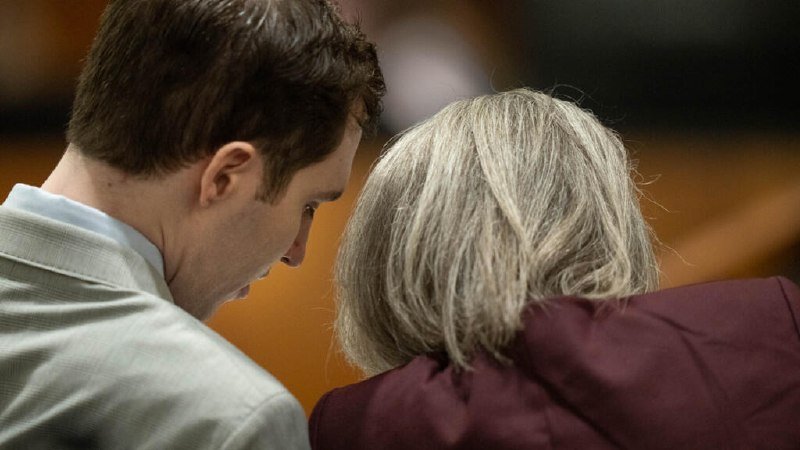
A Utah district judge ruled on 1 September 2026 that prosecutors have met the evidentiary threshold to bring Tyler Robinson to trial for the killing of political commentator Charlie Kirk, declining to bar cameras from the courtroom and clearing the way for the state to pursue the death penalty. Utah District Judge Tony Graf also rejected a defence request to keep cameras out of the proceedings, according to a Telegram summary posted by the channel wfwitness on 2 September at 00:23 UTC, and a separate summary distributed by rnintel at 00:22 UTC.
The bind-over decision narrows a case that has been shaped as much by its political backdrop as by its facts. Robinson, who made his first court appearance on 1 September, has entered a not-gu plea on all seven counts, according to posts from the X account @disclosetv at 00:26 UTC on 2 September and the Telegram channels osintlive (00:32 UTC) and disclosetv (00:27 UTC). Graf's ruling on the evidentiary bar is the procedural hinge: under Utah's capital-case standard, the prosecution must show probable cause before a death-eligible charge can move forward, and Graf's finding that the threshold was met sets the stage for a trial in which jurors, not the bench, will decide life or death.
What the judge actually decided
Graf's order was narrow and procedural, but it had two practical consequences. First, by clearing the evidentiary bar, the judge allowed the aggravated-murder count, a Utah felony that carries a death sentence, to proceed to trial rather than be reduced at the preliminary stage. Second, by declining to bar cameras, he left intact a high-visibility trial in a case that has already saturated American political media. The Guardian reported on 2 September that Robinson must stand trial and is eligible for the death penalty, framing the ruling as both a bind-over and a death-penalty authorisation in a single decision.
The defence's camera request had argued, in line with standard pretrial publicity doctrine, that saturation coverage would prejudice the jury pool. Graf's rejection signals that he considers the presumption of openness in capital proceedings sufficient safeguard on its own. The Guardian's reporting, summarised in a Breaking News US newsletter item circulated at 00:01 UTC on 2 September, did not specify whether the defence signalled an intent to seek a change of venue; the source items reviewed do not detail that question.
The seven counts, and what Robinson denies
Robinson entered a not-gu plea to all seven charges filed against him, according to the @disclosetv X post and the osintlive and disclosetv Telegram mirrors on 2 September. The source items do not enumerate those counts. They do not, for example, specify how many counts allege aggravated murder versus felony discharge of a firearm, nor do they break out any hate-crime or terrorism enhancements that state prosecutors have floated in past capital prosecutions in Utah. Readers should treat the exact charge sheet as not specified by the available reporting.
The source items also do not name Robinson's defence counsel, do not quote the defence team, and do not describe any statements from Robinson beyond the plea. The absence of on-the-record defence comment is a feature of the very early procedural posture: bind-over hearings are short, and defence lawyers at this stage typically reserve argument for motions filings rather than open court. The pattern is consistent with the source items reviewed.
Monexus assessment: a politically charged trial, on a normal procedural track
Read narrowly, the bind-over decision is the legal system doing what the legal system is supposed to do: testing whether probable cause exists, then letting the case go to a jury. Read in the political environment in which the killing occurred, the same decision has acquired a different weight. Kirk was a co-founder of Turning Point USA and a fixture on conservative college campuses; his death in Utah produced an outpouring of political reaction, official statements, and counter-statements that have continued through the preliminary hearings. The Guardian's framing of the death-penalty ruling as a national story rather than a state-court procedural note is the cleanest signal that editors are treating this as a politically charged case, not a routine homicide.
Monexus's read is that Graf's ruling reduces, rather than eliminates, the political surface area of the case. By clearing the evidentiary bar on the record, the judge forces any future challenge to the death-penalty decision into the trial phase, where jurors, not cable-news cameras, are the relevant audience. That procedural move is the kind of step that limits how much the pretrial news cycle can move the outcome, which is presumably what defence counsel sought when they asked for a camera ban.
What the source items do not specify, and what to watch
Three details remain unspecified by the reporting reviewed. First, the exact composition of the seven counts Robinson faces is not enumerated in the Telegram or X items, nor in the Guardian newsletter blurb. Second, the venue and trial date have not been set in the source material reviewed. Third, the source items do not record any statement from the Kirk family or from Turning Point USA on the bind-over ruling; the available posts are confined to the courtroom.
The dates to watch are now the standard ones in a Utah capital calendar: defence motions, the trial setting order, and any pretrial publicity or venue challenges. The decision to allow cameras will keep the case in the public eye through each of those steps. The decision to permit the death penalty makes the eventual jury selection the consequential phase, not the bind-over itself.
How Monexus framed this vs the wire: The Guardian's newsletter led with the death-penalty question; Monexus's lead puts the bind-over decision and the camera ruling together, on the view that the legal threshold is the news and the politics follow from it.
Wire provenance
This editorial synthesis draws on the following public wire/social posts:
- https://www.theguardian.com/us-news/2026/sep/01/charlie-kirk-trial-death-penalty
- https://t.me/osintlive/569055
- https://t.me/disclosetv/21804
- https://x.com/disclosetv/status/2094945132097282194
- https://t.me/wfwitness/109375
- https://t.me/rnintel/66002