Anytime he wants: parsing Trump's threat to widen the Iran campaign
A 2 September promise that a renewed US campaign against Iran 'won't last long' sits awkwardly beside a 3 September threat to strike Tehran 'anytime we want.' Markets read the gap; Tehran reads a war crime.
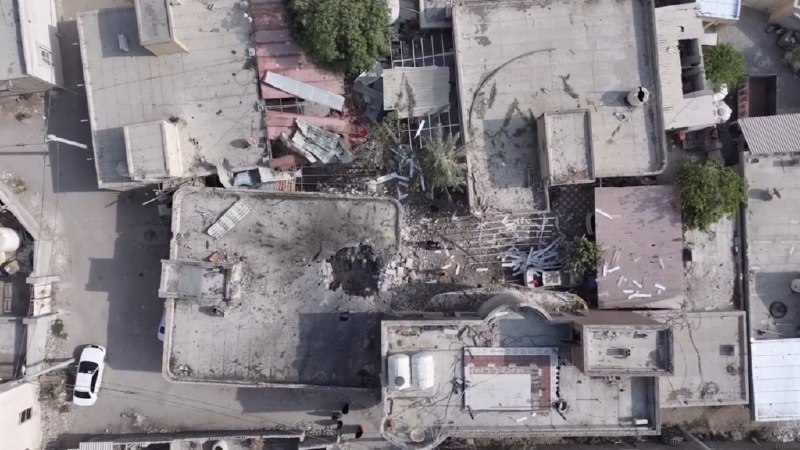
On 3 September 2026, with the Iranian Health Ministry reporting a death toll of 18 from the latest round of US strikes, Donald Trump posted that the United States could hit Iran "anytime we want," adding that the Iranian regime is "getting weaker by the day." Hours earlier, on the evening of 2 September UTC, Trump had told reporters the renewed campaign "won't last long." Tehran called the strikes, including one it said hit a wedding party, a war crime.
The contradiction is the message. Washington is signalling both resolve and an off-ramp within the same 12-hour window, and the contradiction is doing diplomatic work that neither signal could do alone. Monexus analysis: the gap between "won't last long" and "anytime we want" is not a slip. It is a pricing exercise. Oil traders, Gulf underwriters, and Iranian negotiators are each being asked to underwrite a different probability distribution, and the administration appears comfortable letting all three of them guess.
Two messages, one morning
Trump's "anytime we want" post came after a Reuters dispatch timestamped 2 September 23:00 UTC reporting that his Justice Department had warned states they could lose federal funding unless they cooperated in reporting migrants without legal status. The pairing matters: a domestic-enforcement ultimatum and a foreign-strike ultimatum, sequenced within hours, are the rhetorical architecture of a presidency governing by threat rather than by negotiated settlement.
Reuters, citing Trump's own remarks, reported at 22:45 UTC on 2 September that the renewed US campaign against Iran "won't last long." Less than twelve hours later, Al Jazeera reported at 01:45 UTC on 3 September that Trump had promised strikes "anytime we want," with Trump adding, in a separate post relayed via Polymarket's account on X, that US surveillance of Iran is so extensive that Iranian officials "can't go to the bathroom without us seeing it." The surveillance boast is not idle: it implies a targeting pipeline that does not require a sequencing decision, only a permission slip.
What the oil tape is telling us
Crude futures edged down in early Asian trade on 3 September, according to Investing.com, as investors parsed the contradiction and concluded that the off-ramp signal was the more credible of the two. That read is contestable. A market that rallies on "won't last long" and shrugs on "anytime we want" is implicitly betting that the administration has priced in a short, sharp operation. If that bet is wrong, the unwind will not be gradual. Monexus assessment: the cost of being early bearish on a Hormuz-risk premium is currently being paid by speculators who believe Trump. The cost of being early bullish will be paid later, by the same people, if he is not.
The structural frame is straightforward and worth stating plainly. A hegemon that can credibly threaten strikes "anytime we want" while simultaneously signalling that any particular round will be brief is exercising the kind of optionality that only the issuer of the reserve currency can sustain. Tehran's counter-read, reported by Al Jazeera, is that the strike on what it described as a wedding party constitutes a war crime, not a calibrated escalation. That framing will not survive contact with US-domestic media, but it will travel in the Global South, where the wedding-party detail is already being amplified by state-adjacent outlets as proof of indiscriminate force.
The Iranian counter-narrative, steelmanned
Tehran's position deserves more than a sentence. From the Iranian government's vantage point, the sequencing is not new: a maximum-pressure sanctions regime, an assassination campaign against senior commanders and nuclear scientists that ran through the early 2020s, and now a bombing campaign openly described as renewable on presidential whim. The Iranian argument, in its strongest form, is that no sovereign state can negotiate under a threat that is explicitly open-ended, and that "anytime we want" is the diplomatic equivalent of an unlimited check. That is a real strategic complaint, even if one rejects the regime's domestic legitimacy. The Reuters-sourced line that the renewed campaign "won't last long" does not soften it; if anything, it hardens it, because it concedes that the threat is being calibrated downward for oil markets while remaining maximalist for Iranian planners.
Stakes, and what to watch
The Polymarket market on Trump's next press secretary pick, active as of 2 September 22:28 UTC, is a reminder that prediction markets are now pricing White House personnel moves with the same seriousness they once reserved for Federal Reserve nominations. That is a useful proxy for how seriously the political-risk complex is taking the next 72 hours. Monexus reads the next inflection point as follows: any confirmed second strike on Iranian infrastructure, particularly energy export terminals, will reprice both crude and insurance premiums within minutes; any Trump statement softening the "anytime we want" line toward a specific date or condition will be read as a ceasefire signal and likely trigger a risk-on unwind in energy.
The honest uncertainty is this. The cited items do not specify the precise targets struck in the 2-3 September wave, do not name the Iranian military facilities hit, and do not confirm independently whether the wedding party described by Tehran was struck by US ordnance or by Iranian air-defence debris falling on a nearby civilian gathering. The latter is not a pro-US framing of the facts; it is a clarification of what the available reporting has and has not established. The body count of 18 is sourced to the Iranian Health Ministry, as relayed by Al Jazeera's 3 September 01:45 UTC bulletin, and is the only casualty figure this article will assert.
What is not in dispute is the strategic posture. A presidency that promises strikes "anytime we want" while telling markets the campaign "won't last long" is asking two audiences to underwrite opposite bets. The bet oil is making is the one Tehran should worry about most, because it is the bet that assumes the next round is coming soon enough that hedging now is cheaper than hedging later.
Desk note: Monexus framed this around the contradiction in Trump's own statements across a 12-hour window, rather than around the casualty narrative alone, because the diplomatic and market work is being done by the gap between "won't last long" and "anytime we want." Wire coverage led with the death toll; the structural story is the timing.
Wire provenance
This editorial synthesis draws on the following public wire/social posts:
- https://www.aljazeera.com/news/2026/9/3/trump-threatens-more-strikes-as-death-toll-in-iran-rises-to-19?traffic_source=rss
- https://reut.rs/3UzBhHR
- https://x.com/Reuters/status/2095281914525425841
- https://www.investing.com/news/commodities-news/oil-edges-down-as-investors-weigh-uncertainty-over-usiran-strikes-4886907
- https://www.investing.com/news/commodities-news/trump-says-renewed-us-campaign-against-iran-wont-last-long-4886633
- https://x.com/Polymarket/status/2095244371515887941
- https://x.com/Polymarket/status/2095213033291149446
- https://x.com/Polymarket/status/2095277811531440300
- https://reut.rs/4zKxUhg
- https://www.aljazeera.com/news/2026/9/3/trump-threatens-more-strikes-as-death-toll-in-iran-rises-to-19?traffic_source=rss
- https://reut.rs/3UzBhHR
- https://x.com/Reuters/status/2095281914525425841
- https://www.investing.com/news/commodities-news/oil-edges-down-as-investors-weigh-uncertainty-over-usiran-strikes-4886907
- https://www.investing.com/news/commodities-news/trump-says-renewed-us-campaign-against-iran-wont-last-long-4886633
- https://x.com/Polymarket/status/2095244371515887941
- https://x.com/Polymarket/status/2095213033291149446
- https://x.com/Polymarket/status/2095277811531440300
- https://reut.rs/4zKxUhg