Trump's Iran Carrot and Stick: Diplomacy in Geneva, Threats in Washington
Vice-President JD Vance met Iranian negotiators in Switzerland on 21 June 2026 and called the talks historic. Hours later, from Washington, President Donald Trump threatened to hit Iran 'very hard again' if Tehran failed to restrain Hezbollah and its regional allies. Iran's delegation walked out before the day was over.
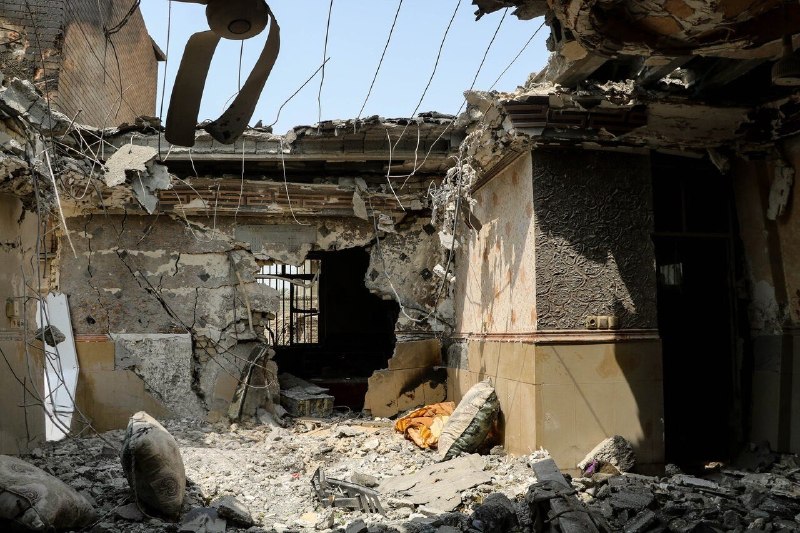
Lead. On 21 June 2026, two branches of the same US administration publicly disagreed about how to handle Iran — and the Iranian delegation walked out. Vice-President JD Vance met Iranian negotiators in Switzerland and called the session "historic talks." From Washington, President Donald Trump told reporters that Iran would be hit "very hard again" unless it contained Hezbollah and its regional allies. By Sunday evening UTC, Iran's negotiating team had left Geneva in protest, according to Iranian state media, and the question of whether the United States was negotiating, coercing, or both was being decided in real time.
Nut graf. The day's events compressed the contradictions of the Trump second term into a single news cycle: a diplomatic channel held open by the vice-president, and an open-ended threat of renewed bombing issued by the president. Whether the strategy amounts to coercion-with-an-exit-ramp or to bad-faith negotiation by ultimatum depends on which Washington voice the Iranians end up believing. Both voices were operating, simultaneously, on the same Sunday.
The two-track day
Vance sat down with the Iranian delegation at a venue in Switzerland on the morning of 21 June 2026. Reporting by Middle East Eye, citing the vice-president's remarks, framed the meeting as a substantive diplomatic exchange. "Historic talks," Vance said, according to Middle East Eye's account — language designed to mark the session as more than a holding pattern. The talks were treated, in that framing, as a fresh start: a "new leaf" after the most recent round of US-Israeli strikes on Iranian targets and the diplomatic wreckage those strikes left behind.
Hours later, and roughly 6,000 kilometres away, Trump shifted the register. Asked by reporters whether the United States would resume strikes, Trump replied that if Iran did not restrain Hezbollah and allied groups, the answer was yes. "Iran will be hit very hard again," Trump said, according to NPR's reporting on the same day. Reuters carried the warning in parallel: "Trump says US will resume attacks if Iran does not restrain Hezbollah allies." The two messages, issued the same Sunday, drew different headlines in different capitals.
The Iranian delegation had left the Swiss venue by Sunday evening UTC. Iranian state media, as relayed by the unusual_whales account on X, framed the walkout as a direct response to Trump's threat. Iranian negotiators had gone to Geneva expecting a diplomatic process; they left because the process was being conducted, in their telling, under the shadow of a bombing threat issued by the other side's commander-in-chief.
What the Iranian side says
Iranian state media — Tasnim, IRNA and the broader network of outlets aligned with the Islamic Republic — present the Geneva talks as having been sabotaged from Washington before they could produce anything. The framing across these outlets is consistent: the United States negotiated in bad faith, using the table as a holding pen while preparing the next strike package. Tasnim's coverage, relayed via Telegram on 21 June, treated the US posture as a manifestation of a broader pattern in which Iran is asked to make concessions under threat and to accept limits that the United States would never accept on itself.
This is not a new argument. It is the standard Iranian diplomatic line in any negotiation with an administration that has both a military option and a public-pressure option in play. The structural complaint is older than Trump: that the United States negotiates from a position of threatened escalation, that the threat is never retired, and that the price of talking is measured in concessions the Iranian side never agreed to in advance. The Iranian walkout on 21 June is consistent with that line — but it is also consistent with a tactical decision to extract a domestic-political benefit from being seen to leave.
The distinction matters because both readings are live. The same walkout serves two masters: in Tehran, it positions the delegation as having refused to be humiliated; in Washington, it confirms the hard-line view that Tehran is not a serious negotiating partner. Reuters and NPR's reporting on Sunday evening reflected only the first-order facts; they did not adjudicate between the two readings.
What the Trump administration is actually doing
The simplest reading of the day is also the most unflattering to the White House's stated strategy. A two-track posture — a vice-president at the table, a president issuing public threats — does not, on its own, constitute coercion. It can be a deliberate division of labour: the diplomat absorbs the political cost of being in the room, while the commander-in-chief keeps the military option credible. That is a recognisable pattern in US-Iran interactions going back decades.
The harder reading, and the one some of the early French commentary picked up, is that the administration is not running a strategy at all but a contest. Tasnim News, relaying a French analyst's argument on 21 June, framed Trump's approach as "treating Ukraine like a dog and falling short against Iran" — a polemical summary, not a neutral one, but one that captures a critique now circulating in European commentary: that the administration conflates personal dominance with diplomatic outcomes, and that personal dominance produces headlines rather than agreements. The French framing was specifically pointed at Iran: the claim is that the same maximalist rhetoric that has stalled Ukraine-related diplomacy is now stalling the Iran track.
Counter-read: the threats may be working. The walkout is a price, not a collapse. Iran's decision to leave is reversible; the talks, on Vance's framing, were framed as historic because something — possibly limits on enrichment, possibly restraints on Hezbollah-linked activity — was on the table. If Trump's threats produced the walkout, they may also have produced the terms that brought Iran's delegation to Geneva in the first place. None of the wire reporting on 21 June confirms or denies this. The Reuters and NPR accounts describe the threats and the walkout; they do not describe what the Iranians were prepared to offer.
Where this sits structurally
The US-Iran track does not exist in isolation. It runs alongside an unresolved file on Hezbollah's military posture in Lebanon, an unresolved file on Iran's nuclear enrichment programme, an unresolved file on Iranian-aligned militia activity in Iraq and Syria, and an unresolved file on the Israeli campaign against Iran's regional infrastructure. Each of those files is being negotiated, in some sense, in parallel.
A diplomatic process that has the vice-president at the table and the president issuing threats is operating inside the same gap that has defined US-Iran contacts since 2018, when the United States withdrew from the Joint Comprehensive Plan of Action. The United States wants limits on Iran's nuclear programme and restraints on Iran's regional network. Iran wants sanctions relief and recognition that its security concerns are not a unilateral concession. The two sides have been unable to close that gap through formal negotiation; they have been unable to close it through unilateral pressure, either. Sunday's two-track posture is the latest expression of a process that has been stuck, more or less visibly, for years.
The structural stakes are not symmetrical. For the United States, the cost of a failed round of talks is measured in continued sanctions enforcement and continued risk of escalation. For Iran, the cost of a failed round is measured in the survival of an economy that has been under maximum-pressure sanctions since 2018 and has lost, by Iranian government figures cited in earlier reporting, a substantial share of its oil export revenue. The walkout on 21 June was, on this structural reading, a decision that the cost of staying at the table under public threat exceeded the cost of leaving.
What the next 72 hours will show
Three near-term signals will indicate whether Sunday was a pressure tactic or a collapse.
First, whether Iran's delegation returns to Geneva or to a successor venue within the week. A walkout is reversible. A refusal to schedule a successor session, by contrast, is a statement that the diplomatic track has been suspended for the foreseeable future.
Second, whether the United States issues any public acknowledgement of the walkout, or whether the administration treats the Iranian departure as the Iranian side's problem. The two readings produce very different public postures: the first frames the United States as willing to keep talking; the second frames Iran as having walked away from a workable offer. Reuters' and NPR's reporting on Sunday did not include any US readout beyond Trump's threat and Vance's "historic talks" remark. A US readout on Monday or Tuesday will clarify which framing is operative.
Third, whether Hezbollah-linked actors in Lebanon, Syria or Iraq take any operational action in the days following 21 June. The Iranian walkout was framed, in Iranian state media, as a response to threats against Hezbollah and its allies. If those threats were the trigger for action rather than the trigger for diplomacy, the next 72 hours will show it.
What remains uncertain. The wire reporting on 21 June — Reuters, NPR, Middle East Eye, and the unusual_whales account relaying Iranian state media — establishes the basic timeline and the basic contradiction. It does not establish what the Iranian delegation was prepared to offer, what Vance's "historic" remark was referring to specifically, or whether Trump's threat was coordinated with the negotiating team in Geneva or issued independently. The French commentary on Tasnim is polemical and not independently verifiable. The walkout itself is reported through Iranian state media; the framing of the walkout as a protest over Trump's threats is, for now, a single-source claim that needs corroboration from a non-Iranian outlet before it can be treated as established.
— Monexus News, 21 June 2026, 19:00 UTC
Wire provenance
This editorial synthesis draws on the following public wire/social posts:
- https://t.me/tasnimplus
- https://t.me/tasnimplus/2068694250443726848
- https://en.wikipedia.org/wiki/Joint_Comprehensive_Plan_of_Action
Follow the event.
These dated source records provide context. They do not retrospectively verify this archive article.
Separate what the nuclear watchdog reported from what it could not determine after the June 2025 strikes.