CENTCOM opens new round of strikes on Iran, escalating a confrontation already shaped by Trump's direct command
US Central Command says it has begun additional strikes against Iran at the president's direction, layering a fresh campaign onto an air war that has already redrawn Gulf risk pricing and forced a new round of regional diplomacy.
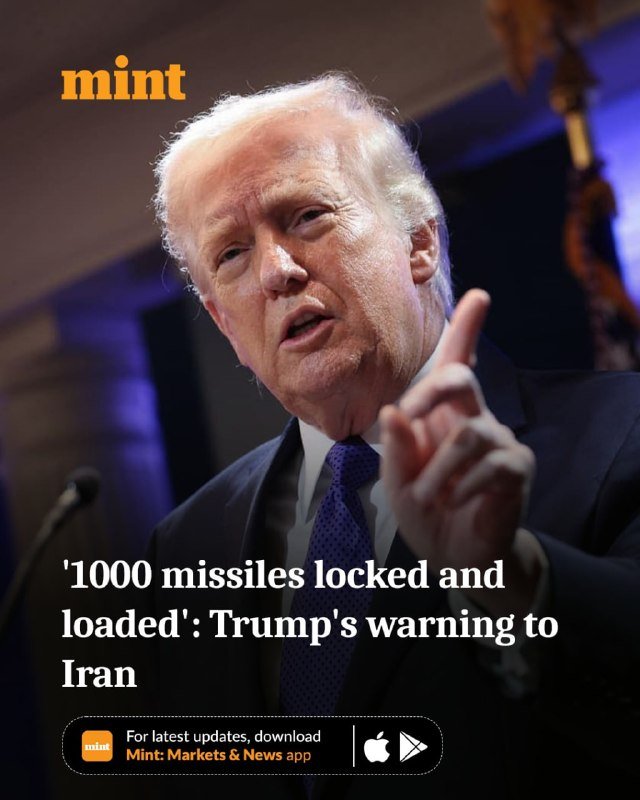
At 20:22 UTC on 8 July 2026, US Central Command confirmed that its forces had begun a fresh wave of strikes against Iran at the direct order of the commander-in-chief. The statement, carried almost verbatim by Iran's Fars News International and by regional aggregators including Liveuamap and Clash Report within minutes of release, frames the campaign in unambiguous language: the operation is intended "to further degrade [Iran's] ability to threaten freedom of navigation" in waters surrounding the Strait of Hormuz and the wider Persian Gulf. The wording matters. It is not the language of retaliation for a single incident, but of a sustained campaign aimed at Iran's maritime-military posture — exactly the infrastructure, from fast-attack craft bases to coastal anti-ship batteries, that has shaped Gulf shipping risk since the November 2024 Houthi-Asadi axis of disruption went regional.
For a Washington that has spent the better part of two years rationing force against Tehran, the announcement marks the most explicit public acknowledgement yet that the campaign has escalated from strike-and-assess into something closer to attrition. The chain of command running through CENTCOM's Tampa headquarters is consistent with strikes carried out under existing authorities, but the explicit invocation of presidential direction — repeated across the three wire variations that surfaced within seven minutes of one another — is the signal worth watching. It telegraphs to Tehran, to Gulf capitals, and to markets that the White House is prepared to own the operation politically, not just operationally.
What CENTCOM actually said, and what it didn't
The CENTCOM release, as reproduced by Fars at 20:22 UTC, by Liveuamap at 20:20 UTC, and by Clash Report at 20:16 UTC, runs along familiar lines. "At the direction of the Commander in Chief, U.S. Central Command forces have started conducting additional strikes against Iran to further degrade their ability to threaten freedom of navigation." The phrasing — "additional strikes," "further degrade," "threaten freedom of navigation" — is the same template CENTCOM has deployed since the start of the maritime campaign. None of the three sources lists specific targets, weapon systems, locations, or anticipated duration. None of them names a counterpart Iranian system being suppressed. That the Iranian state-affiliated Fars News International carried the announcement without an immediate counter-framing — unusual for an outlet that usually pairs US military action with denouncement within minutes — suggests Tehran's information apparatus was caught off-guard by the timing, even if not by the substance.
What the wires do not contain is equally informative. There is no claim of a successful strike, no-before-and-after damage assessment, no body count, no Iranian retaliatory action logged in the same window. The silence on targeting specifics is, at this stage, consistent with operational security more than with anything else. It also means the round of strikes exists so far as an announcement, not as a confirmed outcome.
Why the language matters
"Freedom of navigation" is the doctrinal hook that the United States has used since at least the 1988 Tanker War to justify naval and air action in the Gulf. The current campaign's invocation of it places the new strikes inside a legal and rhetorical tradition that Washington has spent forty years refining, and that Iran has spent an equal amount of time contesting as cover for regime-change strategy. Read narrowly, the statement is about shipping lanes. Read broadly, as the structure of the campaign suggests, it is about the wider balance of force across the Iraqi, Iranian, and Yemeni theatres that converge on the Gulf.
For Tehran the message lands in a complicated place. The Islamic Republic's maritime doctrine — built around fast boats, anti-ship missiles along the coast, and a layered ballistic-missile deterrent — depends on presenting any adversary with the prospect of escalation on multiple fronts at once. A US campaign aimed at degrading that capability gradually is, in effect, an attempt to dismantle the deterrence posture Tehran has spent two decades assembling. The structural worry in Tehran, articulated openly by analysts close to the Iranian armed forces in the past week, is that each round of strikes further compresses the threshold at which Iran might judge that a larger escalation is preferable to a slow squeeze. That is the scenario Gulf monarchies are now quietly pricing into insurance premiums.
Counter-readings and what remains uncertain
The official line from CENTCOM is that the strikes are about degrading capability, not pursuing regime change. Iran's framing, when its outlets do engage, is that the strikes are an act of war indistinguishable from the campaign that began with the assassination of Ismail Haniyeh on Iranian soil last year and accelerated with direct Israeli-Iranian exchanges. A third reading, currently more whispered than published, is that the operation reflects White House impatience with a pace of degradation that has not measurably reduced Iranian-mediated attacks on Gulf shipping. All three frames share the same underlying premise: the air campaign has not yet produced a strategic outcome either side is willing to call decisive, and the new round is intended to push the calculus one notch further.
The sources available do not specify which Iranian sites have been struck, whether there have been Iranian casualties, or whether Tehran has responded in kind. They do not specify what "additional" means in operational terms — whether it refers to a multi-day surge or a single salvo. They do not specify whether Israel is operating in parallel inside Iranian airspace, as it has in earlier rounds, or whether the United States is acting alone this cycle. Until those answers come into view, the strikes are best understood as a deliberate escalation of intent rather than as a redefinition of the war's terms.
Wire provenance
This editorial synthesis draws on the following public wire/social posts:
- https://t.me/FarsNewsInt
- https://t.me/Liveuamap
- https://t.me/ClashReport