A third round over Hormuz: what three U.S. strikes in a week tell us about the Iran campaign's widening aperture
On 11 July 2026, U.S. Central Command began a third round of strikes against Iran in a single week, this time triggered by an IRGC attack on the Cyprus-flagged containership GFS Galaxy in the Strait of Hormuz. The pattern is the story: how a tit-for-tat shipping war has now produced an open-target air campaign.
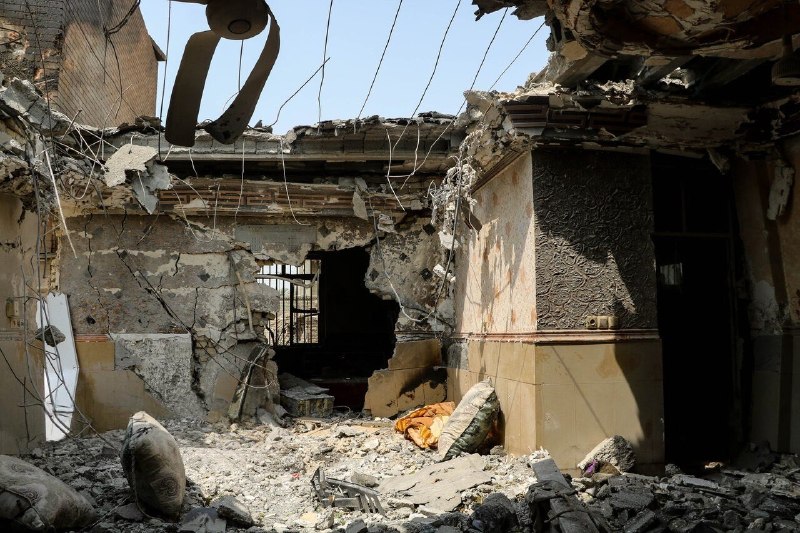
At 7:15 p.m. Eastern Time on 11 July 2026, U.S. Central Command forces began a third round of strikes against Iran inside a single week. CENTCOM's own statement, distributed across Telegram channels including rnintel, ClashReport and DDGeopolitics, frames the round as a direct response to an attack by Iran's Islamic Revolutionary Guard Corps on the M/V GFS Galaxy, a Cyprus-flagged containership transiting the Strait of Hormuz, with a civilian crew member reported missing. The pattern matters more than any single raid: what began as counter-strikes against IRGC facilities has, in days, widened into retaliation for an attack on commercial shipping in one of the world's most economically sensitive maritime corridors.
The chain of events now reads as a campaign, not a crisis. Inside roughly a week, Washington has shifted from discrete strikes on IRGC-linked military infrastructure to strikes explicitly justified by a hostile act against a third-flag merchant vessel in transit through a chokepoint that handles a significant share of the world's seaborne oil. That is a wider aperture. It is also the aperture that any Iranian decision to weaponise Hormuz had been expected, for years, to draw from the United States.
Three strikes, three trigger conditions
The first two rounds in the week, both announced by CENTCOM and circulated in the channels cited above, ran on the military logic familiar to anyone who has tracked U.S. operations in Iraq and Syria: discrete facilities, named targets, statements designed for Western wire pickup. The third round is cut from different cloth. The justification is no longer a piece of Iran's force structure. It is an act of violence against a vessel flagged to a third state, in a transit corridor whose closure would move global freight rates and crude prices on the same trading day. By grounding the strike in the Hormuz attack, CENTCOM has placed the world's commercial fleet inside the legal and rhetorical frame of self-defence.
Two structural facts follow. First, the missing crew member, described as a civilian, converts an already serious incident into one with a hostage-and-rescue register. Second, the Cyprus flag on the GFS Galaxy pulls a European Union member state, however indirectly, into the political fallout. Neither fact changes the legality of strikes against Iranian military infrastructure; both expand the coalition of states with standing to demand briefings from Washington.
The IRGC's opening gambit
For Tehran, the Hormuz strike on a containership was a calculated risk that has not paid off as advertised. The IRGC has, for years, calibrated seizures and harassment of tankers as low-cost pressure tools, with most episodes ending in negotiated release and headlines rather than body bags. An outright attack on a moving ship with a missing civilian reported is categorically different: it is the kind of incident around which a U.S. administration assembles a coalition and a legal brief in the same news cycle. Iranian state-aligned coverage has offered no public vindication of the action against the GFS Galaxy in the sourced material reviewed for this article; the silence, in itself, is informative. When a state's preferred outlets will not defend an act, the act was, on its own theory, a mistake.
The strategic logic that justifies such attacks inside Tehran's planning rooms is familiar: pressure Western capitals through the price of energy, demonstrate that Iran retains escalation dominance in its own waters, and split Washington from the Gulf monarchies who depend on safe transit. Each of those mechanisms is real. None of them has been advanced by sinking a third-flag container ship with a missing crew member. The third round of U.S. strikes, framed by CENTCOM as direct retaliation, is the cost.
Why Hormuz changes the political geometry
Roughly a fifth of the world's seaborne crude transits the Strait of Hormuz. Insurance markets price war risk weekly into hull and cargo premiums for ships transiting the corridor. When CENTCOM anchors a strike campaign to a Hormuz incident, it is not only striking IRGC assets; it is also re-anchoring the global risk premium around the U.S. Navy's commitment to keep the corridor open. That commitment underwrites the Gulf states' security arrangements with Washington in dollar terms as much as in any other. A campaign that visibly sustains it strengthens the dollar's pricing corridor for energy. A campaign that visibly fails to sustain it strengthens every alternative settlement architecture that Iran's trading partners have spent the past decade building.
This is the frame in which the third strike should be read. The shipping dimension is not a side effect of a military campaign; it is the campaign's centre of gravity. Iran tests it; the United States enforces it; the price of oil, the location of bunkering, the routing of LNG cargoes, the insurance underwriters and the political standing of every Gulf capital are downstream of who wins.
The case for restraint, and why Washington has so far declined it
The argument against the trajectory is straightforward and should be taken seriously. Broadening the target list inside Iran widens the surface area for Iranian retaliation against U.S. bases in the Gulf and against Israeli territory, where an escalation has its own consequences. A sustained air campaign also drifts toward the pattern set after 2003 in Iraq: a doctrine of removability that does not, of itself, remove the underlying capacity or the political willingness to use it. European partners who depend on Iranian-backed proxies for de-escalation in adjacent theatres will press for a defined end-state. Gulf monarchies will press for clarity on what happens after the strikes stop.
Washington's apparent answer, in the language of the third-round statement, is that the new strikes target only those capabilities implicated in attacks on shipping. That is a narrower theory than a campaign of regime pressure; it is also a theory with an off-ramp, because any quiescence in the Strait would, on its own terms, suppress further strikes.
What the next seventy-two hours will tell
Three near-term indicators will determine whether this is the opening of a multi-week air campaign or a sharp but bounded sequence. First, whether additional commercial vessels report approaches or attacks inside Hormuz; the third round was justified by a single incident, and a second would lock the United States into the shipping frame permanently. Second, whether Iran's state-aligned outlets and senior officials publicly affirm, deflect from, or attempt to disavow the GFS Galaxy attack; a public line that owns the act is a line that has accepted retaliation. Third, whether the missing civilian crew member is recovered alive and in what condition; the hostage register, once opened, tends to set the timetable for whatever comes next.
What remains genuinely uncertain in the sourced material is the operational extent of the third round. CENTCOM's statement, as carried by the Telegram channels referenced above, specifies the start time and the trigger but not the target list or the duration. Two of those channels (DDGeopolitics and ClashReport) circulate the same official text; none of them has yet published a corroborated target list, a confirmed set of Iranian casualties, or a parallel statement from Tehran. The truth of the third round is, at the moment of writing, what CENTCOM says it is, plus what transpires in the corridor itself in the hours ahead. The pattern, however, is already legible: a campaign aperture widened by a single act of violence against shipping, in a strait where the world, in effect, cannot afford a miscalculation.
Desk note: Monexus frames this as the widening of an existing campaign rather than the start of a new one. Western wire reporting and Gulf-based outlets will be read here as primary; Iranian state media will be cited at the same weight as a State Department briefing once the Iranian side publishes its own account. The shipping dimension, not the base-strike dimension, will drive the story.
Wire provenance
This editorial synthesis draws on the following public wire/social posts:
- https://t.me/rnintel
- https://t.me/ClashReport
- https://t.me/GeoPWatch
- https://t.me/DDGeopolitics
- https://t.me/thecradlemedia
- https://t.me/TheCradleMedia
Follow the event.
These dated source records provide context. They do not retrospectively verify this archive article.
Separate what the nuclear watchdog reported from what it could not determine after the June 2025 strikes.