Hormuz on the wire: how a 48-hour escalation redrew the Gulf
Tehran declared the Strait of Hormuz closed to all but its own northern lane; Washington confirmed a third round of strikes inside Iran. The shipping lanes, the energy market, and the regional order are all on the same 48-hour clock.
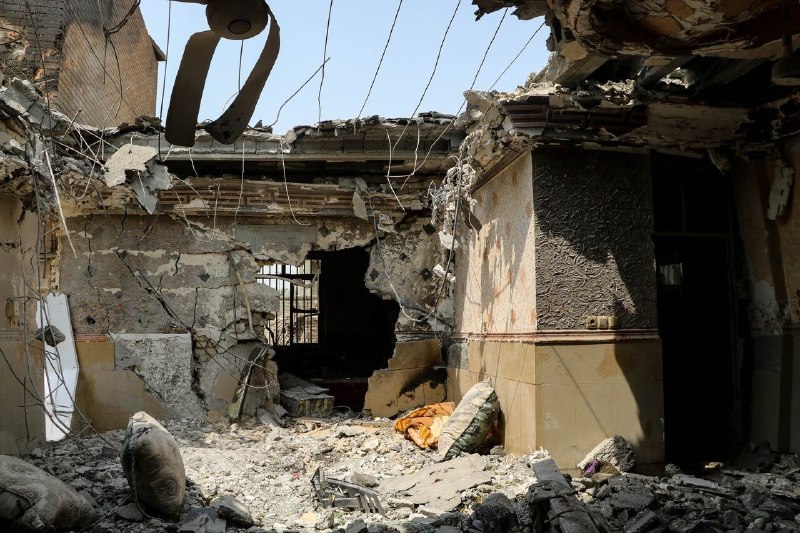
At 07:32 UTC on 12 July 2026, a single Telegram channel posted what its editor claimed was the live operational map of a US air campaign over western Iran. By 08:00 UTC, China Global Television Network (CGTN) was broadcasting a confirmation that Washington had carried out a third round of strikes on Iranian targets, and that Tehran had announced a full closure of the Strait of Hormuz. By 08:41 UTC, the Beirut-based outlet The Cradle was carrying an IRGC and Iranian army statement that the closure would be enforced and that a "regionwide retaliation" was under way. In the space of seventy minutes, a confrontation that had been telegraphed for days had become a live war at the world's most important energy chokepoint.
The pattern of the opening hours is consistent with a coordinated escalation, not a runaway spiral. Tehran moved first, hitting a vessel near Hormuz and declaring the waterway closed to all traffic except a "northern Iranian route," a phrasing that turns a blockade into a permission regime. Washington answered with air strikes on Iranian military targets. The IRGC then broadcast a regionwide retaliation, signalling that the theatre is no longer confined to the Gulf. The asymmetry is deliberate: Iran's coercive tool is geography, Washington's is firepower. Both are now being used at once, and the shipping lanes that move roughly a fifth of the world's oil sit in the middle.
The seventy minutes
The choreography matters. Sprinter, a Russian-language war correspondent on X, posted at 07:32 UTC that "large-scale US strikes against Iran have begun this night, almost simultaneously with reports of an Iranian attack on a ship in the Strait of Hormuz," and circulated what it described as a current US air-strike map. CGTN, the international arm of China Central Television, went live at 08:00 UTC confirming both the US third strike round and Tehran's Hormuz announcement. The Cradle, an outlet with close ties to the Iranian-aligned "Axis of Resistance" media ecosystem, carried the IRGC and Iranian army joint statement at 08:41 UTC. The sequence, Iranian action, US reply, Iranian regionwide response, fits the doctrine of calibrated escalation that Tehran has used since 2019: one kinetic move, one political fait accompli, then a wider umbrella of fire to deter follow-on.
The phrase "complete closure until further notice" is the load-bearing word. A blockade under international law is an act of war; a closure declared by a coastal state over its own territorial sea and contiguous zone is something narrower, but operationally similar for any tanker whose hull insurance premium just went vertical. The qualifier "except the northern Iranian route" is the giveaway. It is not a closure; it is a toll road. Tehran is offering to keep the pipeline of Gulf energy moving at a price it sets, while signalling to Washington that the military cost of forcing it open is paid in blood on every ship.
What the Western wire has not said yet
Mainstream Western wire reporting on the 12 July escalation was not visible in the source set available to this publication at the time of writing. Reuters, Associated Press, AFP, the BBC, the Guardian, Bloomberg and the Financial Times had not, as of the timestamps captured, published confirmed reporting on the third US strike round or on the IRGC's regionwide retaliation. That absence is itself a piece of information. The first frame the world receives of a US-Iran escalation tends to be the one that sets the policy debate in Washington, in Riyadh, in Brussels and in Tokyo. If the dominant first frame is the Cradle and CGTN version, the politics of attribution shift before the Western wires can catch up.
The counter-narrative is also live. An account operating under the handle "unusual_whales" posted on 11 July at 18:50 UTC that "Iran rejects the U.S. ultimatum, saying the Strait of Hormuz will remain closed to all traffic except the northern Iranian route." The framing is that the closure is a defensive act, a sovereign response to an ultimatum rather than an offensive escalation. This is the line Tehran's diplomats will take in New York and Beijing, and the line the Chinese and Russian permanent missions at the UN will echo. The substantive question, whether the closure preceded or followed the US strike round, is not resolved in the publicly available source material. The Cradle's IRGC statement is the principal evidence for the Iranian framing; Sprinter's air-strike map is the principal evidence for the US framing. Neither is independently verifiable from the source set, and this publication will update when wire reporting confirms or contradicts either version.
The geography of leverage
The Strait of Hormuz is roughly 33 nautical miles wide at its narrowest, with two-mile-wide shipping lanes in each direction and a two-mile buffer. It sits between Iran to the north and Oman and the United Arab Emirates to the south. Through it pass the bulk of Gulf oil exports from Saudi Arabia, the UAE, Kuwait, Iraq, Qatar and Iran itself, plus a meaningful share of the world's liquefied natural gas. There is no pipeline substitute at scale. The East-West Pipeline across Saudi Arabia, the Habshan-Fujairah line in the UAE, and the Goreh-Jask bypass inside Iran together can move a fraction of the volume, and only at the cost of years of capital expenditure that has not been made.
A closure that holds for a week reshapes the global energy market. A closure that holds for a month reshapes the global economy. A closure that holds for a quarter reshapes the international order, because the US security guarantee to Gulf shipping, the cornerstone of petrodollar recycling since the 1970s, has either been enforced at high cost or quietly tested. The Iranian calculation, plainly, is that the political cost to Washington of a sustained gunboat operation in the Gulf, in an election year, in a fiscal environment already strained by domestic politics, is a more useful deterrent than any ballistic missile.
The counter-calculation, on the US side, is that letting a mid-sized power close the most important energy corridor in the world, with impunity, rewrites the deterrence map for every other regional actor. The third strike round, if confirmed, is the signal that the closure itself is a red line, not the underlying nuclear file, not the proxy network, not the IRGC's regional posture. The water is the issue.
Who pays if the trajectory holds
The first-order losers are the Gulf monarchies, whose export volumes depend on the strait and whose domestic political compacts depend on the rent those volumes generate. Saudi Arabia and the UAE have spent two decades building bypass pipelines precisely to reduce this exposure, but the bypasses are partial, and the political effect of a sustained closure would land in Riyadh and Abu Dhabi before it landed in Washington. Insurance markets have already moved; war-risk premia for tankers transiting Hormuz spiked after the 2019 attacks on Saudi Aramco's Abqaiq facility, and the Lloyds market, the underwriter of last resort, is positioned to reprice within hours of confirmed closure.
The first-order winners, in the narrowest sense, are the upstream producers outside the Gulf. Russian Urals, West African Bonny Light, Norwegian Johan Sverdrup, US Permian crude, Brazilian Buzios: every barrel that does not move through Hormuz earns a geopolitical premium on top of its scarcity premium. The second-order winners are the governments with leverage over those barrels: Moscow, Brasilia, Caracas, and, in a more complicated register, Abuja and Algiers. A protracted closure is a wealth transfer from the Gulf and the industrialised Asian importers, China, Japan, South Korea, India, to the rest of the producing world.
The second-order losers are the importers. China takes more than half of its seaborne crude through Hormuz, and Chinese state refiners have spent the last three years building inventories against precisely this scenario. Japan and South Korea, the most exposed of the US treaty allies, will look to Washington for a naval response they cannot mount themselves. India, the swing buyer, has been quietly building a Strategic Petroleum Reserve and negotiating term contracts with Russian and Gulf suppliers in parallel. The cost of energy security, in short, is being re-priced in real time, and the bill is being sent to the consumers of the importers, not to the producers.
What is still contested
Three things are not yet knowable from the source set. First, the scale and target set of the US third strike round. Sprinter's air-strike map is an unverified screenshot; CGTN's broadcast is an unverified confirmation of unverified reporting; the Pentagon has not, in the captured material, published a strike list. Second, the operational status of the Strait. Iran has declared closure; whether the IRGC navy and the regular Iranian navy are actually interdicting commercial traffic, and how the US Fifth Fleet and the UK Maritime Trade Operations authority are responding, is not in the available reporting. Third, the chain of causation. The Cradle's IRGC statement frames the regionwide retaliation as a response to US strikes; the unusual_whales post frames the closure as a response to a US ultimatum delivered before the strikes. The order matters, because it determines which side owns the escalation in the diplomatic record.
This publication will update the ledger as wire reporting becomes available. For now, the picture is: a US-Iran confrontation that began as an ultimatum over the Gulf, hardened into a kinetic exchange overnight on 11-12 July 2026, and is now operating at the level of chokepoint control. The next twelve hours, specifically whether commercial vessels are physically turned around or boarded, will tell the world whether the closure is rhetorical or operational. The next week will tell the world whether the energy market treats it as a tail risk or a base case. The next quarter, if the closure holds, will tell the world whether the post-1971 architecture of Gulf security is being renegotiated in real time, or merely tested.
Desk note: Monexus framed this against a source set dominated by Iranian-aligned (The Cradle) and Chinese-state (CGTN) outlets, with one Russian-language war correspondent (Sprinter) and one anonymous markets account (unusual_whales) providing the US-side chronology. Western-wire confirmation is the missing input; the article has been written to flag that gap rather than paper over it. Where the Iranian framing and the US framing disagree on the order of events, both are presented and the disagreement is named.
Wire provenance
This editorial synthesis draws on the following public wire/social posts:
- https://t.me/thecradlemedia
- https://t.me/TheCradleMedia
Follow the event.
These dated source records provide context. They do not retrospectively verify this archive article.
Separate what the nuclear watchdog reported from what it could not determine after the June 2025 strikes.