Bahrain's sirens, the Patriot strain, and the night Iran found the US base it wanted
Drone strikes on the US naval and air presence in Bahrain on the night of 15 July 2026 mark the most sustained attack on American Gulf infrastructure of the war so far, and the first time Patriot interceptors have been observed visibly saturating against a coordinated Iranian barrage.
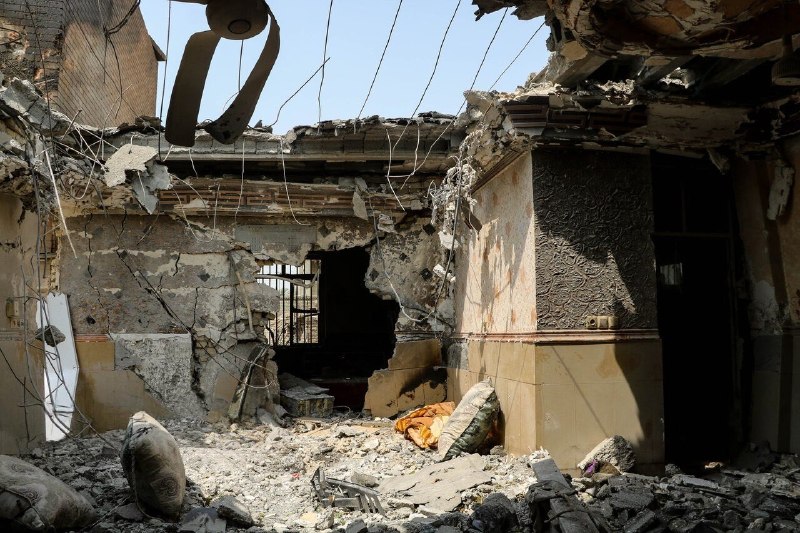
Warning sirens sounded across Bahrain at 23:11 UTC on 15 July 2026, and within minutes Arabic-language outlets carried unconfirmed but rapidly multiplying reports of explosions at American military positions on the island. By 23:14 UTC, the Telegram channel Geo-Political Watch was reporting that two interceptors had failed to stop incoming missiles and that impacts had been recorded on the ground in Bahrain. By 23:25 UTC, Fars News, the Iranian state-aligned outlet, was describing the strike as the most extensive attack on American bases in Bahrain of the current conflict. By 23:29 UTC, Tasnim was reporting that Iranian drones had arrived in numbers the Patriot air-defence system could not comfortably absorb. The evening ended, so far as the public record goes, with Al-Alam Arabic at 23:40 UTC reiterating that explosions had been heard at US bases on the island. Nothing about the night was small, and the most consequential detail may have been the one that arrived first: two Patriot interceptors failed, and something landed.
Bahrain has hosted the US Navy's Fifth Fleet since 1995, and the island's small territory means that any strike on an American installation is also a strike on Bahraini sovereign space, on the diplomatic arrangements that put the fleet there, and on the air-defence architecture the Gulf has spent two decades building around it. The 15 July barrage matters less for what was hit on a single night than for what it demonstrates about the saturation problem: a coordinated drone-and-missile package large enough to swamp the interceptors whose job is to make American forward bases survivable.
Sirens, then impacts
The opening hours of the attack are reconstructed almost entirely from Telegram feeds and Arabic-language outlets of varying editorial alignment. Geo-Political Watch, a multi-language channel that aggregates wire copy, posted the first reports of sirens and explosions at 23:12 UTC. Middle East Spectator followed at 23:13 UTC with the same picture. Geo-Political Watch returned at 23:14 UTC with the more specific detail that two interceptors had failed and that missiles had impacted on the ground. The framing, even in the first minutes, was not "missiles fired at Bahrain" but "incoming traffic that the local air-defence umbrella could not fully neutralise".
The Iranian state-aligned outlets then amplified the picture. Fars News, posting in Persian and English across its Telegram channels at 23:25 UTC, described the attack as the most extensive on American bases in Bahrain during the current conflict. Tasnim, the other major Iranian state outlet, at 23:29 UTC added the load-bearing claim that Patriot operators were struggling against a mass of Iranian drones. Al-Alam Arabic, the Iranian-funded satellite channel operating in Arabic, confirmed explosions at US bases at 23:40 UTC. By that point, the picture across Telegram had stabilised: a coordinated Iranian attack, Patriot engagement, at least two intercept failures, impacts on the ground in Bahrain, and an explicit Iranian claim that this was the heaviest such strike of the war so far.
The reporting carries the usual caveats of a fast-moving Telegram cascade. Initial accounts of impact locations, target identities, and casualties had not been independently verified by an American, Bahraini, or independent wire at the time these messages were posted. The Patriot-failure detail in particular rests on the same fast-moving channel ecosystem, and not on a Pentagon briefing or a CENTCOM release. What is not in dispute is the volume of the reporting, the convergence of outlets with otherwise different editorial alignments on the basic facts of sirens, explosions, and impacts, and the Iranian outlets' own characterisation of the strike as historic in scale.
What Bahrain is, what the Patriot covers
Bahrain hosts Naval Support Activity Bahrain, the home port of the US Fifth Fleet and the combined maritime headquarters for CENTCOM's naval forces. The base sits roughly five kilometres south of Manama, the capital, and shares runway infrastructure with the Bahrain International Airport. It is the only permanent US naval headquarters in the Middle East, and it is the platform from which American maritime posture in the Gulf, the Strait of Hormuz, the Red Sea, and the wider Indian Ocean is conducted. Its loss, or even its degradation, would force a relocation of maritime coordination that the United States has spent thirty years building around the island.
The Patriot surface-to-air missile system is the principal point-defence system at the base. It is designed to counter tactical ballistic missiles, cruise missiles, and large drones at medium to high altitude. It does this well in small salvos. It is known, and has been known since the system was first deployed in combat during the Gulf War of 1991, to be vulnerable to saturation: a sufficiently large, sufficiently coordinated attack can exhaust its interceptor stocks faster than ground crews can reload. The US military has spent fifteen years layering it with THAAD, with NASAMS, with ship-based Aegis, and with a thickening of counter-UAS capabilities at forward bases. None of that negates the fundamental arithmetic: a defender has to fire one or more interceptors at every inbound, while an attacker only needs one inbound to score.
The 15 July attack is the first time during the current war that this saturation arithmetic has been publicly demonstrated, in real time, against a base as strategically significant as the Fifth Fleet's home port.
The Iranian framing
The reporting from Fars and Tasnim does more than describe an attack; it constructs a political case. The phrasing matters. Fars characterised the strike as the most extensive during the current conflict, language that frames it as a milestone in an ongoing escalation rather than as a one-off spasm. Tasnim added the operational layer, that the Patriot system was struggling against the volume of Iranian drones, which is a claim not just about what was hit but about the limits of what the United States can defend.
Read in that register, the attack is being sold to Iranian audiences, and to the wider region, as a demonstration that American forward bases in the Gulf are now within reach of a coordinated drone-and-missile package, and that the air-defence systems built to keep those bases inviolable can be locally overwhelmed. This is the strategic argument the Islamic Republic has been making for two decades: that the United States' forward presence is a strategic liability, that it can be made costly, and that the cost calculus of keeping carriers and air bases in the Gulf is shifting. The 15 July attack, if Tasnim's operational claims hold up to outside verification, is a public demonstration of that argument in action.
The Bahraini and American framings, when they arrive, will almost certainly be different. Bahrain has a structural interest in minimising the appearance of base vulnerability, both because the Fifth Fleet presence is its central security guarantee and because any admission of damage has domestic political consequences. The United States has a structural interest in describing any air-defence engagement as a successful intercept-plus-some-damage, which preserves the deterrent value of the architecture while acknowledging that something was hit. The initial Telegram cascade, sourced largely from Iranian state-aligned and aggregator channels, is not the last word on the strike; it is the first word, and it carries a particular political weight that the subsequent Western wire reporting will need to correct, confirm, or contextualise.
What remains unverified
Three things the Telegram cascade reports and that independent reporting will need to confirm. First, the identity of the specific US facilities impacted. The reporting names American bases in Bahrain in general terms, but it does not name whether the strike hit the Fifth Fleet compound at Manama, Isa Air Base, or a layered Patriot site at some distance from the fleet headquarters. The two are not interchangeable: an impact at the fleet headquarters is strategically a different event from an impact at an airbase or a radar station. Second, the operational specifics of the Patriot engagement. The claim that two interceptors failed is sourced to a fast-moving Telegram channel and was not, at the time of writing, confirmed in a US or Bahraini official statement. Whether the failure was a guidance-track drop, a proximity-fuze miss, an interception of a decoy, or a system-level malfunction cannot be determined from the open reporting. Third, the casualty picture. No outlet in the cascade has reported casualties, on either side. That absence is consistent with the early hours of a strike, and it does not mean the strike was casualty-free.
What the cascade does establish, and what subsequent reporting is unlikely to displace, is the basic sequence: sirens at 23:11 UTC, explosions reported across multiple independent Telegram channels within minutes, at least two Patriot intercept failures with ground impacts at 23:14 UTC, Iranian state-aligned outlets amplifying the strike as the heaviest of the war by 23:25 UTC, and an admission from a major Iranian outlet that the volume of drones involved had strained the air-defence response.
The saturation problem, now public
The deeper story underneath the night is the saturation problem, and the fact that it has now been observed publicly, in real time, against a base the United States has gone to extraordinary lengths to defend. Air-defence saturation is not a new concept. It has been a planning concern since at least the 1991 Gulf War, when Iraqi tactical ballistic missile strikes produced the first combat data on Patriot engagement under load. It has been a documented weakness in every subsequent engagement, from the Iraqi strikes on Israel in the same period, to the Houthi attacks on Saudi and Emirati infrastructure from 2019 onward, to the saturation of Israeli air-defence systems during the Iranian missile barrages of 2024 and 2025.
What is new in the Bahrain attack is the target. Saudi Arabia and the United Arab Emirates have spent the years since 2019 rebuilding their air-defence architecture, layering Patriot with THAAD, with indigenous systems, and with hardened command-and-control. The Fifth Fleet base in Bahrain is smaller in footprint, more concentrated, and the diplomatic weight on its inviolability is higher. A successful saturation of its Patriot layer is a different order of political signal than a saturation of a Saudi Patriot battery. It is a direct answer to the question the United States has been asking the Gulf since 1995: what does the forward posture actually cost the defender when an adversary is willing to commit the ordnance?
The strike does not settle that question. A single night's barrage, however heavy, is a data point, not a verdict. But it is the first time during the current war that the question has been publicly asked, in operationally specific language, by an Iranian state outlet that was reporting on its own attack in real time. The follow-on reporting, when it arrives from the Pentagon, from Manama, from the wires that did not yet have confirmation at 23:40 UTC, will tell us whether the saturation was as successful as the Iranian framing claims, or whether the base absorbed the barrage at a cost the United States is willing to keep paying.
Either way, the arithmetic that matters is the arithmetic that mattered at 23:14 UTC, when two interceptors did not stop what was coming, and something hit the ground in Bahrain.
This piece was assembled from Telegram-channel reporting and Arabic-language outlets active in the first ninety minutes of the 15 July 2026 attack on American positions in Bahrain. The basic sequence of sirens, intercept failures, and ground impacts is reported across multiple independent aggregator and state-aligned channels; the operational specifics, casualty picture, and US or Bahraini official characterisation were not yet on the public record at time of publication. Monexus will update as wire confirmation arrives.
Wire provenance
This editorial synthesis draws on the following public wire/social posts:
- https://t.me/FarsNewsInt
- https://t.me/GeoPWatch
- https://t.me/GeoPWatch
- https://t.me/Middle_East_Spectator
- https://t.me/farsna
- https://t.me/JahanTasnim
- https://t.me/alalamarabic
Follow the event.
These dated source records provide context. They do not retrospectively verify this archive article.
Separate what the nuclear watchdog reported from what it could not determine after the June 2025 strikes.