A wheat silo, a deputy governor, and the question Iran cannot yet answer
Iranian state media say American strikes hit a wheat silo and a second site in Khuzestan overnight. The reporting is unanimous; the corroboration is not.
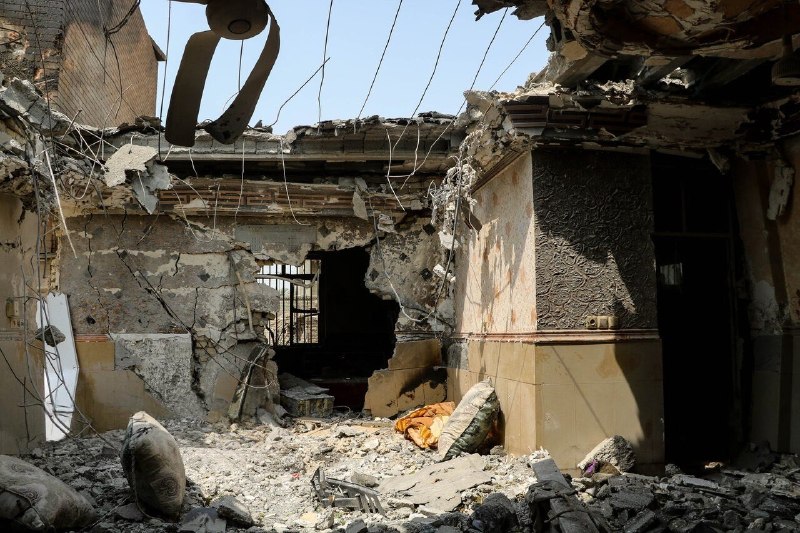
At 03:10 UTC on 15 July 2026, Iran's Fars News Agency broke a single-sentence bulletin: a wheat storage silo in Huizeh city and a point in Dasht Azadegan city had been "attacked and hit by the American" overnight, according to the deputy governor of Khuzestan province. By 03:20 UTC, Tasnim, the news agency closely aligned with the Islamic Revolutionary Guard Corps, had carried the same line twice, with no additional detail, no casualty figure, and no independent confirmation outside the provincial statement.
That is the entire public record of the incident as of this writing. Three wires, one source.
What makes the moment worth a second look is not the magnitude of what was reported, a storage facility and an unspecified "point" in two border towns, but the choreography of the reporting itself. Iran's state-aligned outlets are publishing a synchronized account of an American strike on Iranian economic infrastructure, on the morning after a fresh round of talks between Iranian and American intermediaries in the region. The messaging is tight; the corroboration is thin.
What Khuzestan said, and what it did not
The deputy governor's claim is specific in geography and vague in substance. Huizeh, also transliterated Hoveyzeh, sits in the marshlands of northern Khuzestan, within artillery range of the Iraqi border and roughly 40 kilometres from the Shalamcheh crossing into Basra province. Dasht Azadegan, the larger county that contains Huizeh, has been a recurring stage for the Iran–Iraq war's bloodiest engagements, and for the cross-border exchanges that have punctuated the uneasy post-2003 order. A "point" struck there could be anything from a guard post to a fuel dump to a civilian structure; the language leaves it deliberately open.
Three structural problems hang over the bulletin. First, the figure making the claim is a deputy provincial governor, not a military spokesperson; Khuzestan is an oil-producing border region where civilian authorities have spent decades managing the politics of cross-border fire. Second, the wording is past tense and passive: things "were attacked and hit by the American," not "the American military struck X at Y time using Z." Third, neither Fars nor Tasnim has published photographic, video, or satellite evidence in the public channels monitored at 03:20 UTC; the bulletins are textual and identical.
The synchronized wire
The two Iranian outlets publishing the claim are not interchangeable. Fars is a quasi-state news agency with deep links to the security establishment; Tasnim is closer to the IRGC's media operations arm. Their near-simultaneous publication of the same sentence, on the same deputy governor, with no follow-up, is the kind of coordinated release pattern Iran typically reserves for incidents it intends to anchor in the public record before any competing account takes hold.
That pattern matters because the alternative reading is not necessarily "the strike didn't happen." The alternative reading is that the strike happened, but the framing is being chosen in Tehran. Wheat silos are civilian economic infrastructure. A strike on a wheat silo, in a province already straining under drought and chronic water-management failure, carries a humanitarian register that an oil depot or a paramilitary compound does not. The selection of what to release, and what to release together, is itself an act of war reporting.
What the American side has not said
By 03:20 UTC, no U.S. Central Command release, no Pentagon readout, and no statement from the State Department had appeared in the channels monitored by this publication. There has been no acknowledgement of a strike on Iranian soil, no denial, and no scoping language ("we are aware of reports") that typically accompanies ambiguous incidents. The silence is itself a fact, but it is a fact compatible with several explanations: that the strikes have not occurred, that the strikes occurred and are classified, that the strikes occurred but at sites the United States does not intend to publicly claim, or that the strikes are part of an ongoing operation whose public disclosure is being sequenced.
That ambiguity is the article. Iran is publishing; Washington is not. The information asymmetry is widening rather than narrowing.
The structural frame
Reporting on Iran has long operated inside a corridor in which Tehran's official statements travel faster and louder than anything coming back from Washington or Tel Aviv. The reasons are bureaucratic and doctrinal. Iran's information apparatus is centralised; its outlets take their lead from the security services; and its propaganda logic rewards rapid, on-message deployment. The United States, by contrast, treats strikes on foreign soil as compartmented operational matters that surface, if at all, through leaks, FOIA litigation, or post-hoc official histories.
That structural imbalance shapes how this story will be read tomorrow morning. By the time Western desks file their midday ledes, the only verifiable primary statement in the public record will be a Khuzestan deputy governor's account, filtered through two Iranian agencies whose editorial lines converge. Reuters, AP, and AFP will, in most cases, decline to confirm a strike on Iranian infrastructure on the basis of an Iranian statement alone; they will write "according to Iranian state media," which is the correct hedge but which, in practice, means the Iranian framing travels.
The result is a particular kind of information environment: the strike, real or otherwise, becomes legible to readers almost exclusively through Tehran's optics. That is not a small thing in a week when Iranian and American negotiators are reportedly attempting to narrow the gap on a nuclear file that has spent two decades oscillating between diplomacy and rupture.
The uncertainty ledger
What the sources confirm: that Fars and Tasnim both carried a single-sentence bulletin at 03:10 UTC and 03:20 UTC on 15 July 2026, attributing the claim to the deputy governor of Khuzestan, naming Huizeh and Dasht Azadegan as the locations, and identifying a wheat storage silo in Huizeh as one of the targets.
What the sources do not confirm: the time of the strike, the weapons used, the casualty toll (if any), the extent of damage to the silo, whether the second "point" in Dasht Azadegan was civilian or military, whether Iranian air defences engaged, and whether the U.S. military has any involvement at all.
What the sources do not address: the wider political context. The bulletins do not reference the nuclear talks, the Strait of Hormuz tanker traffic, or the status of Iraqi airspace, all of which are proximate variables in any reading of a strike in Khuzestan.
A reader trying to verify the claim against only the cited sources will find that the wire ends where the deputy governor's sentence ends. That is not, on its own, evidence of fabrication. It is the working condition of reporting on incidents inside a country whose own media is the only audible wire.
Stakes, narrowly drawn
If the strike occurred, the consequences will depend on its scale. A wheat silo is not a nuclear facility. It is, however, civilian economic infrastructure in a province whose food security is already under stress from chronic water mismanagement; whose population is ethnically mixed, including a substantial Arab minority with grievances against the central government; and which sits on the border with a country whose government has spent two years publicly leaning between Washington and Tehran. A strike here is not, on its face, an escalation toward general war. It is, on its face, an escalation of friction.
If the strike did not occur, or occurred at a different site than described, the consequences are still real. Iran's information apparatus will have used the gap to seed a framing of American aggression that Western wire desks will spend the next 48 hours either confirming, qualifying, or quietly dropping. The frame, once placed, is hard to retract even when later reporting complicates it.
The most useful thing a reader can do with this article is hold two thoughts at once. First: that three wires carrying one sentence in ten minutes is not, on its own, proof that the sentence is true. Second: that the absence of any American acknowledgement is not, on its own, proof that the sentence is false. The contested space between those two positions is where this story, for now, lives.
The date to watch is not today. It is the next 72 hours. Either Tehran publishes the corroborating material, or it does not; either Washington leaks, denies, or stays silent; either satellite imagery surfaces, or it does not. Until then, the public record of the strike on Huizeh is a single deputy governor, two agencies, and a synchronised wire.
This publication notes that the available reporting on this incident is sourced exclusively from Iranian state-aligned outlets. Monexus will update this article as independent corroboration emerges.
Wire provenance
This editorial synthesis draws on the following public wire/social posts:
- https://t.me/farsna/
- https://t.me/tasnimplus/
- https://t.me/tasnimplus/
- https://en.wikipedia.org/wiki/Hoveyzeh
- https://en.wikipedia.org/wiki/Dasht-e_Azadegan_County
- https://en.wikipedia.org/wiki/Khuzestan_Province
- https://en.wikipedia.org/wiki/Iran%E2%80%93Iraq_War
- https://en.wikipedia.org/wiki/Tasnim_News_Agency
- https://en.wikipedia.org/wiki/Fars_News_Agency
Follow the event.
These dated source records provide context. They do not retrospectively verify this archive article.
Separate what the nuclear watchdog reported from what it could not determine after the June 2025 strikes.
- https://t.me/farsna/
- https://t.me/tasnimplus/
- https://t.me/tasnimplus/
- https://en.wikipedia.org/wiki/Hoveyzeh
- https://en.wikipedia.org/wiki/Dasht-e_Azadegan_County
- https://en.wikipedia.org/wiki/Khuzestan_Province
- https://en.wikipedia.org/wiki/Iran%E2%80%93Iraq_War
- https://en.wikipedia.org/wiki/Tasnim_News_Agency
- https://en.wikipedia.org/wiki/Fars_News_Agency