Hormuz becomes the chokepoint that pays for its own closure
Iran says the Strait of Hormuz stays shut until Washington meets its interim-deal terms, while US strikes have already pushed Iranian fishermen off the water and a bulk carrier has been struck in the corridor.
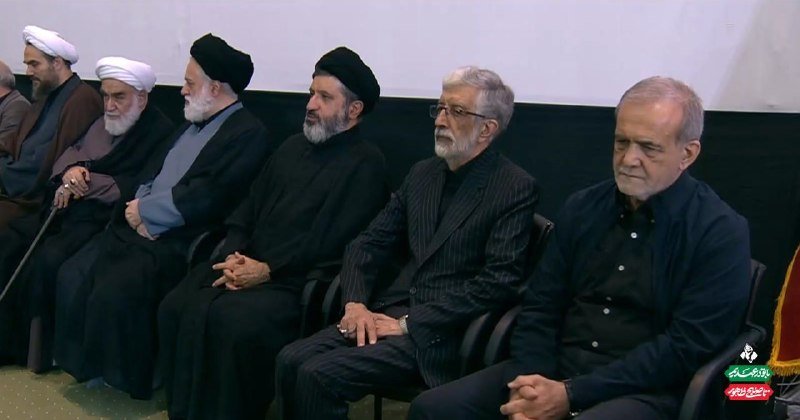
At roughly 14:22 UTC on 18 August 2026, a BRICS News flash carried on Telegram reported that a bulk carrier had been struck, with at least one casualty reported, in or near the Strait of Hormuz. Hours earlier, the same channel carried a line from the Iranian foreign minister describing the United States as now "begging" for talks on Iranian terms. By mid-afternoon, Reuters was carrying an Iranian declaration that the strait would remain shut until Washington met the conditions of an interim deal. The same corridor, in other words, is now simultaneously the site of a kinetic incident, a diplomatic lever, and an economic squeeze that reaches far beyond Tehran.
What is unfolding in the Strait of Hormuz is the intersection of three pressures: a US military posture that has, by the South China Morning Post's reporting, priced local fishing fleets out of their own waters; an Iranian negotiating position that treats maritime traffic as a bargaining chip; and a tanker market that has no option but to absorb the disruption. Each thread, taken on its own, looks like an isolated story. Read together, they describe a chokepoint in which the people who live on the water are paying the bill for a confrontation between governments they do not control.
The fishermen who cannot go back out
The South China Morning Post reported on 18 August 2026 that US strikes had kept Iran's fishing fleet off the Strait of Hormuz, and that the skippers and crews can no longer afford to stay idle. The economics are straightforward: when a military exclusion zone, war-risk insurance surcharges, and the threat of being misidentified as a hostile contact overlap in a narrow shipping lane, small operators are the first to be priced out. The larger shipping companies can absorb premia and reroute through longer voyages; a Hormuz fishing family cannot.
The structural consequence is a slow privatisation of risk. Working coastal waters become the domain of navies, state-aligned cargo interests, and well-insured commercial fleets, while the local labour force migrates inland or into informal work. Whether or not the planners in Washington and Tehran would describe it as such, the displacement is a pressure point generated by the strike campaign and absorbed, in the first instance, by the people who had no part in the decision to strike.
The strait as a bargaining chip
Reuters reported at 14:50 UTC on 18 August that Iran had declared the Strait of Hormuz would remain shut until the United States met the conditions of an interim agreement. The framing matters: this is not a classical wartime blockade, with legal notice and a list of contraband, but a graduated denial-of-access posture tied to a specific set of demands. The foreign minister's earlier "begging" line, carried by BRICS News, is the diplomatic register of the same posture, a public inversion of the usual hierarchy in which Washington sets the meeting terms and Tehran accepts them.
Read in plain terms, the Iranian position translates a military deployment into a negotiating instrument. The strait is a chokepoint through which a substantial share of seaborne oil and liquefied gas passes; any sustained disruption moves prices and revenues in real time. By tying continued closure to "interim deal conditions," Iran converts the geography of the Persian Gulf into a standing credit line drawn against future US concessions. The US strike campaign, in turn, denies Iranian access to its own coastline and pushes pressure inland. Two governments are, in effect, trading leverage at the expense of the people who actually work the water.
A bulk carrier struck in the corridor
The day's BRICS News flash that a bulk carrier had been struck, with at least one casualty reported, adds a kinetic layer to the picture. The source items available to this article do not specify the vessel's flag, owner, cargo, casualty count, or which party struck it, and BRICS News is a Telegram channel rather than a primary maritime authority. The available source items do not specify whether the strike occurred inside the Strait of Hormuz itself or in adjacent waters at the strait's exit; readers should treat the location as "in or near the strait" pending primary maritime reporting, and treat the casualty figure as the minimum end of a range that could change as more reporting lands.
That said, the incident is consistent with what happens in a militarised chokepoint: misidentification, stray ordnance, insurance withdrawal, and the slow chilling effect on traffic that follows. Even a single strike in or near Hormuz moves the war-risk premia curve. Each carrier rerouted, each charter cancelled, each insurer raising its surcharge is another increment of pressure that the negotiating parties on either side can claim credit for.
Monexus assessment: the negotiating lane, and the contradictions inside it
Monexus assessment: the public Iranian framing of an "interim deal" suggests a sequence rather than a single document. Tehran is offering a reversible de-escalation in exchange for reversible US concessions, with the strait closure as the dial that can be turned up or down. The US side, having already committed forces and absorbed the political cost of strikes on Iranian targets, has an incentive to demand that any interim step be tied to verifiable Iranian behaviour. The two designs are not, in principle, incompatible. In practice they collide on the question of what counts as a verifiable step.
The serious obstacles to reading either side's framing at face value are visible in the same day's reporting. The foreign minister's "begging" characterisation sits awkwardly next to the US side's public posture that no talks are scheduled; the available source items do not specify which account is the operative one and the channels through which, if any, communication is actually flowing. A second, more specific question hangs over the Iranian declaration of a strait closure tied to an interim deal: the source items carry Reuters' headline attributing the declaration to Iran without specifying which Iranian official is on the record, and parallel reporting elsewhere attributes the same declaration to the speaker of Iran's parliament. The available source items do not resolve that attribution. The dominant reading still holds, namely that the strait closure, the fishermen displacement, and the strike on a carrier all fit a coherent Iranian strategy of converting local pressure into international leverage, but the public temperature on both sides is louder than the verifiable movement at the table.
The plausible alternative read is that the Iranian declarations are performative, designed for a domestic audience and a non-aligned readership, and that the substantive negotiations are happening in channels that are not visible on the wires. The pattern across similar recent episodes is that the public posture runs hotter than the actual negotiating posture. The dominant reading is the more defensible one, but the gap between the two readings is narrower than the headlines suggest, and the next 48 to 72 hours of reporting will determine which one the market has to price.
Stakes, and what to watch
The stakes divide cleanly. Iran wins leverage for as long as the strait is closed and as long as insurance markets price the closure in. The United States wins leverage every day that Iranian fishermen stay off the water and Iranian negotiating flexibility erodes. The fishing communities on both sides of the Gulf, the crews of bulk carriers, and the importing economies that depend on Hormuz transit are paying the bill without a vote in any of it. The first-party US position that there are no talks scheduled is a direct counter to the Iranian framing, and the attribution question around who in Iran is on the record for the strait-closure declaration remains open in the available source items.
Over the next 48 to 72 hours, the markers to watch are: any primary maritime authority confirmation of the struck carrier, including flag, owner, casualty count and the exact location of the strike inside the strait or in adjacent Omani waters; the publication of a new round of US sanctions designations or waivers; and whether Iranian state media carries the "begging" line into a formal statement rather than a press remark, and from which institution. Each of those is a tell about whether the public negotiating lane is the real one.
Desk note: Monexus is leading this story on the Iranian negotiating framing and the SCMP reporting on the fishing fleet, rather than on US strike communiqués, because the source items available to this article centre the Iranian position and the local economic cost. Where the available sources name an Iranian declaration, we have said so; where they do not specify the vessel, the casualty count, the location of the strike, or which Iranian official is on the record, we have said that too.
Wire provenance
This editorial synthesis draws on the following public wire/social posts:
- https://www.scmp.com/news/world/middle-east/article/3364408/us-strikes-kept-irans-fishermen-hormuz-they-can-no-longer-afford-stay-idle
- https://reut.rs/4x5F4uF
- https://x.com/Reuters/status/2089726534072328645
- https://t.me/bricsnews/17741
- https://t.me/bricsnews/17740
- https://t.me/SCMPNews/109356