Trump pauses 50% Canada tariffs with hours to spare, framing it as a deal
Less than two hours before a 50% US tariff on Canadian imports was set to take effect, President Trump said the two countries had reached a deal. The pause buys three days; the underlying dispute does not.
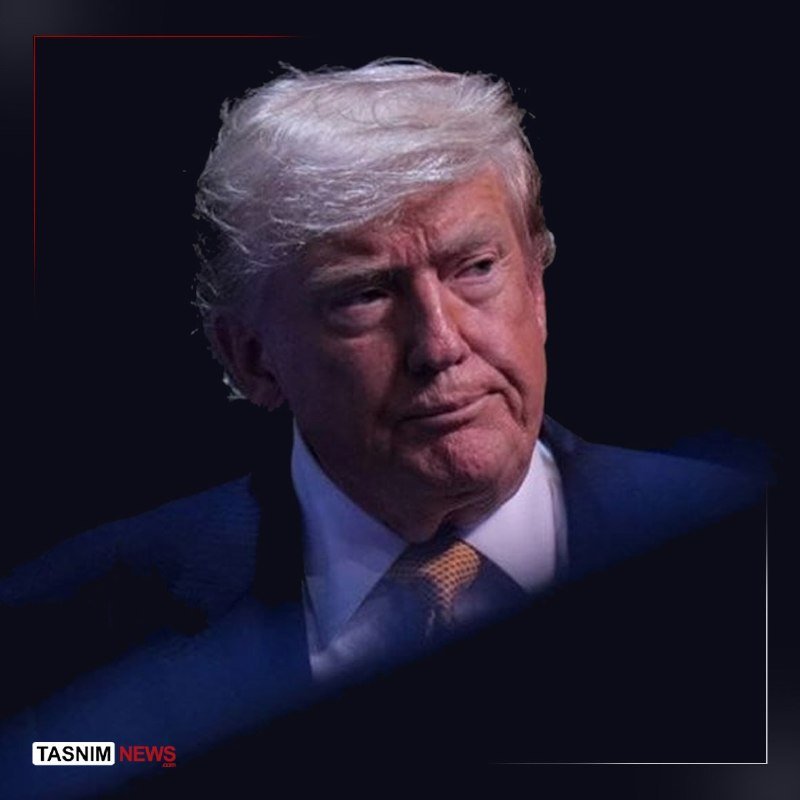
At 04:55 UTC on 19 August 2026, President Donald Trump announced that the United States and Canada had reached a last-minute agreement to delay a 50% US tariff on Canadian imports that had been scheduled to take effect later the same morning. NPR's write-through of the announcement, posted within the hour, described the deal as struck "less than two hours before the sanctions were to go into effect," with Trump framing the pause as a concession he had extracted rather than one he had conceded.
The numbers make the escalation legible. A 50% duty on Canadian imports is not a border-adjustment tweak; it is a near-shuttering of the integrated supply chains that link Ontario auto parts to Michigan assembly lines, Alberta energy to US refineries, and Quebec aluminium to US aerospace. That Trump was prepared to let the duties snap into place at all is itself the story. That Canada secured even a three-day reprieve suggests both sides calculated the cost of the alternative and flinched.
What was actually agreed
The reporting from NPR, carried through BBC World on Telegram at 03:38 UTC and relayed again by The Indian Express at 03:52 UTC, converges on a narrow factual core: Trump "will delay imposing new tariffs on a wide array of Canadian goods for three days," per the BBC's framing, while both governments describe themselves as "close to a deal." No joint text has been published. No annexes. No sector-by-sector schedule of which duties would lift and which would remain.
That absence is the point. The deal is performative in the precise sense: it exists to convert a scheduled rupture into a negotiating window, while leaving the rupture itself on the table. Trump's social-media posting, relayed through wire channels, treats the pause as evidence of Canadian flexibility rather than US restraint. The Canadian government's communications, where they appear in the available reporting, emphasise the volume of cross-border trade protected by even a temporary hold.
The clock matters more than the headline
Three days is not a negotiating horizon. It is a deadline with a fuse. Any agreement announced inside that window will be hailed by the White House as vindication of the threat-based negotiating style that has defined Trump's second-term trade policy: announce a punitive rate, let markets and counterparties absorb the shock, then claim credit for the climb-down that follows.
The structural read is that the tariff architecture is no longer a policy instrument; it is a calendar. Duties are toggled on and off to manufacture urgency, not to express a settled position on comparative advantage or industrial policy. The wire coverage treats each toggle as a discrete event; the cumulative effect is a permanent state of contingent risk for any North American firm that depends on just-in-time cross-border logistics.
What neither side has answered
The available source items do not specify which Canadian goods remain subject to existing duties, what the Canadian side offered in exchange for the pause, or whether the three-day window includes any formal consultation with provincial premiers. The Indian Express relay of the Trump announcement does not carry a Canadian government readout. The BBC write-through describes the two countries as "close to a deal" without enumerating the remaining distance.
Monexus assessment: the structural pattern here is not new, but the compression is. Earlier tariff threats in this cycle were measured in weeks; this one was measured in hours, and the reprieve in days. Each iteration shortens the negotiating window and raises the cost of a missed deadline. The risk is not that the 50% rate ever actually takes effect; it is that the threat of it remains permanently executable, and that firms across the integrated North American economy must price that executability into every contract they sign.
Stakes across the border
If the three-day window closes without a deal, the immediate losers are denominated in Canadian dollars: Ontario manufacturers facing instant margin compression, energy exporters absorbing a duty that US refiners will pass through, and aluminium producers priced out of aerospace bids against Russian and Gulf competitors. The US-side losers are subtler: assembly plants in Ohio and Michigan that depend on Canadian inputs, and agricultural exporters who would face reciprocal duties from Ottawa.
The forward watch is straightforward. If a deal is announced before 22 August 2026, expect the Trump communications apparatus to treat the threat as the cause and the deal as the vindication. If no deal materialises and the 50% rate snaps in, expect a second round of last-minute diplomacy, because the political cost on both sides of the border is now too visible to absorb without a face-saving formula. What neither outcome changes is the underlying architecture: a bilateral relationship in which the most consequential economic decisions are being made on a 72-hour cycle, with the actual producers and workers downstream receiving the volatility as cost.
Monexus framed this as a tariff-calendar story rather than a deal story: the pause is the news, but the structural shift toward deadline diplomacy is the analysis. Wire outlets led on the announcement and the countdown; the forward-looking read on supply-chain risk is ours.
Wire provenance
This editorial synthesis draws on the following public wire/social posts:
- https://www.npr.org/2026/08/19/g-s1-139156/trump-canada-tariffs
- https://t.me/BBCWorldoffl/78435
- https://ift.tt/Psd5E78
- https://t.me/IndianExpress/813953
- https://t.me/IndianExpress/813939