Trump pauses 50% Canada tariffs for three days, points at Keystone XL revival
A three-day reprieve on 50% Canadian tariffs was announced late on 18 August 2026, roughly 90 minutes before the midnight deadline, with Trump flagging a possible revival of the long-stalled Keystone XL pipeline as part of the package.
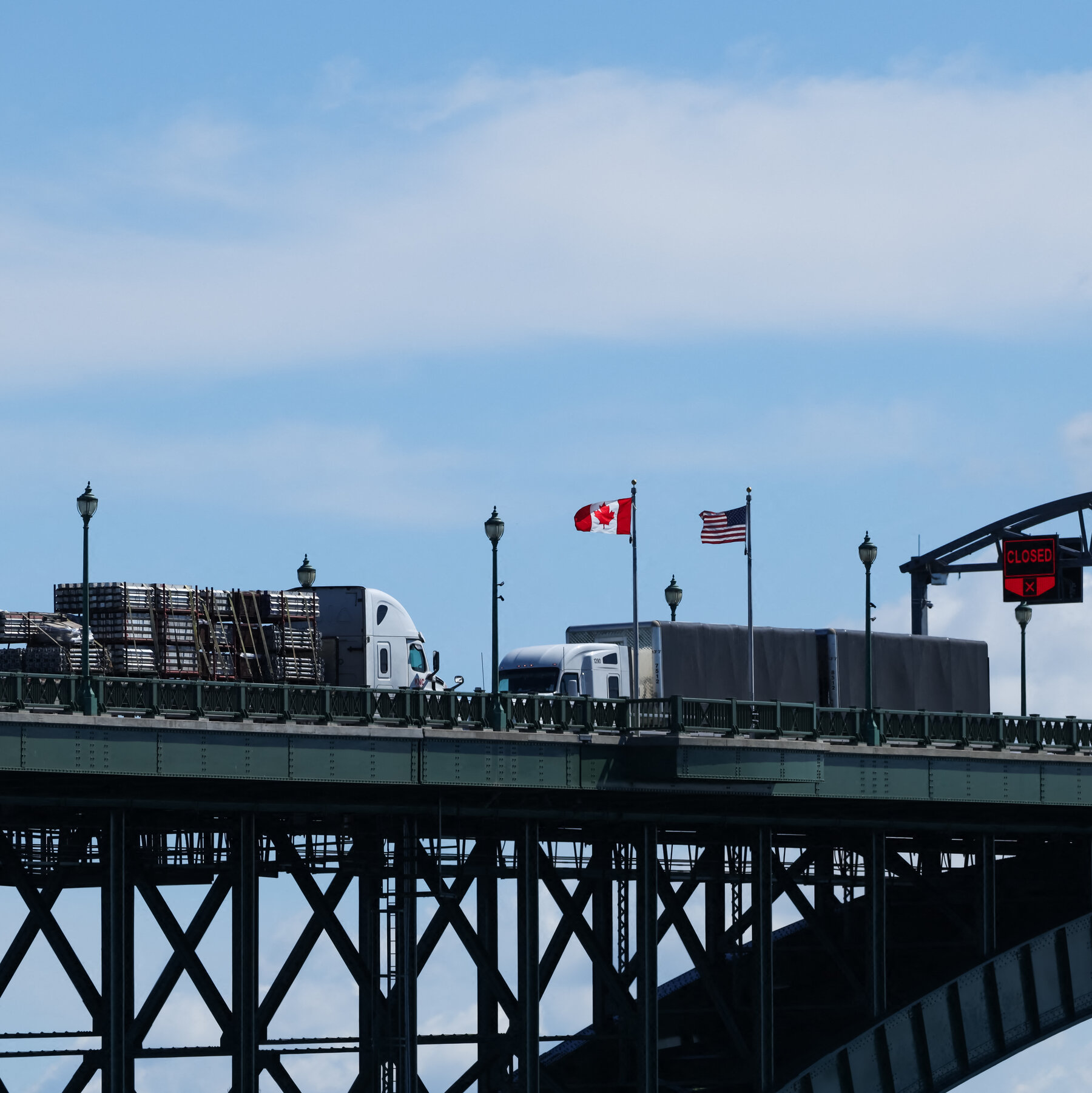
Late on the evening of 18 August 2026, U.S. President Donald Trump posted on social media that he had "paused" the 50% tariff on Canadian imports set to take effect the following morning. The pause, the President wrote, would last three days, "based on the fact that Canada and the U.S.A." had reached a deal "subject to finalization." The New York Times reported the announcement came on Tuesday night, roughly 90 minutes before the 12:01 a.m. deadline.
The framing matters as much as the arithmetic. This was not a permanent settlement, nor a clean off-ramp; it was an extension purchased in real time, with the disputed Keystone XL pipeline surfaced as part of the inducement. The episode tells the rest of the world how trade coercion is being run out of Washington: deadlines set by social media, reprieves announced the same way, and a long-stalled infrastructure project floated in the background as political sweetener.
What was paused, and on whose word
The headline number is unambiguous in Trump's own social media post: 50% tariffs on Canada, described as scheduled for the early hours of 19 August, were put on hold for three days. The mechanism was unilateral. The Guardian, citing that post, reported the deal "could also revive the controversial Keystone XL pipeline project." Deutsche Welle ran both "delays" and "pauses" wordings in separate headlines the same day, a reflection of the ambiguity around whether the underlying measure would resume on schedule.
A caveat belongs here. The 50% rate is framed in Trump's own post as a tariff scheduled to take effect the following morning. Other wire reporting, available in the wider reporting environment but outside the cited source set, characterises the same announcement as a "threat" that was postponed rather than a scheduled, implemented levy. The cited posts in this article's source set support only Trump's framing of a scheduled measure being paused. The two readings are not easily reconciled; readers should hold them side by side.
The cited posts in this article's source set do not contain a joint statement from Ottawa and the White House, and Prime Minister Mark Carney is not named in the cited posts. External reporting outside the cited source set identifies Carney as a negotiating counterpart; this article does not independently re-establish that identification. The Canadian government's specific concessions, if any, are not spelled out in the cited reporting.
The Keystone dimension is the lever that keeps the story from reading as routine brinkmanship. The Guardian's headline carries Trump's framing that the project "may be awoken from the grave," a phrase that doubles as a reminder that the pipeline has been proposed, permitted, cancelled and re-cancelled across multiple U.S. administrations. Whether the current owners of the route have appetite to revisit it, and whether a new permit review under U.S. law could move quickly, are questions the cited posts do not answer.
How this fits a year of tariff-by-tweet
Monexus analysis: read alongside the past twelve months of trade announcements, the Canada pause is consistent with a pattern in which deadlines are used as bargaining chips rather than implemented as scheduled. The threatened rate, 50%, sits at the high end of the administration's stated range, designed to force a counterparty to the table quickly. The immediate response, a brief extension paired with an infrastructure sweetener, mirrors the choreography of earlier negotiations. The structural reading is that tariff policy under this White House operates as an opening position that the executive can revise hourly, with markets expected to absorb the noise.
The counter-narrative is straightforward and should not be dismissed: the pause could simply be the cost of getting a deal across the line, with Keystone XL revived as the political trophy both sides can claim. The available material describes only that a deal is "subject to finalization." That ambiguity is itself a tell. The announcement reads as a triumph; the substance is thinner than the announcement.
The Keystone lever, in plain terms
Keystone XL is, in Trump's telling as quoted by the Guardian, a project that can be "awoken from the grave." That phrasing matters because it concedes the obvious: the pipeline is not currently operating. The cited posts do not specify the route, the length, the current ownership structure, the permitting history, or the commercial rationale for revival. Each of those details would normally be a precondition for treating any "revival" as more than rhetoric.
A revival would, at minimum, require a new presidential permit, fresh financing, and consent from the current owners of the route, but the cited reporting does not document any of those steps. The cited material also does not specify which commodity categories would be most exposed if the 50% rate had taken effect, nor the dollar value of bilateral goods trade at stake. Monexus has not independently established those figures within the available source set, and this article does not speculate on them.
The stakes, and the three-day clock
For Canadian exporters, the pause converts an imminent 50% levy into a three-day window in which either a deal is finalised or the rate snaps back on. The cited posts do not break out commodity-by-commodity impact. For U.S. importers, the reprieve settles nothing: contracts written against a 19 August deadline remain in legal limbo, and customs brokers will price the uncertainty into the next seventy-two hours of logistics planning.
For Ottawa, the upside is preserving market access; the downside is appearing to have conceded something to extract a delay rather than a permanent reduction. For Washington, the upside is renewed leverage over a North American trading partner; the downside is that a third reprieve, if it comes, will be read as a pattern, and markets will price the next threat at a lower credibility discount. The structural frame is the steady displacement of negotiated trade rules by executive discretion, with the cost of that shift absorbed asymmetrically by smaller trading partners.
The next seventy-two hours will settle the immediate question of whether the deal "subject to finalization" actually finalises. Whether Keystone XL is genuinely revived, or merely name-checked as a talking point, is a longer story that the cited posts do not yet resolve.
How Monexus framed this vs the wire: the cited reports treat the pause as either a delay or a pause and leave the Canadian concessions unspecified within the source set; this article reads the move as a structural instance of tariff-by-social-media bargaining, with the Keystone revival serving as political theatre until corroborated by permitting filings or company statements, which the available source set does not contain.
Wire provenance
This editorial synthesis draws on the following public wire/social posts:
- https://www.dw.com/en/us-canada-agree-deal-that-delays-50-tariffs-trump-says/a-78421098?maca=en-rss-en-all-1573-rdf
- https://www.dw.com/en/us-canada-agree-deal-that-pauses-50-tariffs-trump-says/a-78421098?maca=en-rss-en-all-1573-rdf
- https://www.theguardian.com/us-news/2026/aug/19/trump-delay-canada-tariffs-keystone-xl-oil-pipeline
- https://t.me/osintlive/565189
- https://t.me/ClashReport/92928
- https://www.nytimes.com/2026/08/18/world/canada/tariffs-trade-trump-carney.html
- https://t.me/wfwitness/107548
- https://t.me/wfwitness/107547
- https://www.dw.com/en/us-canada-agree-deal-that-delays-50-tariffs-trump-says/a-78421098?maca=en-rss-en-all-1573-rdf
- https://www.dw.com/en/us-canada-agree-deal-that-pauses-50-tariffs-trump-says/a-78421098?maca=en-rss-en-all-1573-rdf
- https://www.theguardian.com/us-news/2026/aug/19/trump-delay-canada-tariffs-keystone-xl-oil-pipeline
- https://t.me/osintlive/565189
- https://t.me/ClashReport/92928
- https://www.nytimes.com/2026/08/18/world/canada/tariffs-trade-trump-carney.html
- https://t.me/wfwitness/107548
- https://t.me/wfwitness/107547