The pipeline, the data centres, and the price of the pitch
A Reuters explainer has put Keystone XL back in the news, while remarks attributed to Trump make a parallel claim that AI data centres will lower electricity costs. The available source items support the claims, but not the economics behind them.
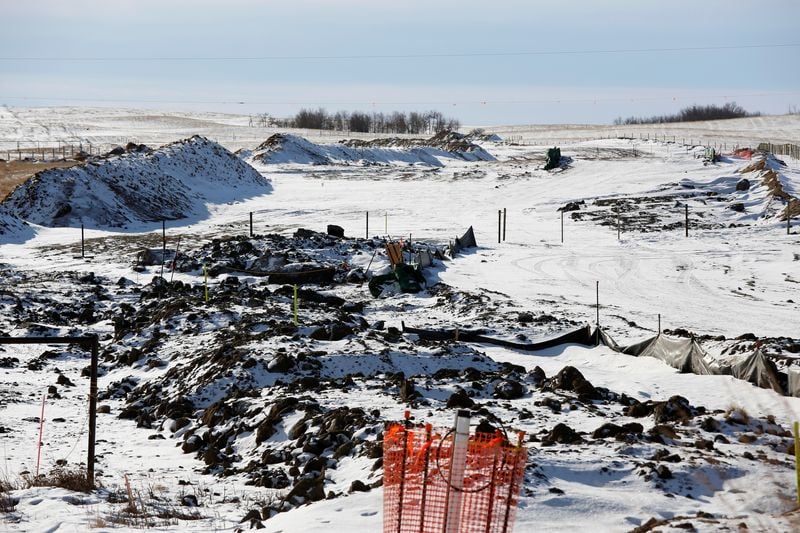
On 21 August 2026, Reuters published an explainer with the headline “Why is Trump talking about the Keystone XL oil pipeline?” The short item is significant because it places the pipeline back in the political conversation, but the available source material does not provide the explainer’s historical details or a description of any new policy action. On the same day, a series of remarks attributed to Trump and carried by the Telegram channel ClashReport made a separate infrastructure claim: AI data centres, he said, will lower electricity costs because they are building their own electric facility. The contrast is revealing. The pipeline’s return to public discussion is treated as a question by Reuters. The data-centre claim arrives as an answer.
That asymmetry is the point. A headline can establish that a subject has returned to the news without establishing what has changed in policy. A quoted assertion can establish what was said without establishing that the promised benefit will occur. Political infrastructure pitches become difficult to evaluate when those two forms of certainty are allowed to blur together. The source items here support the words and the attention. They do not support the ratepayer economics, power-system accounting or emissions assessment needed to turn those words into a finding.
The pipeline returns to the conversation
The available Reuters material is limited to the explainer’s title, publication date and link, as well as a same-day Investing.com page carrying the same headline. It does not specify, in the source items supplied for this article, when Keystone XL was first proposed, which companies sponsored it, what permits governed it, or what action Trump has taken in relation to it. Those historical and policy details should not be supplied by inference.
What the record does establish is narrow but important: on 21 August 2026, Reuters considered the question of Trump’s reference to Keystone XL explainer-worthy. The Investing.com page, also dated 21 August 2026, mirrors that framing. The topic has therefore returned to the news cycle, even though the supplied material does not tell us what material policy change, if any, accompanies the renewed attention.
Monexus analysis: the political value of mentioning a long-discussed pipeline may lie in making an old project feel newly available. But the available evidence establishes renewed attention, not renewed construction. A pipeline can be a symbol, a bargaining position or a policy proposal. It is not evidence of steel in the ground.
The data-centre pitch, taken at face value
Three remarks attributed to Trump were carried by ClashReport on 21 August 2026. At 21:01 UTC, the channel posted: “I only make good deals.” At 21:09 UTC, it posted: “AI data centers will lower the electric cost because they are building their own electric facility.” At 21:11 UTC, it posted: “If I ran a community, I would want to have the data centers. They are clean.”
These statements make two distinct propositions. The first is about the price of electricity. The second is about the acceptability and environmental character of data-centre development. The quoted material contains no rate-impact model, electricity tariff filing, power-market assessment or emissions accounting. It also does not specify the type, location or operating arrangements of the electric facility referenced in the 21:09 UTC post.
The source relay therefore supports attribution of the claims, not verification of their substance. That distinction matters especially because a facility built by a data-centre operator is not self-evidently a mechanism for reducing the price paid by nearby households. The available posts do not say how any cost would be shared, how generation capacity would connect to the grid, or who would bear the expense. The clean-data-centre proposition is equally unsupported by the supplied material. The post says the facilities are clean. It provides no accounting behind that description.
What the pattern looks like in plain terms
Monexus analysis: read the two subjects together and a pattern becomes visible. The pipeline is presented through the language of renewed political attention. The data centres are presented through the language of guaranteed public benefit. One item is a question about why a politician is talking about a project; the other is an answer to who should host the next wave of computing infrastructure.
Neither proposition is made more persuasive by placing it beside the other. The common political technique is the substitution of confidence for evidence: a project becomes credible because it is described as a good deal, or because its promised advantages are stated as if they were settled outcomes. The public deserves a more demanding test. For Keystone XL, the question is what, if anything, has changed beyond the discussion. For data centres, the question is what, if anything, would actually reduce a household electricity bill or establish that a facility is clean.
The supplied items do not identify a relevant public-utility decision, a rate filing or an emissions record. They also do not identify a new federal action concerning either project. The result is not that either project is necessarily uneconomic or harmful. It is that the evidence needed to make that determination is not in the source record reviewed here.
The honest framing
The honest framing is also the simpler one: infrastructure has real costs, and political claims about infrastructure require real records. A renewed headline does not establish a renewed pipeline. A claim that data centres are clean does not establish an emissions result. A claim that they will lower electric costs does not establish a household saving.
The next useful test would be specific rather than rhetorical. For any proposed data-centre project, the relevant evidence would include the electricity supply arrangement, the facility’s expected load, the applicable tariff treatment and any publicly available assessment of costs and emissions. For Keystone XL, the relevant evidence would include the policy or commercial action that explains why the project is being discussed now. Those records are not supplied in the available source items, so the direction of future outcomes cannot be established from this thread alone.
There is a broader danger in treating a pitch as a result. It encourages the public to confuse visibility with delivery and promised savings with measured savings. The proper response is neither reflexive opposition nor automatic acceptance. It is to ask which institution, filing or accounting would make the claim verifiable, and then wait for that evidence before declaring victory.
Desk note: Monexus separated the Reuters headline’s evidence of renewed attention from claims about Keystone XL’s history or status, and treated the ClashReport posts as relays of attributed remarks rather than independent verification of electricity prices or environmental performance.
Wire provenance
This editorial synthesis draws on the following public wire/social posts:
- http://reut.rs/4znTesK
- https://www.investing.com/news/commodities-news/explainerwhy-is-trump-talking-about-the-keystone-xl-oil-pipeline-4871917
- https://t.me/ClashReport/93204
- https://t.me/ClashReport/93205
- https://t.me/ClashReport/93201