Carney calls Trump's 50% tariff a 'miscalculation' as Canada walks away from
Prime Minister Mark Carney said Canada walked away from the trade talks to
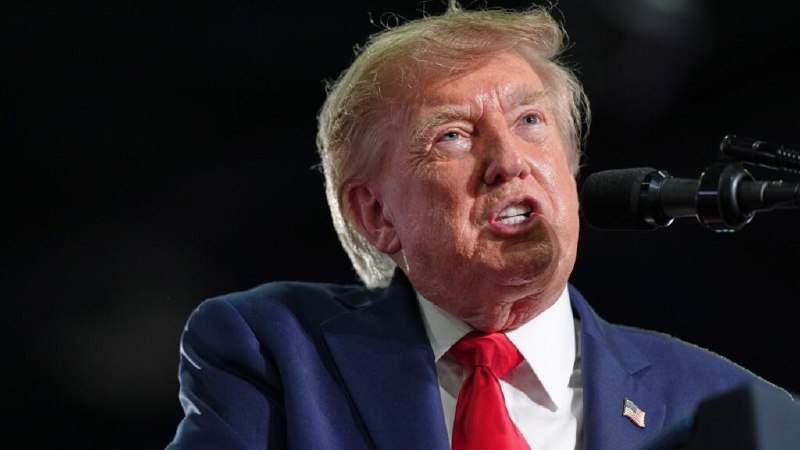
A 50% United States tariff on roughly $20 billion of Canadian products took effect in the early hours of Saturday 22 August 2026 after a final round of negotiations failed to clear the impasse. By afternoon UTC, Prime Minister Mark Carney was on a podium calling the duties a "miscalculation" by Washington, saying Canada had walked away from the table to protect its sovereignty and pledging reciprocal action "dollar for dollar." The BBC reported the speech on Saturday morning, with Carney's comments relayed across Telegram channels including BRICS News and Clash Report within the hour.
The collapse of the talks, and Carney's decision to declare them dead on a Saturday rather than let them linger into the working week, is itself the story. A G7 neighbour breaking off negotiations with the world's largest economy on the eve of a 50% duty is not a procedural footnote; it is a choice with a price. Carney's framing, that the United States is trying to "break us so they can own us," is the line Ottawa has decided to organise its response around, and it tells readers where the political centre of gravity now sits inside the Canadian government.
The shape of the new wall
The duties land on about $20 billion of Canadian exports, a single tranche, at a single rate, on a single date. According to a Telegram relay from Jahan Tasnim, the 50% rate was set to take effect "from tonight," with Canada having stopped trade negotiations with the United States. Carney's response, relayed by BRICS News and Clash Report, was direct: "Last spring, I warned that America is trying to break us so they can own us, and I promised that that would never, ever happen. We are keeping that promise. Canada is becoming stronger and less dependent on America."
Ottawa's retaliation list is the next variable, and Carney's "dollar for dollar" formula is doing the political work. It is a phrase designed for the cameras and for the bond and currency desks, and it commits Canada to a mirror schedule whose economic bite depends on which US exports are targeted and on the retaliation timetable. The available source items do not specify either variable in detail; the headline formula is what is on the record. Monexus analysis: the political durability of that pledge depends less on the headline number and more on which provincial premiers hold the line when local jobs start to bend, a question the available reporting does not yet answer.
Carney's framing of the rupture
The Saturday speech, reported by the BBC, was Carney's most explicit public account of why the talks ended. He said Canada walked away "to protect its sovereignty," and described Trump's fresh tariffs as a "miscalculation." The phrasing matters: it is the language of a government that has decided to make this a sovereignty story rather than a balance-of-payments story, and the choice will colour every negotiation that follows, whether they resume next month or next decade.
A second Carney line, posted by the X account Sprinter Press with video, sharpened the sovereignty frame further: "We cannot control the storm that is brewing in Washington. … Canada has never had illusions about America." Monexus analysis: that formulation is a long way from the continental integration rhetoric that defined Canadian trade policy for a generation. It positions Ottawa as preparing for an extended standoff rather than a sharp exchange followed by a return to the table. The available source items do not specify whether back-channel contacts are live, which leaves open the question of whether this is a rupture or a posture.
The fundraiser tape
Into the trade wreckage dropped an audio clip, circulated by the ClashReport Telegram channel, in which US Vice President JD Vance is heard at a private fundraiser mocking Carney's negotiating posture. The line doing the rounds: Carney "comes in and puffs his chest out and says, 'I'm going to out-tough Donald Trump.' It's hilarious." The authenticity of the recording has not been independently verified by Monexus, and the available source items do not specify who attended the fundraiser, when it was held, or who first captured the audio. Whether Vance's office has issued any statement responding to the clip is not specified by the cited source items.
Monexus assessment: the clip matters because it shifts the frame. Until now, the collapse could be told as a structural story about rules-of-origin disputes and the renegotiation of the continental trade compact. The Vance audio tells it instead as theatre: two leaders performing toughness for two domestic audiences. That is probably the more honest reading. The public performances are increasingly the policy, and a leaked quip from a vice-presidential fundraiser is now part of the documentary record.
What the dollars are saying
Monexus assessment: the financial-market reaction is the variable that will determine how long the stand-off lasts. A textbook tariff shock is inflationary on the importing side and recessionary on the exporting side, and Canada is on both sides of this particular ledger. The Bank of Canada's response function in the days ahead is one read on whether Ottawa reads the duties as a price event or a growth event, though the available source items do not specify the bank's policy posture, its recent rate path, or the timing of its next scheduled statement. On the structural frame, a 50% rate between two G7 economies reads less as a routine adjustment and more as a candidate moment of rupture inside a continental framework that had survived for decades; that characterisation belongs to the analyst, not to the cited record.
Stakes and what the thread does not yet tell us
For Ottawa, the immediate cost is concentrated in the provinces whose exports sit inside the roughly $20 billion tranche, a list the available source items do not itemise by sector. For Washington, Monexus assessment: the burden would land on US importers and, through normal pass-through, on consumers, on a reading consistent with how tariffs generally distribute costs in the cited record, though the available source items do not specify how this Canada tranche compares in scale to earlier rounds of duties on other trading partners. For the continental compact itself, the question is what survives, and the cited source items do not answer that either.
What remains genuinely uncertain is whether Carney's dollar-for-dollar pledge survives its first provincial pressure test. The available source items do not specify the retaliation schedule in detail, only the headline formula. Neither side has indicated a return to the table; the available source items do not specify whether back-channel contacts are live. Monexus assessment: a leaked personal aside tends to harden negotiating positions rather than soften them, since any climbdown now reads as a response to a partisan jab, though the cited record does not establish that mechanism in this case. The next data point worth watching is the Bank of Canada's next scheduled policy appearance; the cited source items do not date one.
Desk note: this update integrates Carney's Saturday-morning speech and the BBC's reporting on the talks' collapse, alongside the BRICS News, Clash Report, Sprinter Press and Jahan Tasnim relays. Monexus leads with the BBC's headline characterisation of "miscalculation" and walks the Vance tape as unverified audio rather than as a sourced quotation of policy. Where earlier drafts asserted broader context on sectoral duties, the CUSMA review clock and market reaction, this revision pares back to what the cited source items actually contain, and labels the rest as analysis or acknowledged gaps.
Wire provenance
This editorial synthesis draws on the following public wire and social posts:
Wire provenance
This editorial synthesis draws on the following public wire/social posts:
- https://www.bbc.co.uk/news/articles/cx272np7vgyo?at_medium=RSS&at_campaign=rss
- https://t.me/ClashReport/93302
- https://t.me/bricsnews/17803
- https://x.com/SprinterPress/status/2091202459871912431
- https://t.me/JahanTasnim/231177
- https://t.me/ClashReport/93247
- https://t.me/hindustantimes/39898
- https://t.me/insiderpaper/44090