Ozon warehouse in Orenburg hit in drone attack, governor says
A logistics warehouse operated by Russian online retailer Ozon was hit in a drone attack in Russia's Orenburg region, according to a Reuters headline posted at 07:40 UTC on 23 August 2026, citing the regional governor. Ukrainian attribution is reported by a Telegram channel, but the supplied material does not establish an official Ukrainian claim.
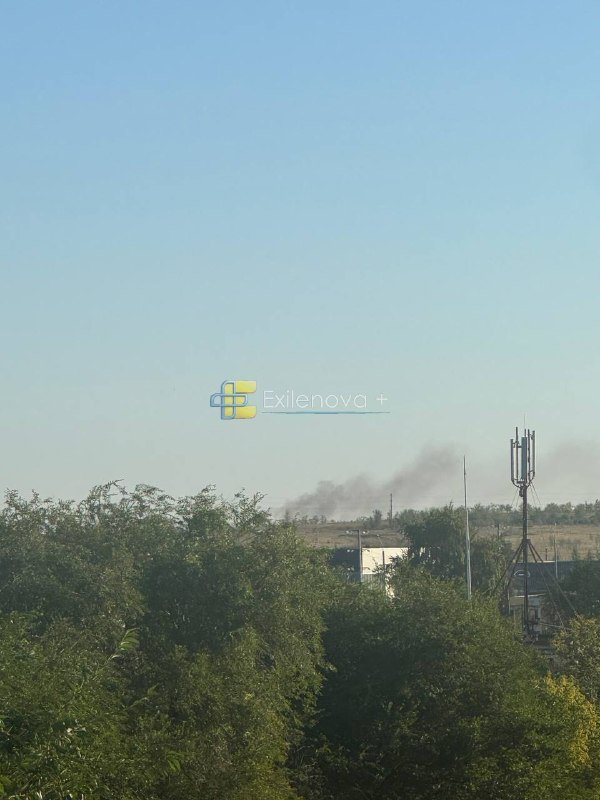
A logistics warehouse operated by Russian online retailer Ozon was hit in a drone attack in Russia's Orenburg region, according to a Reuters headline posted at 07:40 UTC on 23 August 2026. Reuters attributed the report to the regional governor; the supplied headline does not name the governor.
The available evidence establishes the location, target and reported method of attack, but not the full operational picture. A Telegram channel attributed the strike to Ukrainian forces, while the Reuters item consists of a headline and a social-media post that does not itself name a perpetrator. The distinction matters. This was reported as an attack on a commercial logistics facility, but the available sources do not establish damage, casualties, the number of drones involved, or the precise point of impact.
What was reported
Reuters carried the headline, "Russian online retailer Ozon warehouse in Orenburg region hit in drone attack, governor says," in a post timestamped 23 August 2026 at 07:40 UTC. The wording attributes the information to the regional governor; the supplied headline does not name the governor.
WarTranslated, a Telegram channel that relays and translates material from the Russia-Ukraine war, posted at 06:53 UTC on 23 August that the Ozon warehouse in Orenburg had been attacked. That post is consistent with the Reuters account but adds no new detail in the supplied material.
A separate Telegram channel, noel_reports, stated at 06:31 UTC on 23 August that Ukrainian forces had struck an Ozon logistics centre in Orenburg, Russia. The same post said at least one impact was reported, that no major fire was visible at the site, and that the facility covered about 200,000 square metres. Those details are claims from the channel, not independently corroborated findings in the supplied evidence.
The temporal order is worth preserving. The noel_reports post appeared nine minutes before WarTranslated's report and roughly 18 minutes before the Reuters post. The sequence does not prove that one account derived from another, but it shows that the strike was being discussed across several channels before the Reuters item appeared.
Attribution, carefully bounded
The available source items provide two different levels of attribution. Reuters's headline says the attack was reported by the Orenburg region governor. The noel_reports post explicitly attributes the action to Ukrainian forces. The supplied material does not provide an official Ukrainian statement claiming responsibility, nor does it independently establish the chain of command or the type of drone used.
That is a narrower and more defensible account than presenting Ukrainian involvement as settled fact. The Telegram channel's attribution is relevant reporting, but it is not equivalent to a public Ukrainian military or government statement. The Reuters item is also limited in the available evidence to its headline and social-media post, so this account does not rely on it to establish details beyond the report that the governor said the warehouse was hit in a drone attack.
The alternative reading is equally important. The available material could reflect a genuine strike whose details are still being assembled, or a developing report in which the actor, weapon and operational consequences have not yet been independently established. Monexus analysis: the prudent conclusion is that the event is reported, while responsibility and impact remain unevenly documented.
The logistics frame
The Ozon name places the incident inside Russia's commercial distribution network. The supplied source items do not specify what the warehouse stored, whether it was operating at capacity, or whether the facility had a direct connection to military logistics. They also do not establish the scale of any interruption beyond the reported absence of a major visible fire in the noel_reports account.
A Telegram post from englishabuali, timestamped 05:55 UTC on 23 August, offered a broader interpretation. It linked the reported Ozon attack to earlier damage to logistics centres associated with Wildberries, which it described as Russia's largest retail company, and said Ukraine had begun attacking logistics complexes of Russia's second-largest retailer. The supplied headline identifies the second retailer by implication but does not itself provide a complete account of those earlier attacks.
That framing points to a possible pattern of pressure on Russian retail logistics, not to a fully demonstrated sequence. The thread evidence supports the claim that the Ozon incident was being connected to a wider retail-logistics narrative by one Telegram account. It does not independently establish how many Wildberries facilities were affected, what damage occurred, or whether the incidents were part of a coordinated campaign.
Monexus assessment: the structural significance lies in the target category rather than in an established national economic effect. A warehouse can matter commercially without being shown to be a military node. Until the evidence distinguishes civilian logistics from military use, treating the strike as economic attrition would outrun the supplied reporting.
What remains uncertain
The evidence is strongest on the narrow event: an Ozon warehouse in Orenburg region was reported hit in a drone attack on 23 August 2026, with Reuters attributing the report to the regional governor. It is weaker on the actor. The noel_reports post attributes the strike to Ukrainian forces, but no official Ukrainian claim appears in the supplied items.
It is also limited on consequences. The noel_reports account reports at least one impact and no major fire visible at the site, and gives a facility area of about 200,000 square metres. The supplied material does not specify casualties, the number of drones, the damage assessment, the precise location of the hit, or the facility's operating status after the attack. Those are not minor omissions in a strike report. They are the facts required to judge military effect, civilian risk and the scale of the disruption.
The next useful evidence would be an official statement from Ukraine or the relevant Ukrainian military authority, a fuller Reuters account, or an operational statement from Ozon. The immediate question is not whether the incident fits a preferred narrative, but whether the attribution and material consequences can be confirmed independently. Until then, the Ozon attack is a reported expansion of pressure on a Russian commercial logistics site, not proof by itself of a broader campaign against Russia's retail sector.
Desk note: this article is scoped strictly to the four supplied source items. The title reflects the Reuters headline's wording rather than asserting a perpetrator; the body treats Ukrainian attribution as a channel-level claim and flags the absence of an official Ukrainian statement. Independent reporting by Anadolu Agency, Kyiv Post and others points to fire and operational impact at the Orenburg site, which is directionally consistent with the supplied material but is not used here as primary evidence.
Wire provenance
This editorial synthesis draws on the following public wire/social posts:
- http://reut.rs/4xTSB8J
- https://x.com/Reuters/status/2091430266808012818
- https://t.me/wartranslated/18273
- https://t.me/noel_reports/51533
- https://t.me/englishabuali/78146