Carney draws the line: Canada to impose dollar-for-dollar tariffs on US goods from 8 September
Prime Minister Mark Carney has announced retaliatory tariffs on US steel, electronics and other goods starting 8 September, using a dollar-for-dollar formula he framed as a refusal of escalation as 'bait'.
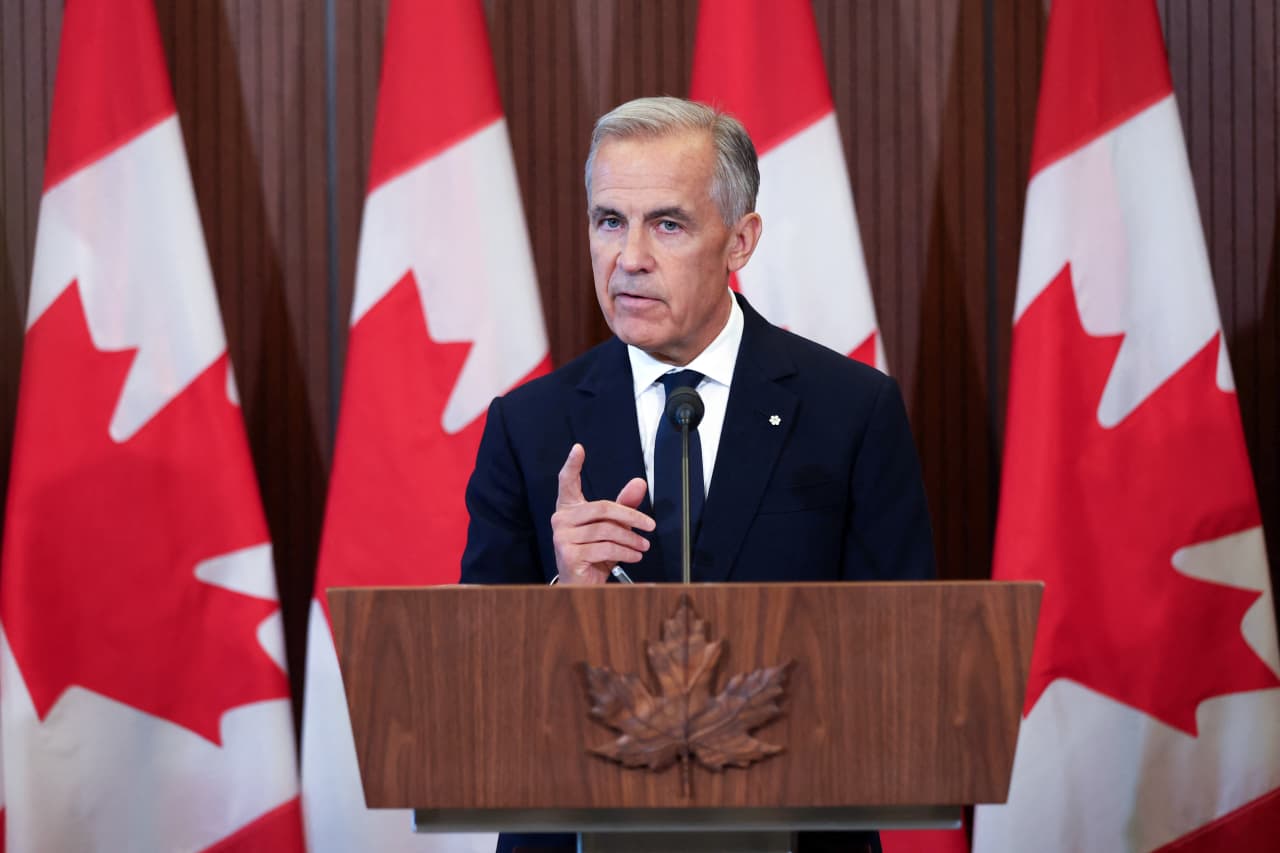
Ottawa moved on 23 August 2026 to put a price tag on its trade dispute with Washington. Prime Minister Mark Carney said Canada will impose "dollar-for-dollar" retaliatory tariffs on US imports starting 8 September, hitting American steel, electronics and other products, according to reporting from CGTN, Al Jazeera and the South China Morning Post.
The dollar-for-dollar formulation is the political centre of gravity of the package. It signals that the size of the Canadian response will be calibrated to the size of whatever US duties have been placed on Canadian exports, rather than fixed in advance as a one-off political gesture. It is also, deliberately, framed as refusal of escalation rather than as a provocation in its own right. The South China Morning Post's write-up of the announcement has Carney declining to characterise the US posture as personal provocation while still confronting Washington head-on; the Post's headline is that Carney "refuses to take Trump's 'bait'". That distinction does the rhetorical work of the entire package.
What Carney actually announced
The headline figure is the start date: 8 September 2026. From that day, Al Jazeera reports, the duties will be applied to a defined list of US products that includes steel and a broad "electronics and other products" category, with the Canadian response calibrated to whatever US duties are in force on Canadian exports at the time. CGTN's reporting uses the exact phrase "dollar-for-dollar" to describe the mechanism, while Disclose.tv's wire of the same announcement also names 8 September as the effective date.
Three details from the available reporting matter for anyone trying to size the announcement. First, the dollar-for-dollar formulation ties the scale of the Canadian response to the scale of whatever US measures are already in place against Canadian exports; it is not described in the available sources as a fixed-dollar political number. Second, the product list named in initial coverage is narrower than a full-spectrum tariff but covers the politically sensitive steel sector that has anchored North American industrial politics for half a century. Third, the 8 September effective date gives both governments roughly two weeks between the announcement and the duties taking effect.
Why "bait" is the operative word
The most revealing line in the Carney rollout is the choice not to match rhetoric with rhetoric. The South China Morning Post's account has Carney declining to characterise the US posture as personal provocation even as he announces a sharp economic response. That is a tactical choice, not a temperamental one. By declining the bait of reciprocal insults, the prime minister keeps the argument about goods and rules rather than handing Washington a fight about personality that the domestic US news cycle would dominate.
Monexus assessment: the framing is built to give Carney optionality against an unpredictable US news cycle. If the next headline from Washington is a tariff hike, the dollar-for-dollar formula gives him a pre-positioned response that does not require new political capital. If the next headline is an offer to negotiate, he has room to talk without having burned domestic credibility on personal attacks. That optionality, not the specific dollar figure, is the asset the announcement buys.
The structural frame
What Canada is doing fits a pattern visible across multiple trade corridors over the past several years. Industrial policy has been migrating from the language of mutual benefit toward the language of managed exposure, with tariffs increasingly deployed as an instrument of domestic political alignment rather than as a narrow trade-remedy tool. Within that pattern, Ottawa's position is unusual in one specific respect: the size of its trade exposure to a single partner makes the cost of asymmetric escalation unusually high, which gives the dollar-for-dollar formulation a particular political weight.
Monexus analysis: read in that light, the formula is less a provocation than an attempt to convert a discretionary bilateral relationship into something closer to a rule-based one. It says, in plain terms, that if tariffs are to be used as policy, the cost will be felt on both sides of the border rather than concentrated on one. Whether that framing produces a negotiating settlement or a confirmed September escalation is the test the next fortnight will run.
Stakes and what we do not know
The near-term test is whether the gap between the 23 August announcement and the 8 September effective date produces a negotiated off-ramp or a confirmed escalation. The available reporting does not specify whether direct US-Canada talks are scheduled, what specific US tariff measures are in force against Canadian exports at the moment of the announcement, or whether the Canadian product list will be expanded before 8 September. The available sources do not specify the precise tariff rates or the legal mechanism Canada intends to use.
What the sources do specify is the political shape of the response: dollar-for-dollar, starting 8 September, framed as refusal of bait rather than as retaliation for its own sake. The detail that the next fortnight resolves will tell readers whether that framing was a negotiating posture or a verdict.
Desk note: The wire framing across Al Jazeera, CGTN and the South China Morning Post converges on Carney's announcement while diverging on emphasis: Al Jazeera foregrounds the trade-war escalation frame, CGTN the dollar-for-dollar mechanism, and the Post the political posture. Monexus reads all three as consistent with the same primary political act.
Wire provenance
This editorial synthesis draws on the following public wire/social posts:
- https://news.cgtn.com/news/2026-08-23/Canada-to-impose-dollar-for-dollar-tariffs-on-US-goods-Carney-says-1PPJvozu46Y/p.html
- https://x.com/CGTNOfficial/status/2091360315103658186
- https://www.aljazeera.com/news/2026/8/23/canada-to-hit-us-with-retaliatory-tariffs-as-trade-war-escalates?traffic_source=rss
- https://www.scmp.com/news/world/united-states-canada/article/3364948/canadas-carney-refuses-take-trumps-bait-confronting-us-trade-war
- https://t.me/SCMPNews/109587
- https://t.me/disclosetv/21748
- https://news.cgtn.com/news/2026-08-23/Canada-to-impose-dollar-for-dollar-tariffs-on-US-goods-Carney-says-1PPJvozu46Y/p.html
- https://x.com/CGTNOfficial/status/2091360315103658186
- https://www.aljazeera.com/news/2026/8/23/canada-to-hit-us-with-retaliatory-tariffs-as-trade-war-escalates?traffic_source=rss
- https://www.scmp.com/news/world/united-states-canada/article/3364948/canadas-carney-refuses-take-trumps-bait-confronting-us-trade-war
- https://t.me/SCMPNews/109587
- https://t.me/disclosetv/21748