Iran strikes US bases across the Gulf as Tehran frames a Sirik wedding strike as its casus belli
Iran has launched missiles and drones at US facilities across the region in retaliation for American strikes that Iranian officials say killed at least 18 people, including children, on 1 September.
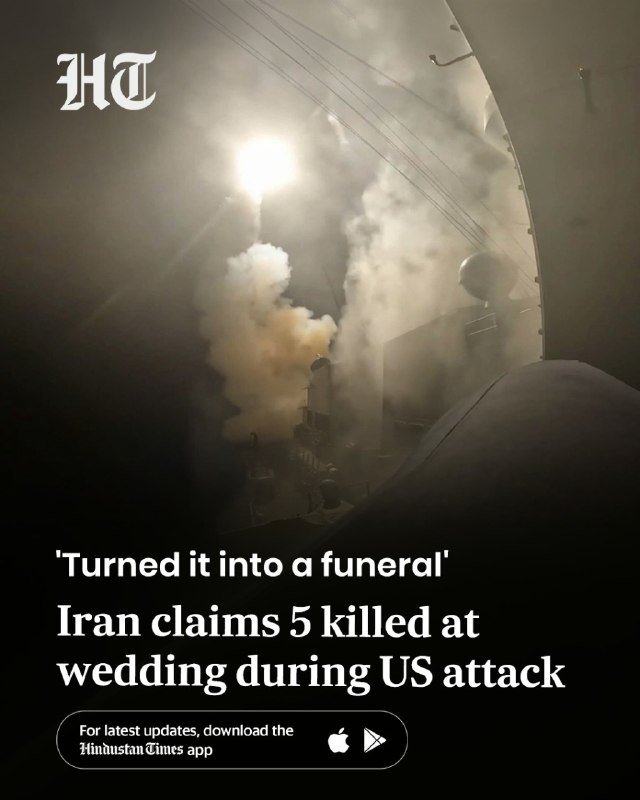
Iran fired missiles and drones at US military positions across the Persian Gulf on 2 September 2026, according to a 14:00 UTC bulletin from Middle East Eye that cited Iranian state-aligned channels. The retaliation, Tehran says, follows an American strike on a gathering described by Iranian officials as a wedding in the southern town of Sirik, in Hormozgan province. The Islamic Republic of Iran Military (IRIM) channel, an Iranian state-aligned outlet, said five people were killed, including a child, with more than fifty wounded, in what it called a "brutal American attack on a wedding" at 13:32 UTC. Middle East Eye's broader tally of dead across Tuesday's strikes is at least eighteen, including children; the available source items do not specify whether that figure includes the Sirik casualties or runs parallel to them. The shape of the retaliation is now visible. What remains contested is its scope, its signalling, and whether Beijing and Moscow will translate the diplomatic cover offered by Tuesday's Shanghai Cooperation Organisation statement into anything that lands at the UN Security Council.
The Iranian response is the first sustained, multi-axis missile and drone volley against US facilities in the Gulf since the January escalation cycle. Its operational logic looks familiar to anyone who watched Tehran's posture after the killing of Qasem Soleimani in 2020: a calibrated, deniable-enough barrage designed to re-establish deterrence without triggering the regime-change spiral that hardliners on both sides profess to fear. The politics around it are less familiar. Iran's foreign ministry moved within hours to publish an SCO read-out framing the retaliation as a lawful counter to an unlawful use of force. The framing matters: it shifts the centre of gravity from the UN Security Council, where the United States holds a veto and would be protected in any draft resolution Washington opposed, to a venue where Iran sits at the table and Beijing and Moscow supply the choreography.
The Sirik strike and the politics of the body count
The single most consequential contested fact in the source record is the civilian toll of the US action on 1 September. Middle East Eye, reporting from the Iranian framing of events, places the count at "at least 18 people, including children" killed on Tuesday, with Iranian state-aligned channel IRIM specifying a subset of that toll: five dead and more than fifty wounded in what it characterises as an attack on a wedding in Sirik. The available source items do not specify the date of the wedding strike relative to the wider American air package, the coordinates of the venue, or whether US Central Command has acknowledged civilian harm. The asymmetry in naming is worth noting: Iranian channels attach a place, a civilian function (a wedding) and a demographic detail (children); the American framing in the materials at hand is absent. That gap is not a verdict on the underlying fact, but it is the gap that will be fought over in the next forty-eight hours.
For Tehran, the Sirik strike is the casus belli it needed. Iranian retaliation for strikes on military infrastructure is one thing; retaliation framed as the defence of wedding guests and children is another. The rhetorical bridge between "we were hit" and "we are now morally authorised to escalate" runs through Sirik. Expect Iranian state media to fix the name of the town, the wedding, and the dead children into the global conversation in the way Soleimani's name was fixed into it after the January 2020 drone strike at Baghdad International Airport.
What the SCO read-out actually says
The South China Morning Post, in a 13:55 UTC bulletin republished via its Telegram channel, framed Tehran's diplomatic offensive as "Iran wins SCO backing against US strikes" and posed the operative question in its own headline: will it be enough? The body of the read-out, as quoted by SCMP, acknowledges the Iranian framing of self-defence and calls for restraint. Read carefully, this is not a defence-of-strike text. It is a face-saving formulation that allows Beijing and Moscow to register concern about American escalation while leaving Iran enough diplomatic oxygen to claim the room has not condemned it. The SCO cannot enforce anything. It can, however, shape the language available to UN Security Council members when a draft resolution arrives. In the SCMP framing, the SCO's contribution is procedural cover, not material backing: an alibi Beijing can offer Washington ("we urged restraint") and a shield Tehran can point to ("we were not isolated"). Neither function survives contact with a serious escalation. Both function perfectly well in the first forty-eight hours of framing.
The structural read: a multi-front war fought on three clocks
Set the tactical picture aside for a moment and the structural one sharpens. What is happening in the Gulf is a contest being run on three different clocks. The first is the operational clock: missiles, drones, interceptors, base damage assessments, and the calculus of whether the next Iranian volley will land on a US carrier strike group, a logistics hub in Qatar, or a quieter target that allows both sides to de-escalate. The second is the diplomatic clock: how fast Tehran can convert the Sirik strike into a UNSC procedural win with Russian and Chinese support, how fast Washington can build a coalition language that re-casts Iran as aggressor, and how fast Gulf states can extract themselves from being the geography on which someone else's war is fought. The third is the financial clock: insurance war-risk premia through the Strait of Hormuz, tanker reroutings around the Cape of Good Hope, and the oil futures curve, where the difference between a six-day escalation and a sixty-day one is roughly the size of an emerging-market current account.
The plain reading is that the United States holds the operational clock, Russia and China hold the diplomatic clock, and the market holds the financial clock, and none of the three clocks are synchronised. That desynchronisation is itself the story. It means each side can claim to be winning on its own clock while the others are losing, and the moment when the clocks re-synchronise is the moment when someone, somewhere, makes a decision they cannot reverse.
What we verified / what we could not
What the available source items support:
- Iran launched missiles and drones at US military facilities across the region on 2 September 2026 (Middle East Eye, 14:00 UTC).
- Iranian state-aligned channel IRIM reports five dead, including a child, and more than fifty wounded in what it calls an American strike on a wedding in Sirik, Hormozgan province (13:32 UTC).
- Middle East Eye's wider Tuesday toll is "at least 18" including children; the source items do not specify whether the Sirik casualties are inside or alongside that figure.
- The Shanghai Cooperation Organisation, as reported by SCMP (13:55 UTC), issued language acknowledging the Iranian self-defence framing and calling for restraint.
What the available source items do not specify:
- The total number, type, and intended targets of Iranian missiles and drones launched in the 2 September retaliation.
- Whether any US personnel or equipment were hit, damaged, or destroyed.
- US Central Command's official characterisation of the 1 September strikes and any acknowledgment of civilian harm in Sirik.
- The exact text of the SCO read-out beyond SCMP's headline summary.
- Whether any Gulf state (UAE, Saudi Arabia, Qatar, Bahrain, Kuwait) has issued a public statement on the retaliation, on hosting of US forces, or on overflight of Iranian projectiles through its airspace.
This publication has not independently established any of the items in the second list and treats the first list as the floor, not the ceiling, of what can responsibly be asserted.
The forward view
The most consequential thing to watch over the next seventy-two hours is not the next Iranian volley. It is the Gulf states. Saudi Arabia and the UAE have spent three years constructing detente with Tehran precisely so that someone else's escalation would not become their war; their public silence on Wednesday will tell the market whether that investment is still intact. The second thing to watch is the SCO-to-UNSC pipeline: whether Beijing tables a procedural statement at the Security Council, whether Moscow co-signs, and whether Washington can peel either away with a face-saving clause. And the third is Hormuz. If Iranian-aligned forces move to interdict or inspect commercial traffic through the Strait, the financial clock takes over from all the others within hours, and no diplomatic clock survives a $120 crude print. None of those three things are pre-determined. All of them are now on the table, and the Sirik wedding, by grim design, is the frame in which they will be argued.
Desk note: Monexus framed the retaliation as the lead because the strike on Iranian territory (Middle East Eye's reporting of civilian casualties) is the event that determines Iranian behaviour. Wire coverage to the publication's reading has tended to anchor on the Iranian volley as the headline event; this piece anchors on the strike the volley responds to, and reads Tehran's diplomatic offensive as the SCO-shaped cover it is, rather than as a substantive shift in alignment.
Wire provenance
This editorial synthesis draws on the following public wire/social posts:
- https://middleeasteye.pulse.ly/0n1sltky0t
- https://x.com/MiddleEastEye/status/2095149829043167510
- https://t.me/SCMPNews/110135
- https://www.scmp.com/news/china/diplomacy/article/3366129/iran-wins-sco-backing-against-us-strikes-will-it-be-enough
- https://t.me/IRIran_Military/9995
- https://www.scmp.com/news/china/diplomacy/article/3366129/iran-wins-sco-backing-
- https://middleeasteye.pulse.ly/0n1sltky0t
- https://x.com/MiddleEastEye/status/2095149829043167510
- https://t.me/SCMPNews/110135
- https://www.scmp.com/news/china/diplomacy/article/3366129/iran-wins-sco-backing-against-us-strikes-will-it-be-enough
- https://t.me/IRIran_Military/9995
- https://www.scmp.com/news/china/diplomacy/article/3366129/iran-wins-sco-backing-