Oklahoma City’s summer-league double act gives the Thunder a quiet kind of depth
Two first-round picks, one alley-oop, and a second-overall pick from a rival class — the Salt Lake City summer slate is already telling a story about how Oklahoma City plans to scale.
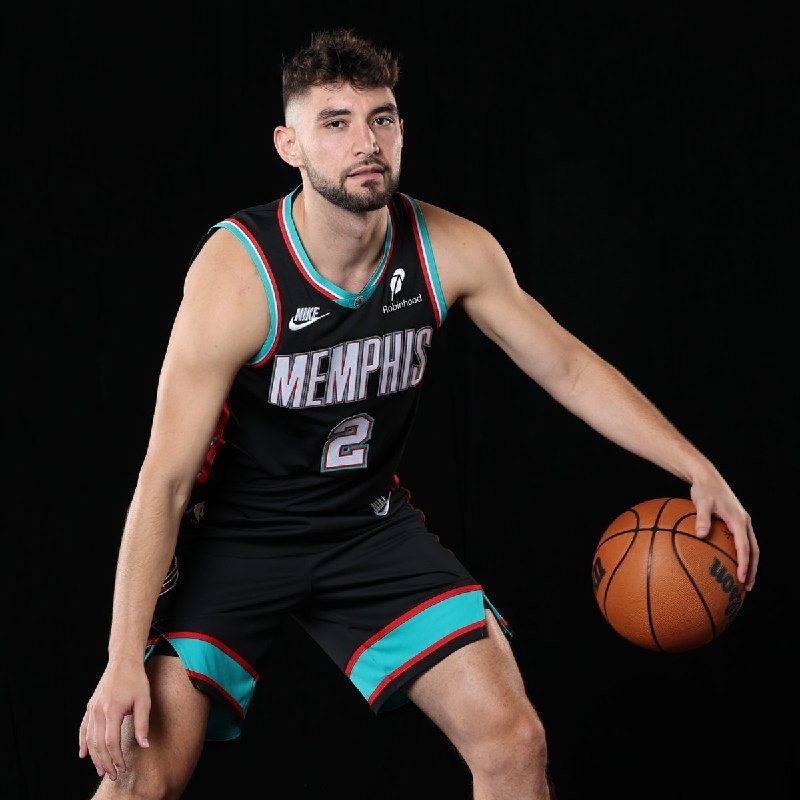
The Salt Lake City Summer League has a habit of producing the kind of moments that look small at the time and feel heavier in October. On the evening of 6 July 2026, Oklahoma City’s two first-round picks — guard Bennett Stirtz and centre Aday Mara — strung together an alley-oop that, in a normal league, would earn a highlight and a shrug. In Oklahoma City, where the defending champions are trying to thread development minutes around a payroll that already swallows the salary cap, the play felt like a small piece of arithmetic resolving on cue.
That same evening, a different storyline crossed paths with it. The No. 2 overall pick in the 2026 NBA Draft — a guard identified in the league’s social feeds only as “Darryn_P1” — dropped 25 points and 12 assists at the same Salt Lake City venue, then stopped to sign autographs on his way off the floor. He is not a Thunder player. But he is the kind of name Oklahoma City’s front office will have already circled, because the way this team sustains itself is by being early on players the rest of the league is still sizing up.
The two picks, in plain terms
Stirtz and Mara arrived in Oklahoma City through the 2026 first round, and the team’s own channels framed their alley-oop as the connective moment the staff had been chasing in summer play. Stirtz is the smaller, decision-driven guard whose game reads as a complement to the Thunder’s existing backcourt of offensive initiators; Mara is the 7-footer the front office has pointed at the league’s growing demand for vertical, switchable size.
That pairing matters because of what sits behind it. Oklahoma City’s title-winning rotation last season was, by cap-sheet standards, freakishly young and freakishly cheap. The bill comes due across the next two off-seasons, when extensions on the core turn the tax apron from a theoretical line into a hard one. Summer league is where the second tier gets auditioned — the players who have to be good enough, soon enough, to absorb the minutes the starters will eventually have to give up.
The rival class walking through the same building
The Darryn_P1 line is its own headline. Twenty-five and twelve is the kind of debut that turns a Summer League crowd into a recruiting tool, and the autograph moment — captured by the NBA Live channel on Telegram — is the part that reads less like a player introduction and more like a soft launch. The number two pick in any draft is supposed to look this composed; the question is which team has spent the year preparing for him to look this composed against them.
For Oklahoma City, the answer is the same as it has been for three years: preparation. The Thunder’s draft-night trade patterns in 2024 and 2025 both pointed at this kind of horizon — accumulating future firsts, taking fliers on athletic bigs who could be rotated cheaply, and treating every summer league as a real evaluation rather than a content shoot.
What this league looks like at the bottom
There is a less flattering read of the same film. Summer league stat lines, particularly the 25-and-12 variety, have a long history of misleading front offices. The Salt Lake City and California Classic slates are short, the defences are vanilla, and the rosters turn over nightly. The alley-oop is fun; whether Stirtz can run pick-and-roll against an NBA defence in February is a question that summer league cannot answer, and the Thunder’s staff know that.
That is precisely why the development infrastructure matters more than the highlight reel. Oklahoma City’s minor-league operation in Oklahoma City proper has, across the last three seasons, been the quiet engine of the team’s bench production. Players the league had stopped watching — second-rounders, undrafted guards, late bloomers — have come through that system and contributed on conference-final nights. The summer-league lineup is the front door; the G League roster is the actual factory.
Stakes, and what to watch
If the Stirtz–Mara pairing holds, Oklahoma City’s margin against the new luxury-tax reality widens. If it doesn’t, the Thunder face the more familiar problem of contenders: paying the stars what they are owed and finding rotation minutes behind them. The Darryn_P1 line, meanwhile, is the wider warning — the 2026 class is not a soft one, and the second pick’s summer cameo suggests as much.
The next tell will come in Las Vegas, where the summer schedules consolidate and the rotations tighten. Until then, the arithmetic at the Delta Center is the same as it has been since draft night: one alley-oop at a time.
Desk note: this piece was assembled from NBA Live’s Telegram wire on 7 July 2026 UTC. Player names are reproduced as the channel published them; where a player is identified only by a draft handle, Monexus has flagged that explicitly rather than guessing at a full name.
Wire provenance
This editorial synthesis draws on the following public wire/social posts:
- https://t.me/NBALive
- https://t.me/NBALive
- https://t.me/NBALive