Trump weighs widening US military footprint in Iran as WSJ reports Kharg Island in scope
The Wall Street Journal reports President Trump is leaning toward expanding US military operations in Iran, with ground troops and a strike on a covert nuclear site on Kharg Island now under discussion after a Tuesday Situation Room meeting.
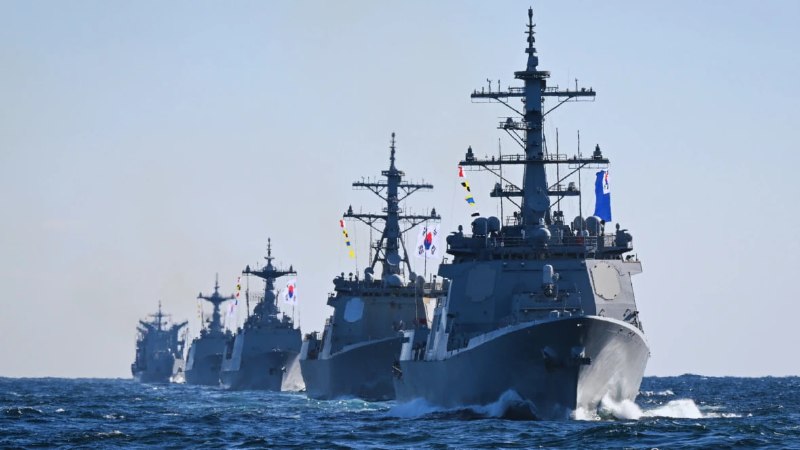
The Wall Street Journal reported on 15 July 2026, citing US officials, that President Donald Trump is "increasingly leaning toward" expanding US military operations against Iran, with options now understood to include the deployment of ground troops and the bombing of a covert nuclear site on Kharg Island, the country's main oil export terminal in the Persian Gulf. The deliberation, per the WSJ account relayed by Telegram channels ClashReport and OSINTdefender within hours of publication, traces back to a Tuesday Situation Room meeting at the White House, with no final decision yet communicated. The same line was amplified by Visioner via an NSTRIKE1231 relay in the same evening window, underscoring that the WSJ scoop is the spine of the current information cycle on the story.
The mechanics matter. A US strike on a covert nuclear site on Kharg Island would be a different category of operation from the June strikes on Fordow, Natanz and Isfahan that the WSJ and other outlets have previously reported: those were bunker-buster runs against declared facilities at altitude, deep but geographically defined. A facility on Kharg would fuse two distinct escalation ladders. It would put US ordnance onto an island that handles the bulk of Iran's crude exports, and it would put US ground forces onto Iranian territory for an objective that, on the public record, remains undisclosed in location and yield. Both ladders, separately, would be a major escalation. Together, they would mark a widening of the US war aim inside Iran well past declared nuclear infrastructure.
What the WSJ actually says
The reporting, as filtered through the Telegram relays, attributes the operational options to "US officials" speaking on background to the Journal. The phrase the relays lean on is that Trump is "leaning toward" expansion, with ground troops and a Kharg Island strike now in the menu. The same account flags explicitly that "no final decision" has been made, a hedge that itself does diplomatic work: it keeps the diplomatic channel open while signalling that the cost of escalation is being seriously priced.
The Tuesday Situation Room meeting is the trigger event in the chain. Telegram channels OSINTdefender and Visioner both date the deliberations to that session, and neither has reported a follow-on decision by the close of the US evening of 15 July. That leaves the public timeline as: meeting, WSJ reporting, Telegram relays, no announcement. The information environment around the story is unusually narrow: a single wire scoop, two Telegram relays, and the absence of an independent on-record confirmation from the Pentagon, the White House, or the Israeli side.
Why Kharg, and why a covert site on it
Kharg Island sits roughly 25 kilometres off the Iranian coast in the northern Persian Gulf. It handles the overwhelming majority of Iran's seaborne crude exports through its terminal complex, and it has been hardened against air attack repeatedly since the 1980s tanker war. A "covert nuclear site" on the island, if accurate, would be a deniable facility: not on the IAEA inventory in the public record, defended by the same air-defence umbrella that protects the export infrastructure, and co-located with the economic nerve of Iran's energy trade. Hitting it would be aimed at a nuclear capability. Hitting it on Kharg would also be a direct strike against the export terminal's security envelope.
The compound effect is the point. A ground deployment adds a different exposure: it forces the question of basing, of logistics, of casualty exposure, of Iranian retaliation options in the Gulf and through the proxy network. The WSJ reporting, on the face of it, is describing an option set that the administration has chosen to leak rather than to announce, with the leak carrying the implicit message that further Israeli or US action against declared sites is insufficient.
The information environment around the leak
Three Telegram channels, in the span of roughly 90 minutes on 15 July, transmitted the same core WSJ scoop. ClashReport opened the run at 19:44 UTC, OSINTdefender followed at 20:48 UTC, and Visioner closed the loop at 21:19 UTC via a retweet of the NSTRIKE1231 account. None added sourcing beyond what the WSJ had published. None carried a White House or Pentagon confirmation. The shape of the coverage, in other words, is a single wire scoop amplified through two research-grade Telegram accounts and one secondary relay. There is no second-tier confirmation in the public record as of the publication of this piece.
That has consequences for how the story should be read. WSJ scoops on Iran operations have, across 2025 and 2026, been both accurate in their outline and conservative in their language: officials use them to pre-position a decision that has not yet been taken, while preserving deniability and leaving room to back off. The "leaning toward" phrasing, and the explicit "no final decision" caveat, fit that pattern. The leak is itself an instrument of policy.
What this fits, structurally
The pattern across the last twelve months has been a layered escalation against Iran's nuclear and missile programme, sequenced with Israel's operations and amplified through US force-posture moves in the Gulf and the eastern Mediterranean. The June strikes on declared sites were a first-order action against the programme's most public infrastructure. A covert site on Kharg, if it exists and is in scope, sits in the second tier: capability, not infrastructure. A ground deployment sits in the third tier: presence, not reach.
Read together, the option set the WSJ is describing is a move from a declared-sites campaign to a capability-and-presence campaign. That is a categorical widening, even if no single item in the menu is a surprise. The unresolved question, and the one the leak is designed to keep unresolved, is whether the widening is intended to be coercive (pressure for a renewed nuclear deal), pre-emptive (a final action against a fast-closing window), or both.
What the sources do not yet tell us
The Telegram relays do not specify the size of any ground force under discussion, the timeline for a decision, the Israeli role, or the state of any back-channel to Tehran. They do not name the "covert nuclear site" beyond the Kharg Island locator. They do not carry any Iranian official response beyond the absence of one. And they do not include any second wire confirmation beyond the WSJ scoop itself. Readers should treat the operational specifics as US-side signalling, not as a plan of action already in motion.
The next 72 hours are the window that will determine whether the leak hardens into a strike order, dissipates into another cycle of coercive diplomacy, or produces a public Iranian response that itself becomes the story.
Desk note: Monexus has run this against the WSJ-led wire feed and the two Telegram relays that carried it in real time, rather than against second-hand summaries. Where the Telegram accounts add no sourcing beyond the WSJ, that is flagged in prose. The Israel–Palestine conflict compass does not apply; this is a US–Iran escalation story with no Israeli decision documented in the present sourcing.
Wire provenance
This editorial synthesis draws on the following public wire/social posts:
- https://t.me/ClashReport
- https://t.me/osintlive
- https://t.me/osintlive
- https://en.wikipedia.org/wiki/Kharg_Island
- https://en.wikipedia.org/wiki/Kharg_Island_Terminal
- https://en.wikipedia.org/wiki/Situation_Room
- https://en.wikipedia.org/wiki/Fordow_Fuel_Enrichment_Plant
Follow the event.
These dated source records provide context. They do not retrospectively verify this archive article.
Separate what the nuclear watchdog reported from what it could not determine after the June 2025 strikes.