Asia's bond-yield squeeze meets a quieter threat: AI-enabled fraud in Southeast Asia
Asia's trading week closed with equities subdued and Treasury yields firm, while a Nikkei Asia dispatch flagged a separate, slower-moving risk: AI lowering the cost of running cross-border scam operations across Southeast Asia.
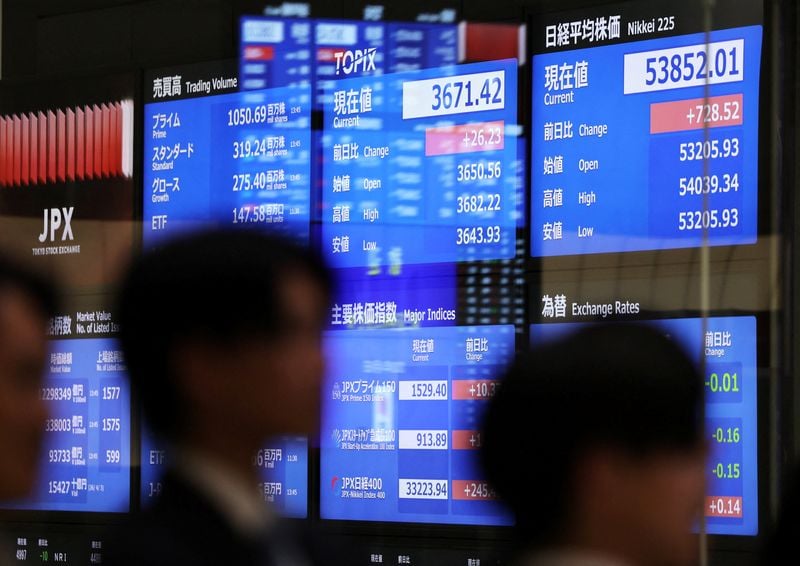
Asia's trading week ended the way it began: under pressure. By the close on the bourses tracked by Reuters and Investing.com on 21 August 2026, regional equities were lower, benchmark sovereign yields were sticky, and crude refused to give back the gains it had built through August. The pattern, repeated across the day's regional roundups, is now less a news event than a backdrop shaping every other decision made in the region this month.
The bond move is the loud story. As long-end yields stay elevated, equity multiples compress, capital expenditure gets repriced, and the cost of rolling dollar debt for the region's weaker credits climbs. That dynamic is now layered onto a slower-burning problem: organised fraud operations across Southeast Asia have started running on cheaper, AI-assisted infrastructure, a shift that turns what used to be a labour-intensive crime into something closer to a margin business. Both stories are quiet; together they sketch the operating environment Asian policymakers and corporate treasurers are walking into for the rest of the year.
What the tape actually showed
Reuters' Asia markets wrap, published at 06:00 UTC on 21 August 2026, ran with the line "Asia shares downbeat for week as bond yields, oil stay high." Investing.com carried an identical frame in its own market-news roundup timestamped 01:24 UTC the same day, with the same diagnosis: bond yields and oil prices were the proximate drag on regional equities, and there was little in the flow to suggest the pressure would ease into the Asian close. Both wires pointed to the same macro inputs working against risk.
What the wires did not break out was the regional dispersion beneath the aggregate headline. The available reporting does not specify the magnitude of the weekly drawdown across major indices, and this publication has not independently established a single composite figure for the move. The qualitative read in the wire copy is the same in both places: the week was bad, the tape was thin in places, and the macro inputs were working against risk.
For readers weighing whether this is a re-run of earlier sell-offs, when Asian credit spreads gapped out, or a more contained yield-led derating, the honest answer from the cited reporting is that the data needed to draw that distinction is not in the day's roundups.
The fraud economy is also repricing
While equity desks were watching the yield curve, a separate story was filed the same day. Nikkei Asia's Telegram dispatch at 00:31 UTC on 21 August 2026 reported that artificial intelligence was cutting costs for Southeast Asia-based scammers, with cross-border fraud "spreading" across the region and authorities locked into a "cat-and-mouse game" with the operators. The framing in the Nikkei note is that AI is doing to scam economics what it has already done to legal call centres and translation work: collapsing the marginal cost of producing convincing text, voice and image at scale.
The Nikkei excerpt goes further on cause. According to the Telegram post, the cat-and-mouse dynamic is "fueled by U.S. pressure" that is causing scam operations to "flee and pop up elsewhere" as enforcement bites in one jurisdiction. That detail matters for how the story should be read. The fraud economy is not a static target drifting across borders; it is a moving one, and the direction of movement is shaped by where Western law-enforcement attention lands next. Monexus analysis: the implication is that any policy success against compounds in one country is partly undone by the same pressure pushing capacity into a neighbour, which is why the regional read, rather than the country-level read, is the right unit of analysis.
The reporting stops short of giving a dollar figure for the regional fraud volume. The Nikkei Telegram note, mirrored twice in the source thread, frames the trend qualitatively and does not name a specific case or jurisdiction for this filing. The available source items do not specify which countries, compounds, or trafficking dynamics are most exposed.
Two stories, one underlying pressure
The bond story and the fraud story look unrelated. They share an underlying input. Both are downstream of a higher-for-longer rate environment, and both are amplified by an uneven regional capacity to absorb that environment. Higher real yields make it more expensive for weaker sovereigns and corporates to service dollar debt; the same environment pushes more economic activity into informal, dollar-priced channels, which is precisely where cross-border fraud operations live. When the formal financial system is cheaper to use, fraud has to compete on trust. When the formal system becomes expensive, fraud competes on access, and access is something AI has just made much cheaper to manufacture.
The mainstream framing in Western business press has been to treat the bond-yield move as a purely cyclical phenomenon: central banks holding rates higher for longer, oil prices sticky, equities rerating in response. That framing is defensible on a one-quarter view. On a structural view, what we are watching is a tightening of the offshore dollar system onto economies that have borrowed heavily against an assumption of cheaper money, with the secondary effects showing up across the region.
What to watch next
Two forward indicators stand out. The first is the path of long-end US yields into the September Federal Reserve meeting cycle; any sustained move back below the levels that defined August would relieve pressure on Asian credit and likely narrow the regional equity discount. The second is whether Southeast Asian enforcement bodies, working in coordination with US counterparts, publish fresh operational data on AI-enabled scam infrastructure in the next reporting cycle; the available reporting does not specify a timeline, and this publication has not independently confirmed any such release. The Nikkei note frames the cat-and-mouse dynamic as ongoing rather than episodic, and frames US pressure as a primary accelerant of geographic displacement.
The reading worth holding onto is that the bond story is loud and the fraud story is quiet, but they are sitting on the same shelf. Asian markets will reprice quickly if the yield backdrop eases. The scam economy, by contrast, has just been handed a cost structure that does not depend on the rate cycle at all, and that is a slower and more corrosive problem.
Desk note: Monexus paired the regional markets wrap from Reuters and Investing.com with Nikkei Asia's Telegram dispatch on AI-enabled fraud, treating both as parallel reads on the operating environment for Asian capital and security. Western business wires led with the bond-and-oil frame; the AI-fraud angle appeared only in the Nikkei Telegram channel and was not surfaced in the major English-language roundups the same day.
Wire provenance
This editorial synthesis draws on the following public wire/social posts:
- http://reut.rs/4qsd1TZ
- https://x.com/Reuters/status/2090680347428114882
- https://www.investing.com/news/stock-market-news/asia-shares-downbeat-on-the-week-as-bond-yields-oil-stay-high-4870733
- https://t.me/NikkeiAsia/21409
- https://t.me/nikkeiasia/21409